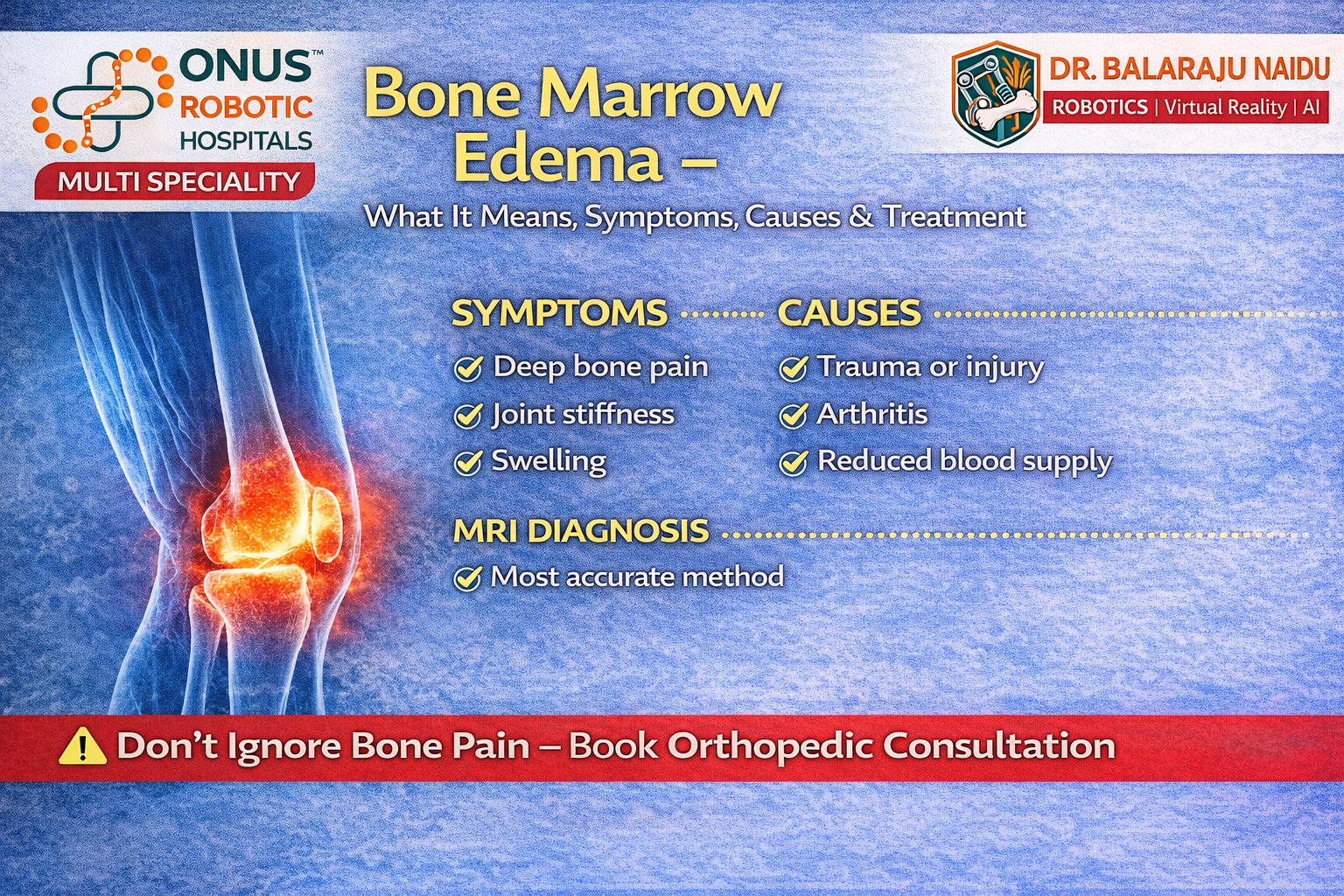
Bone Marrow Edema – What It Means, Symptoms, Causes & Treatment – By Dr. Balaraju Naidu, Robotic Orthopedic Surgeon, ONUS Robotic Hospitals
Seeing the term “Bone Marrow Edema” in an MRI report can be alarming. Many patients assume it indicates a serious disease.
However, bone marrow edema (BME) is not a disease itself. It is a radiological finding that indicates fluid accumulation within the bone marrow, usually due to stress, injury, inflammation, or reduced blood supply.
Early identification and appropriate treatment can prevent long-term joint damage.
What Is Bone Marrow Edema?
Bone marrow edema refers to increased fluid inside the bone marrow, visible only on MRI.
It typically signals:
-
Bone stress
-
Micro-fractures
-
Joint inflammation
-
Early arthritis
-
Ligament injury
-
Reduced blood circulation
It cannot usually be detected on standard X-rays.
Common Causes of Bone Marrow Edema
Bone marrow edema may occur due to:
-
Trauma or minor fractures
-
Arthritis (early or advanced)
-
Ligament injuries
-
Overuse of joints (sports or repetitive stress)
-
Bone infection
-
Avascular necrosis (reduced blood supply)
-
Osteoporosis
In many cases, it develops gradually due to mechanical stress.
Symptoms of Bone Marrow Edema
Patients commonly report:
-
Deep, persistent bone pain
-
Joint stiffness
-
Swelling
-
Pain during walking or weight-bearing
-
Night pain
-
Reduced mobility
Pain is often disproportionate to what is seen on X-ray.
How Is It Diagnosed?
MRI Is the Gold Standard
-
MRI detects fluid changes inside bone
-
X-rays often appear normal in early stages
-
MRI helps determine severity and cause
Proper interpretation by an orthopedic specialist is essential.
Treatment Options
Treatment depends on severity and underlying cause.
Conservative Management (Most Common)
✔ Rest and activity modification
✔ Pain management
✔ Physiotherapy
✔ Bone-strengthening supplements
✔ Offloading weight-bearing joints
Advanced Treatment (Severe Cases)
Targeted injections
Core decompression (rare cases)
Treatment for underlying avascular necrosis
Arthritis management
Early-stage cases often respond well to non-surgical care.
Recovery Time
Most patients recover within 1 to 3 months with proper management.
Delaying treatment may lead to:
Joint cartilage damage
Progressive arthritis
Stress fractures
Avascular necrosis
Timely care prevents complications.
When Should You Consult a Doctor?
Seek orthopedic evaluation if:
Pain persists for more than 2–3 weeks
Walking becomes difficult
Swelling increases
Pain worsens at night
X-ray appears normal but pain continues
Deep bone pain should never be ignored.
Final Takeaway
Bone marrow edema is treatable when detected early.
Ignoring persistent bone pain can lead to joint damage and fractures.
If you experience unexplained knee pain, deep bone pain, or difficulty walking — consult an orthopedic specialist for evaluation.
Early diagnosis protects your joints.
For Appointments:
Dr. Balaraju Naidu, Robotic Orthopedic Surgeon
ONUS Robotic Hospitals – Hyderabad
👉 Button link: contact-us or book-appointment