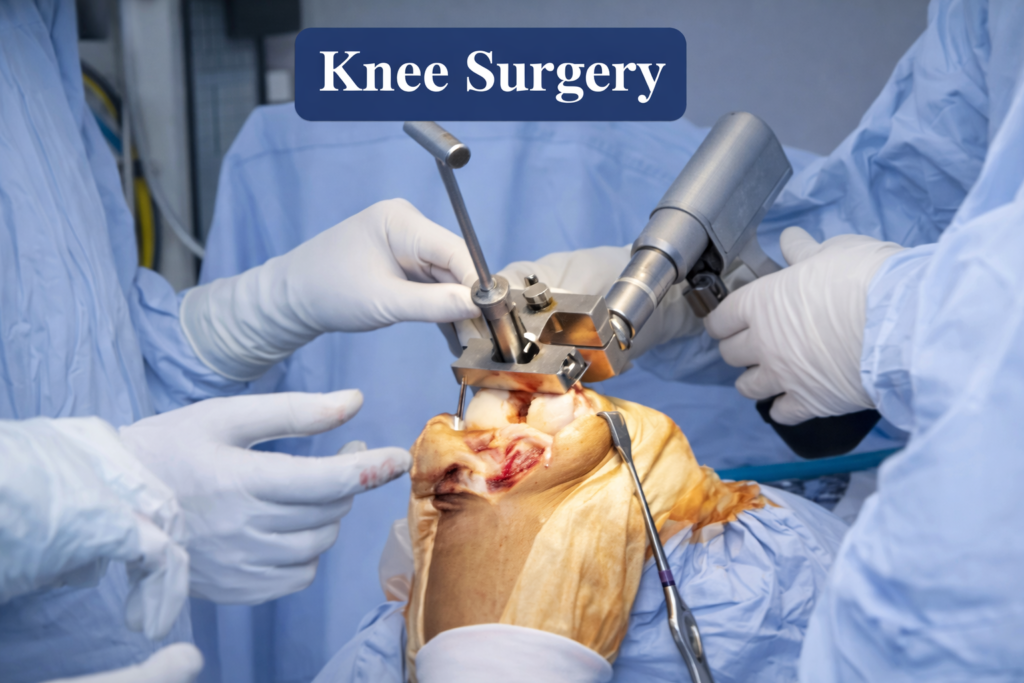
Robotic Total Knee Replacement (TKR)
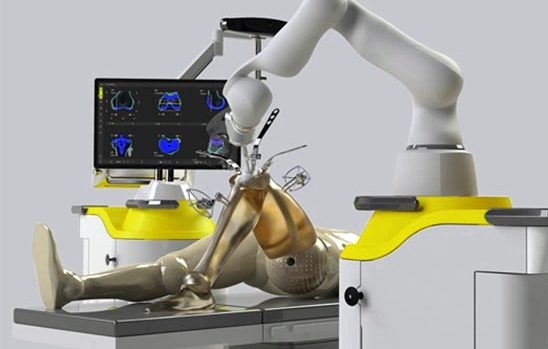
Robotic Total Knee Replacement (TKR) is an advanced form of knee replacement surgery that uses
Robotic Partial Knee Replacement
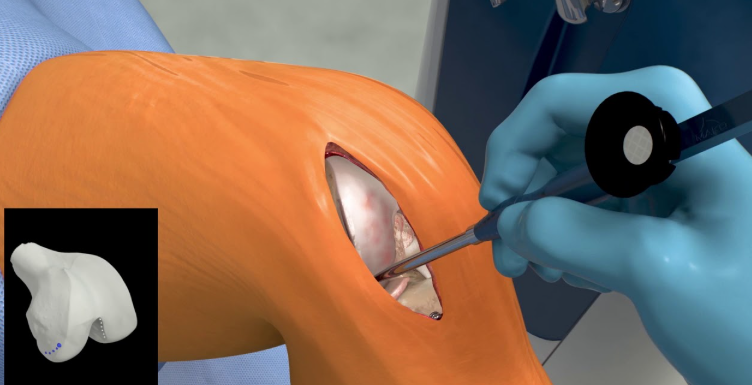
Robotic Partial Knee Replacement, also known as Robotic Unicompartmental Knee Replacement (UKR)
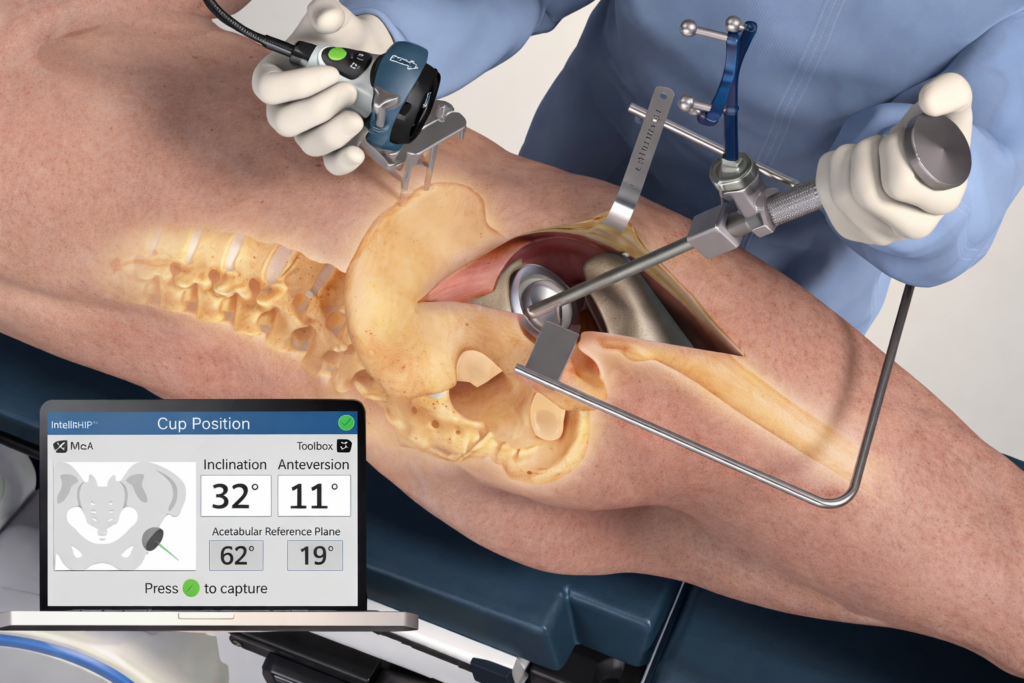
Robotic Hip Replacement Surgery
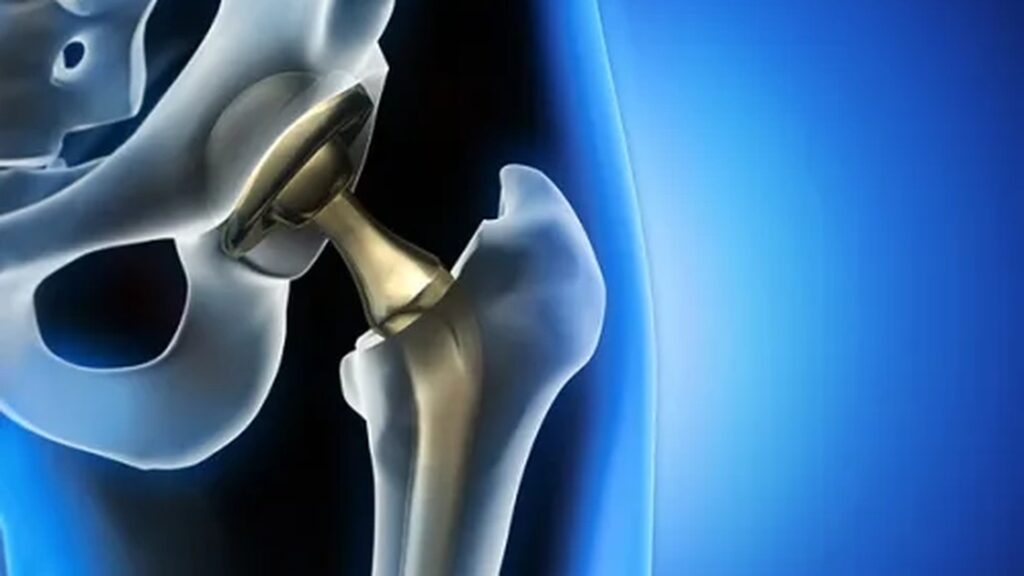
Robotic Hip Replacement Surgery is a next-generation, AI-assisted joint replacement that enhances surgical accuracy,
Computer-Navigated Knee Replacement
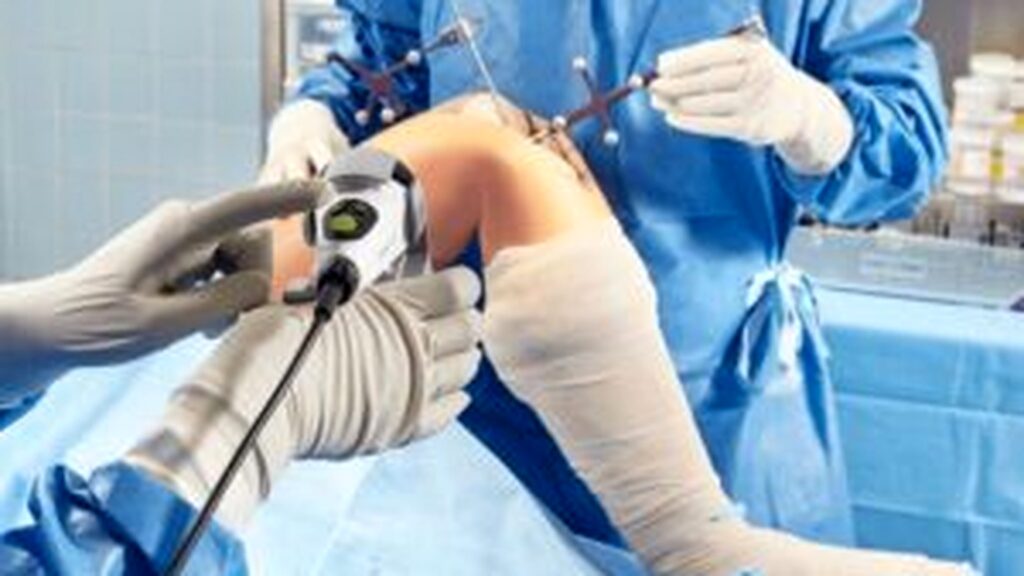
Computer-Navigated Knee Replacement is an advanced form of knee replacement
Computer-Navigated Hip Replacement
Computer-Navigated Hip Replacement is an advanced, technology-driven hip replacement technique
Revision Knee Replacement
Recognizing outstanding leadership in advanced healthcare practices and transformative patient care.
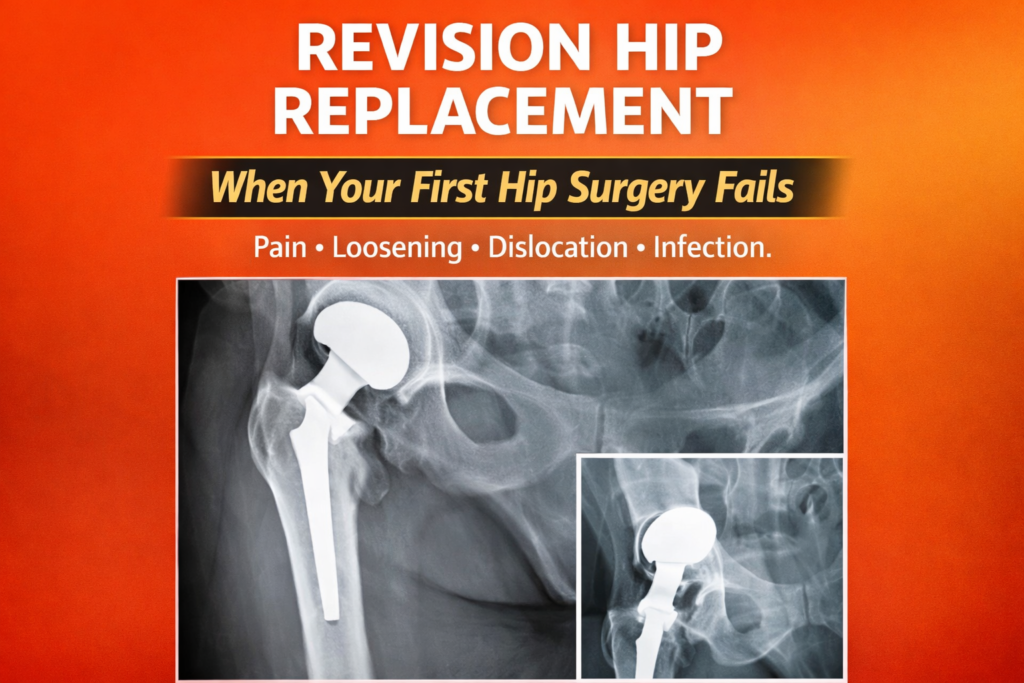
Revision Hip Replacement
Revision Hip Replacement is a highly advanced re-replacement surgery performed when a previously
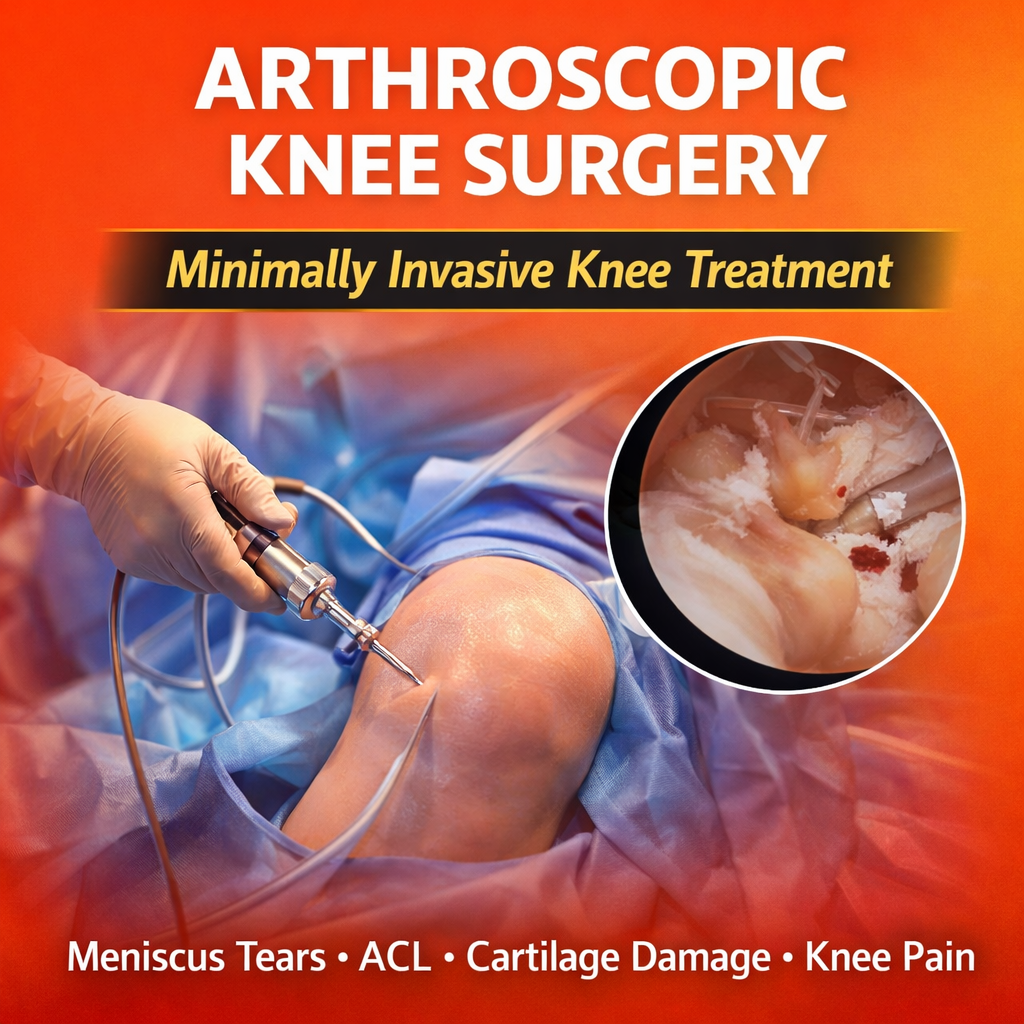
Arthroscopic Knee Surgery
Arthroscopic Knee Surgery is a minimally invasive keyhole procedure used to diagnose and treat various knee joint problems through small incisions.
ACL Reconstruction
ACL Reconstruction is a surgical procedure performed to restore stability of the knee after an Anterior Cruciate Ligament (ACL) tear. The ACL is a critical ligament that prevents the tibia from sliding forward and controls rotational stability of the knee.
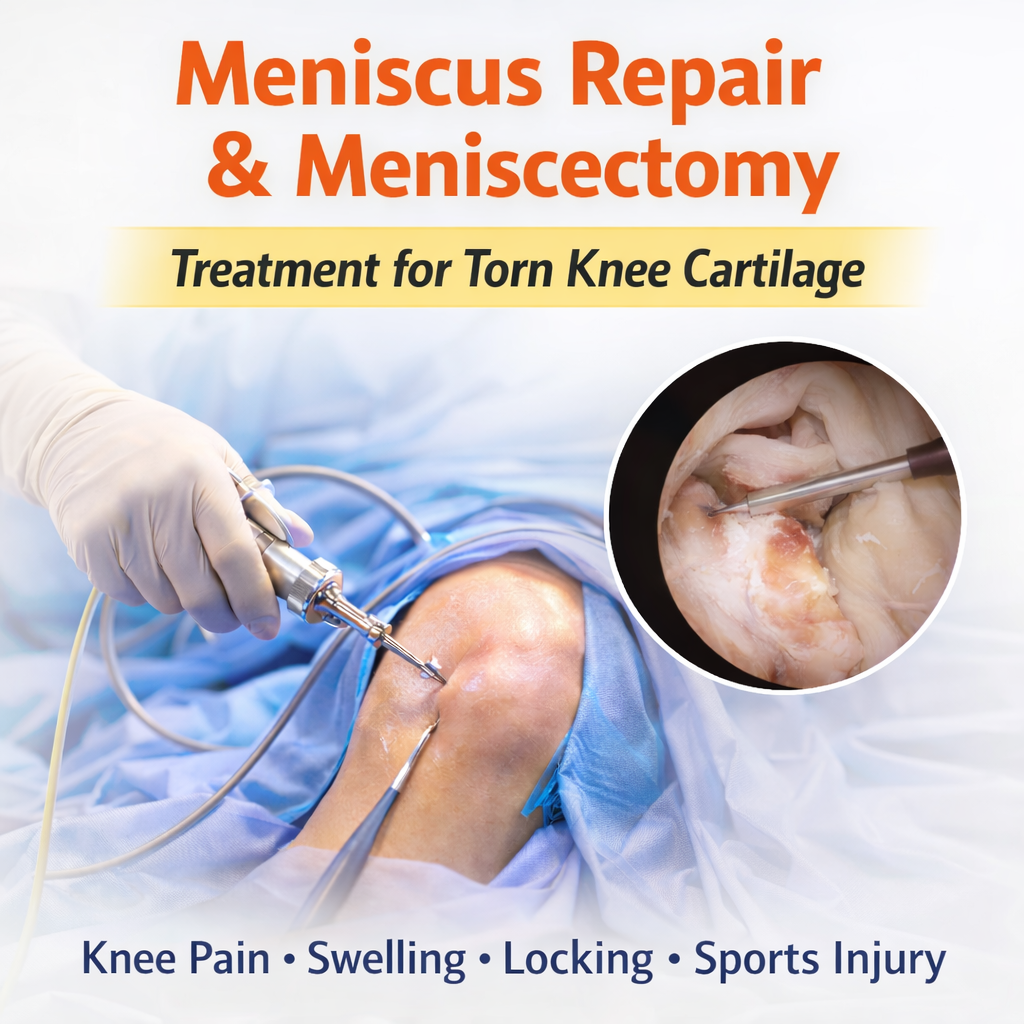
Meniscus Repair & Meniscectomy
Meniscus Repair and Meniscectomy are arthroscopic knee procedures performed to treat a torn meniscus — one of the most common knee injuries in athletes and active individuals.
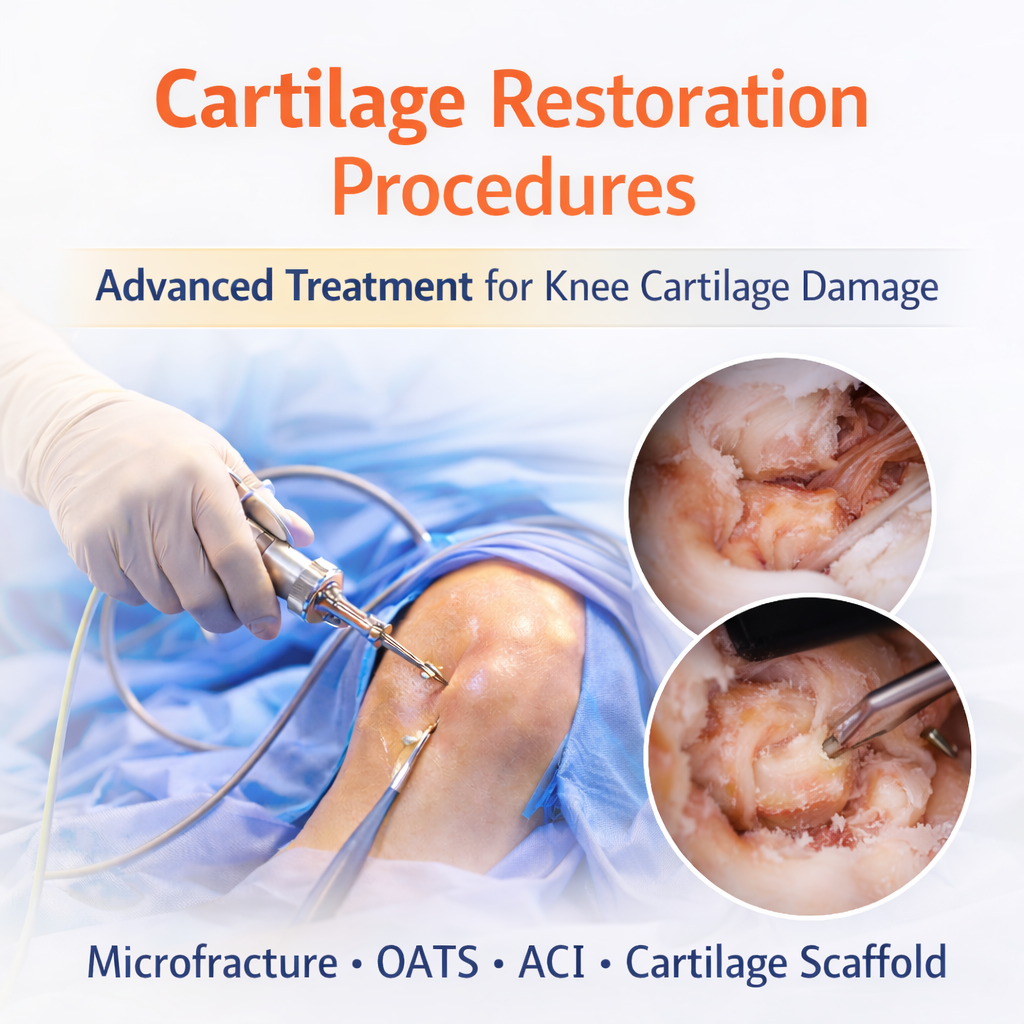
Cartilage Restoration Procedures
Cartilage Restoration Procedures are advanced orthopedic techniques designed to repair or regenerate damaged knee cartilage. Cartilage injuries commonly occur due to sports trauma, accidents, early arthritis, or long-standing joint instability.
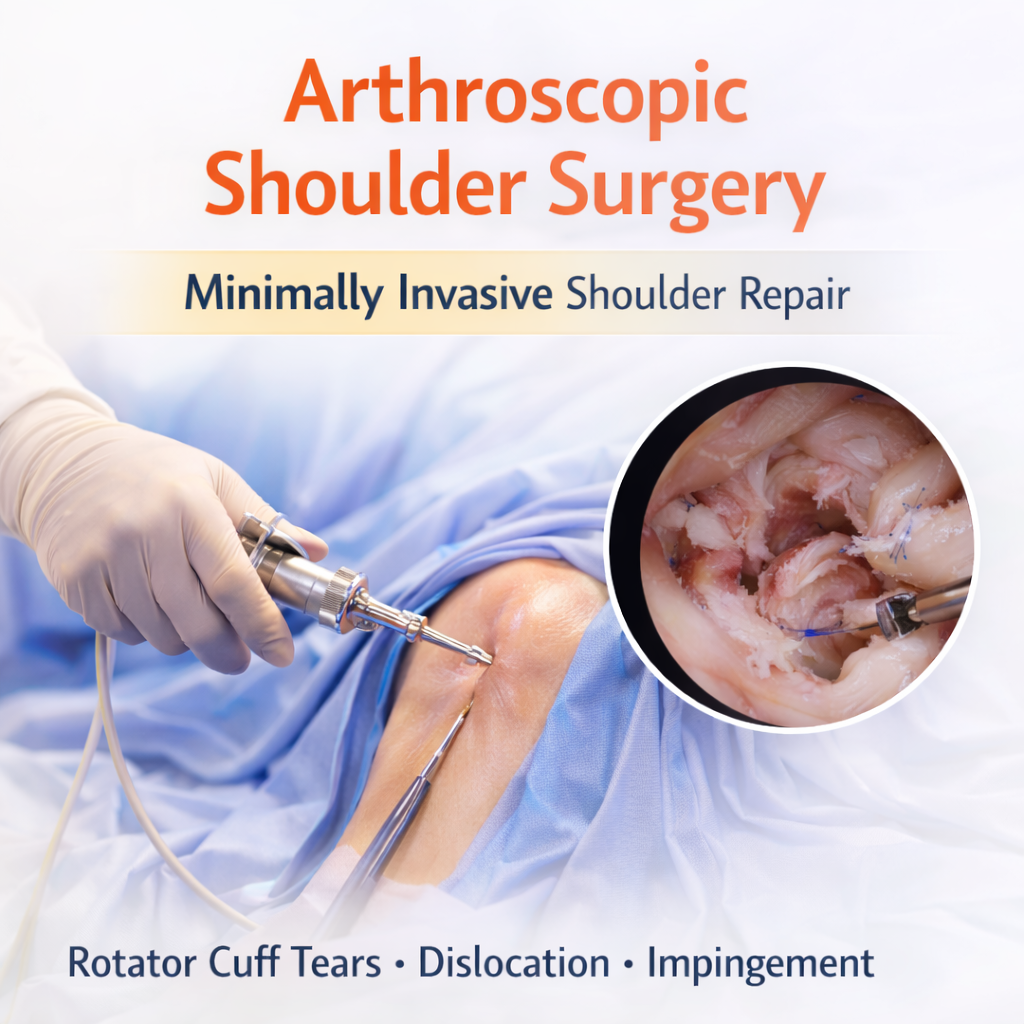
Arthroscopic Shoulder Surgery
Arthroscopic Shoulder Surgery is a minimally invasive keyhole procedure used to diagnose and treat various shoulder joint problems. Using a high-definition camera (arthroscope) and specialized instruments, the surgeon repairs damaged tissues through small incisions instead of large open cuts.
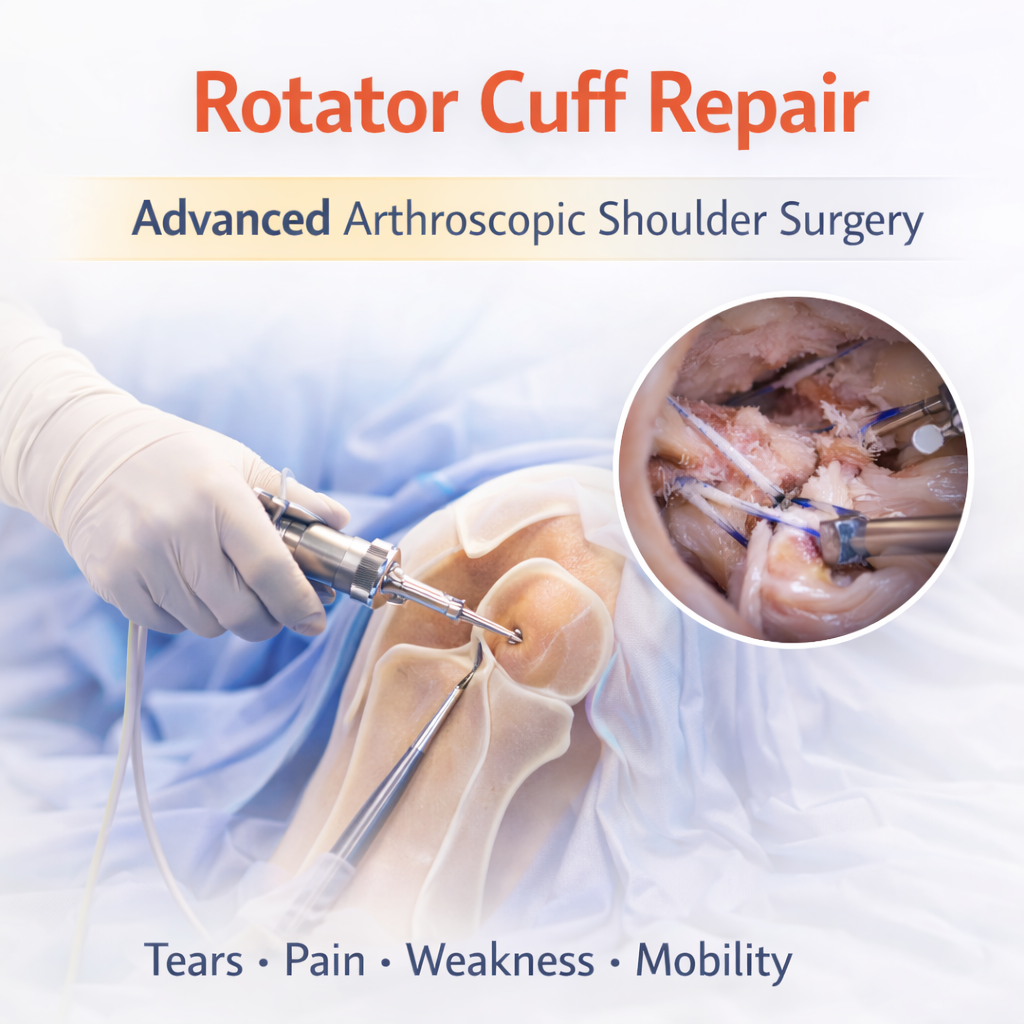
Rotator Cuff Repair
Rotator Cuff Repair is a surgical procedure performed to repair a torn rotator cuff tendon in the shoulder. The rotator cuff is a group of muscles and tendons that stabilize the shoulder joint and allow smooth arm movement.
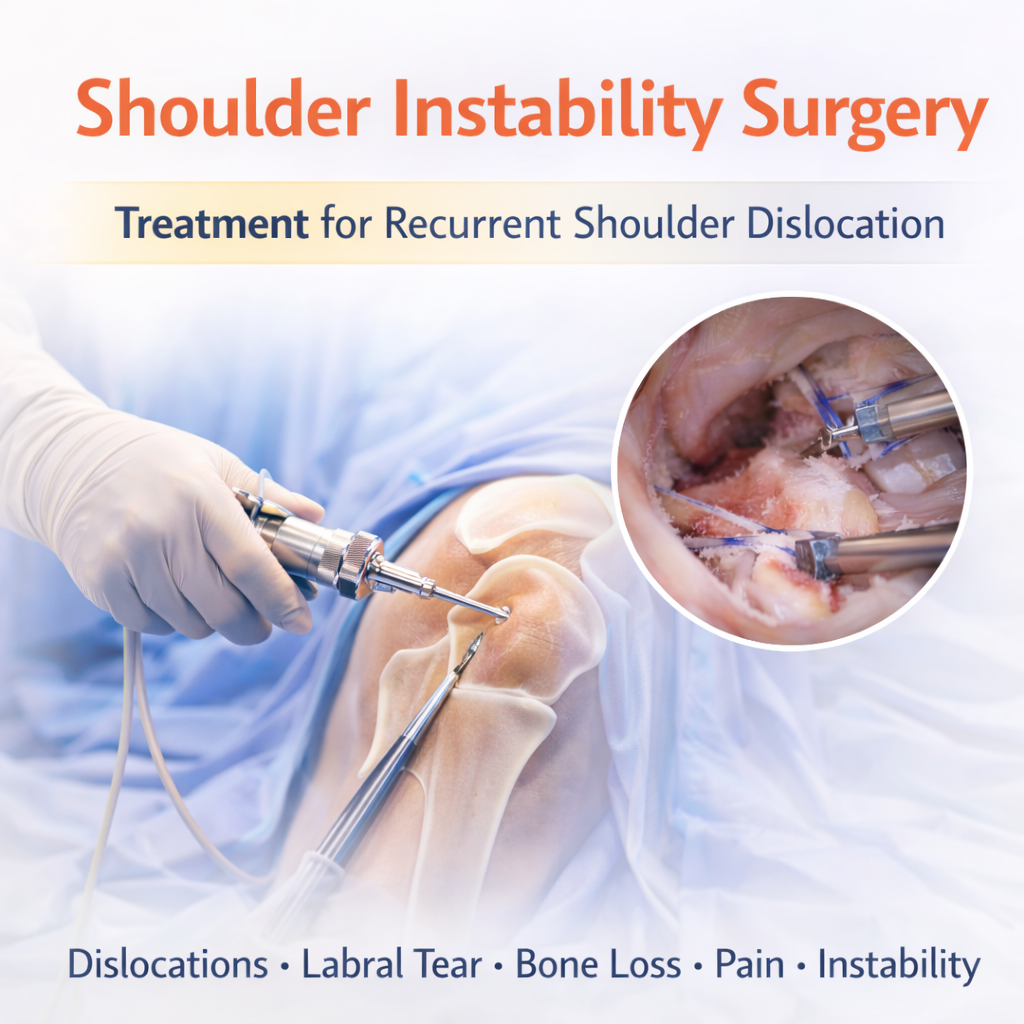
Shoulder Instability Surgery
Shoulder Instability Surgery is performed to restore stability to a shoulder that repeatedly dislocates or feels like it may “slip out” of place. The shoulder joint has the greatest range of motion in the body, making it more prone to instability after trauma or ligament injury.
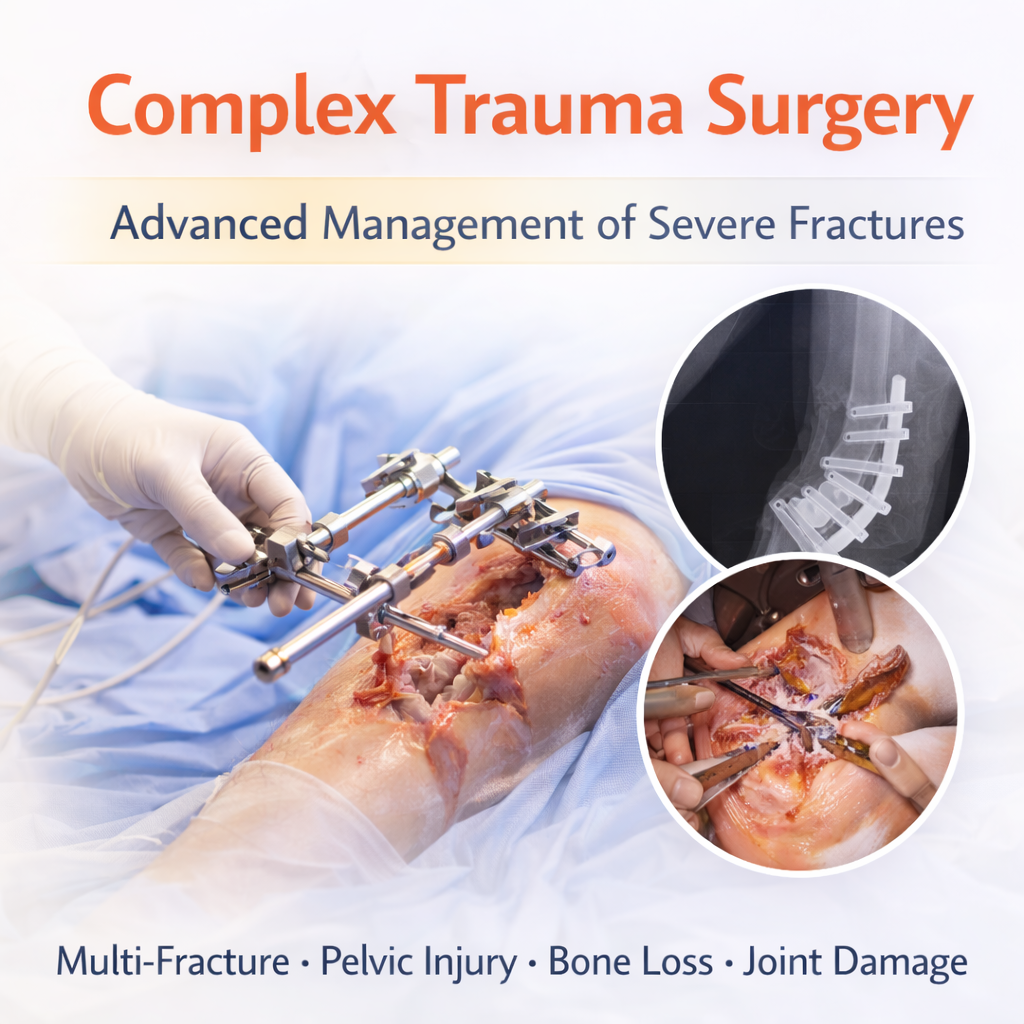
Complex Trauma Surgery
Complex Trauma Surgery focuses on the treatment of severe fractures and multiple injuries resulting from high-impact accidents such as road traffic injuries, falls from height, industrial trauma, and sports injuries.
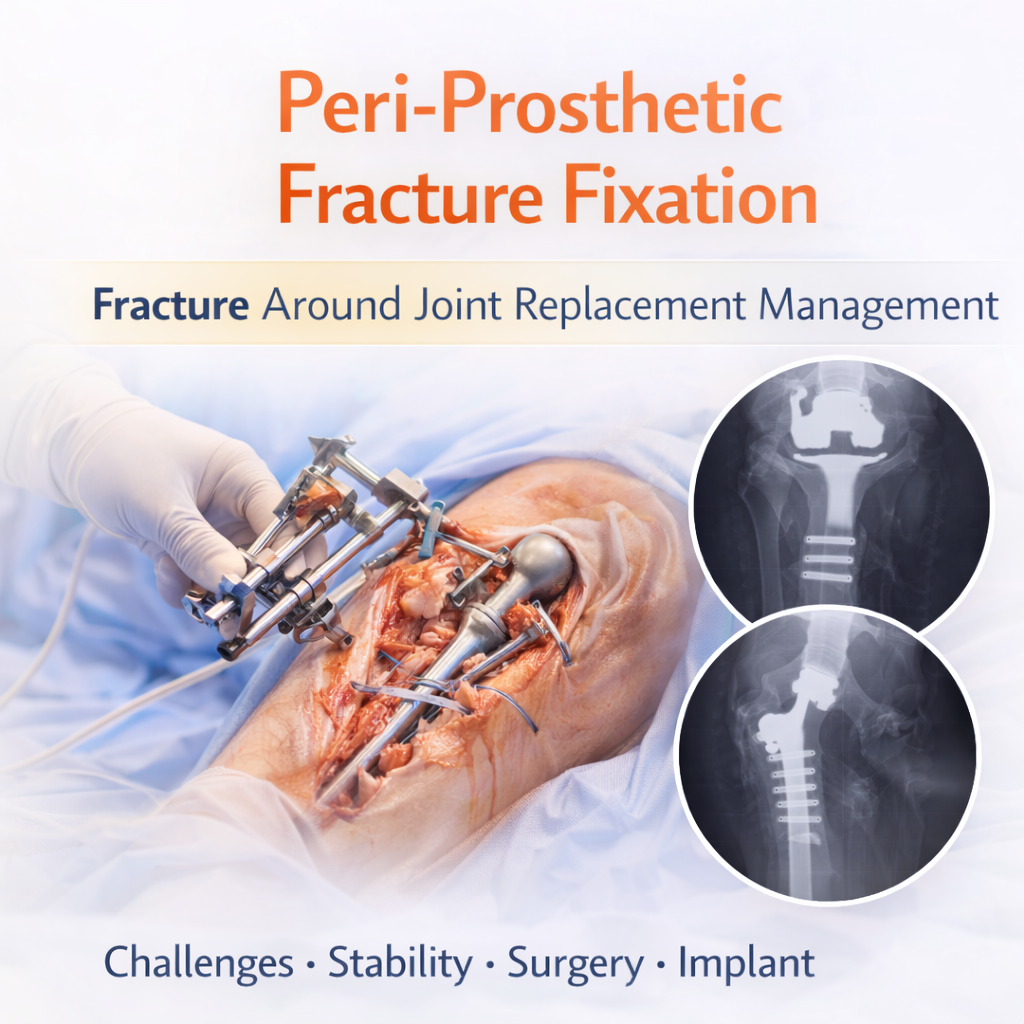
Peri-Prosthetic Fracture Fixation
Recognizing outstanding leadership in advanced healthcare practices and transformative patient care.
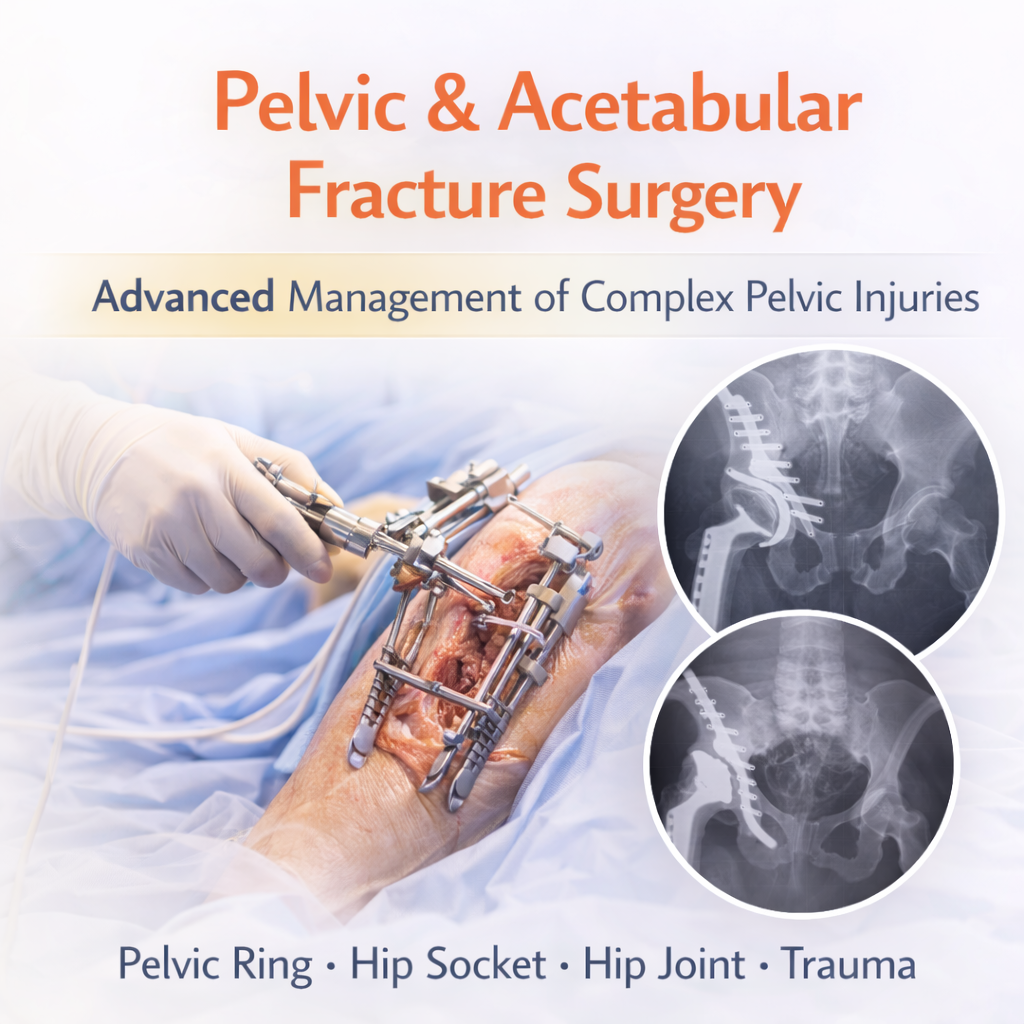
Pelvic & Acetabular Fracture Surgery
Pelvic & Acetabular Fracture Surgery is a highly specialized orthopedic procedure performed to treat complex fractures of the pelvic ring and hip socket (acetabulum).
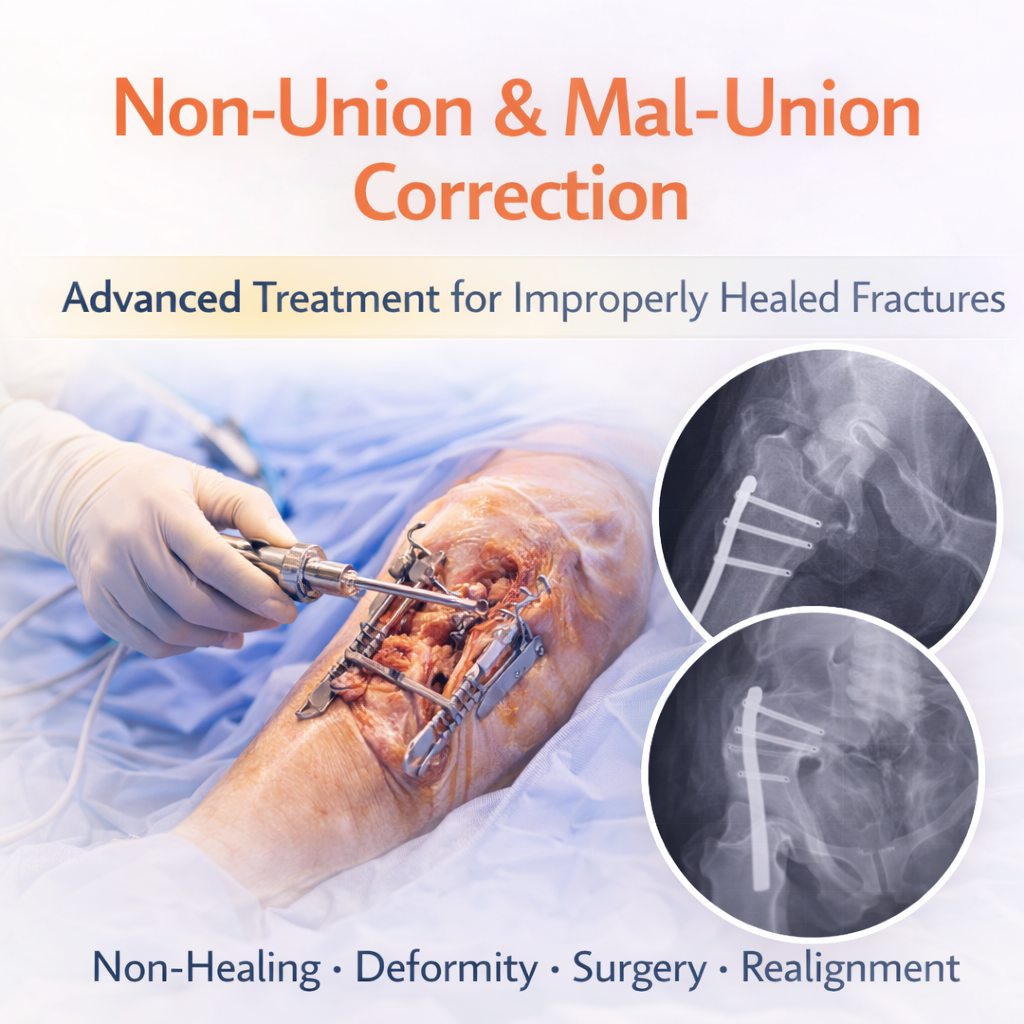
Non-Union & Mal-Union Correction
Non-Union & Mal-Union Correction refers to advanced surgical procedures performed when a fractured bone fails to heal properly or heals in the wrong alignment.
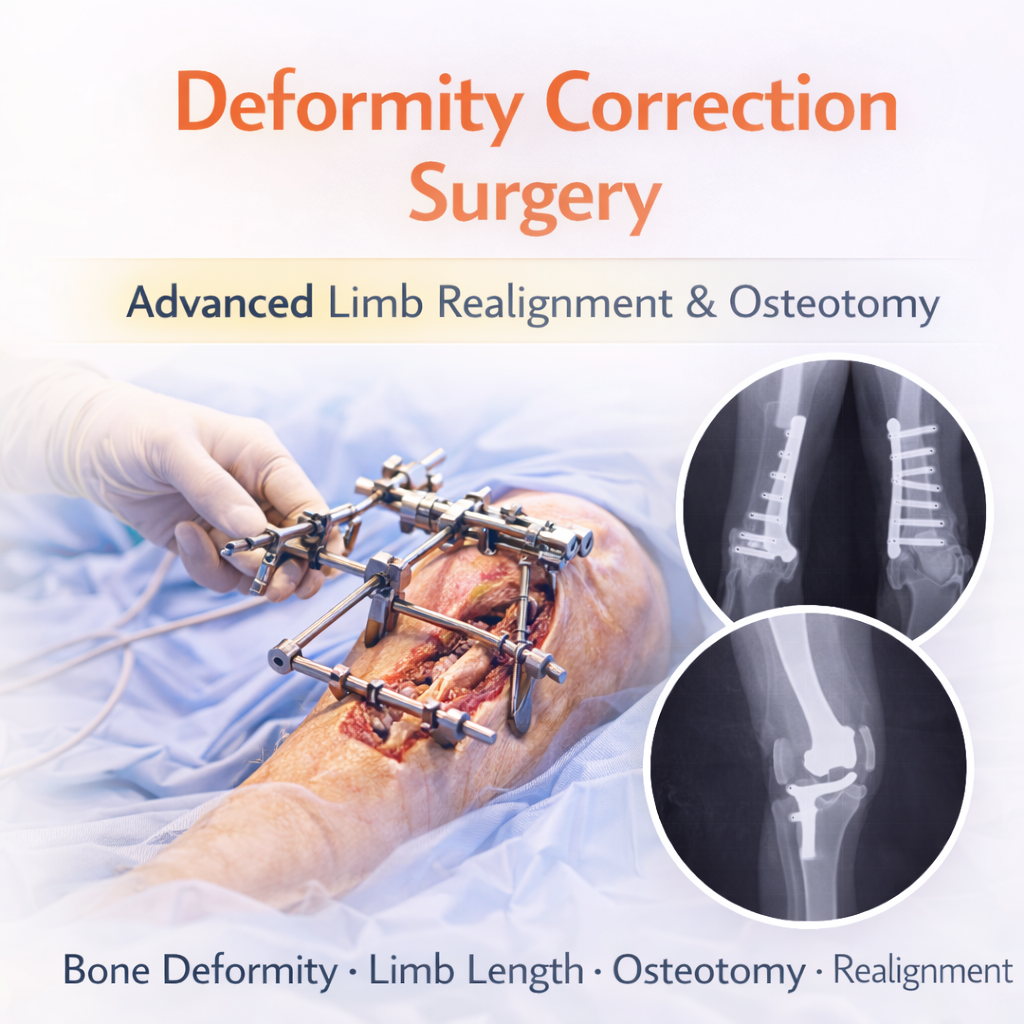
Deformity Correction Surgery
Deformity Correction Surgery is a specialized orthopedic procedure performed to correct abnormal bone alignment caused by congenital conditions, previous fractures, growth disturbances, infection, or mal-union.
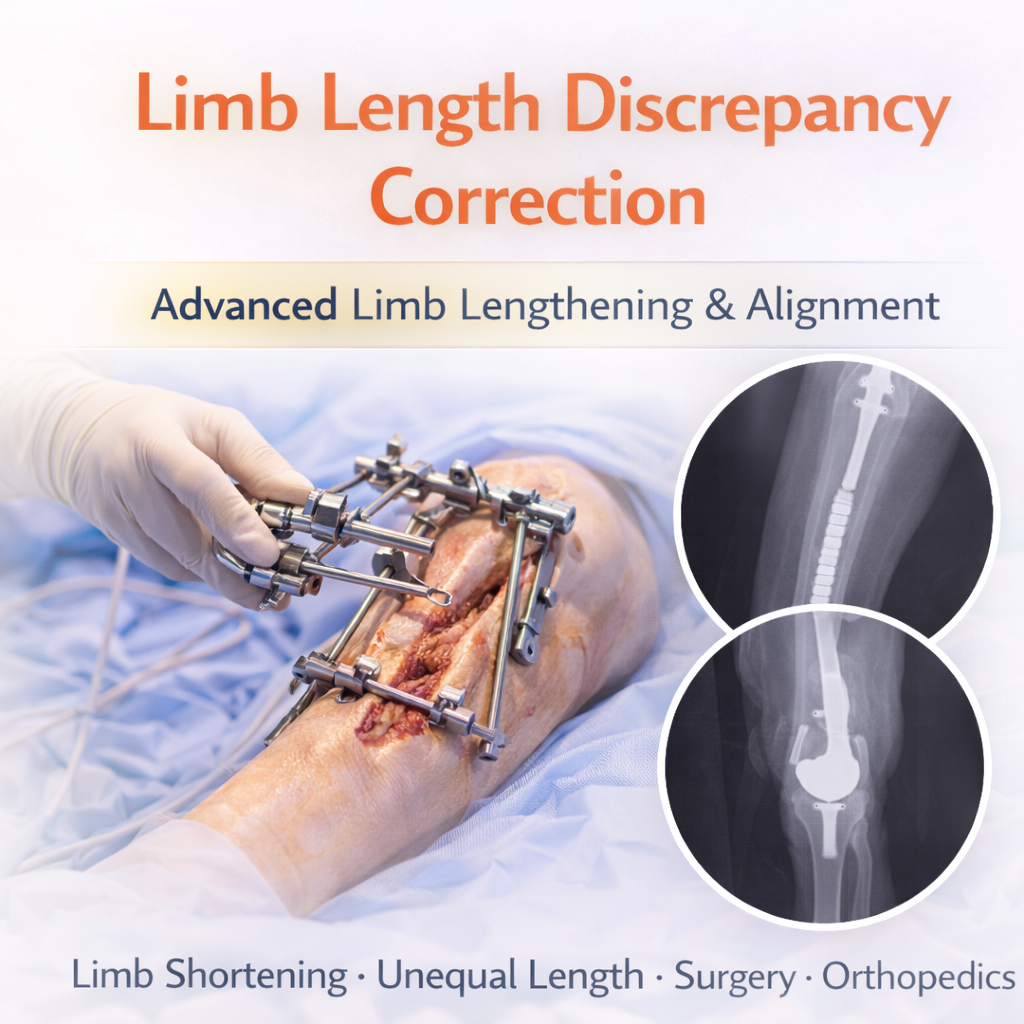
Limb Length Discrepancy Correction
Limb Length Discrepancy (LLD) Correction is a specialized orthopedic procedure performed to correct significant differences in the length of the legs or arms. While small differences are common and often harmless, larger discrepancies can lead to pain, abnormal gait, pelvic tilt, spinal imbalance, and early joint degeneration.
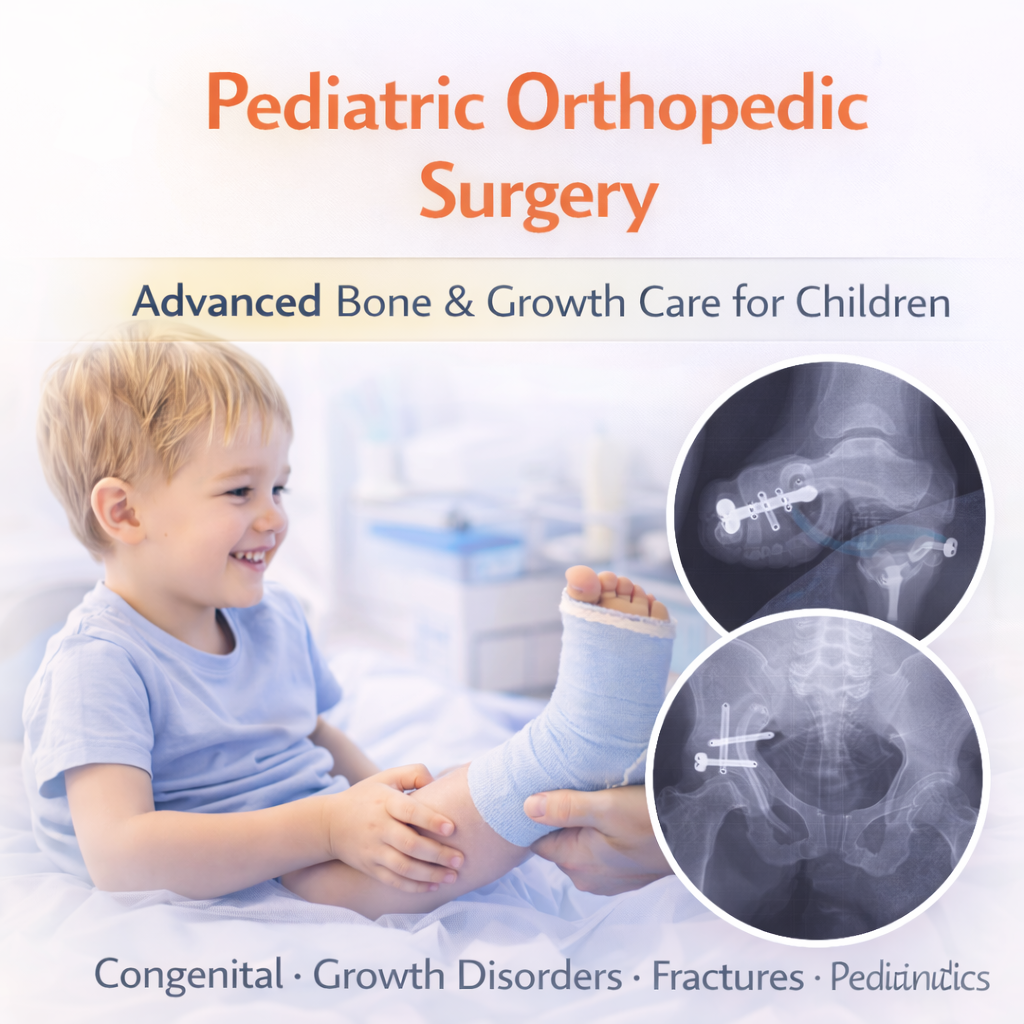
Pediatric Orthopedic Surgery
Pediatric Orthopedic Surgery focuses on the diagnosis and treatment of bone, joint, and muscle conditions in infants, children, and adolescents. Children are not just “small adults” — their growing bones require specialized evaluation and age-appropriate surgical techniques.
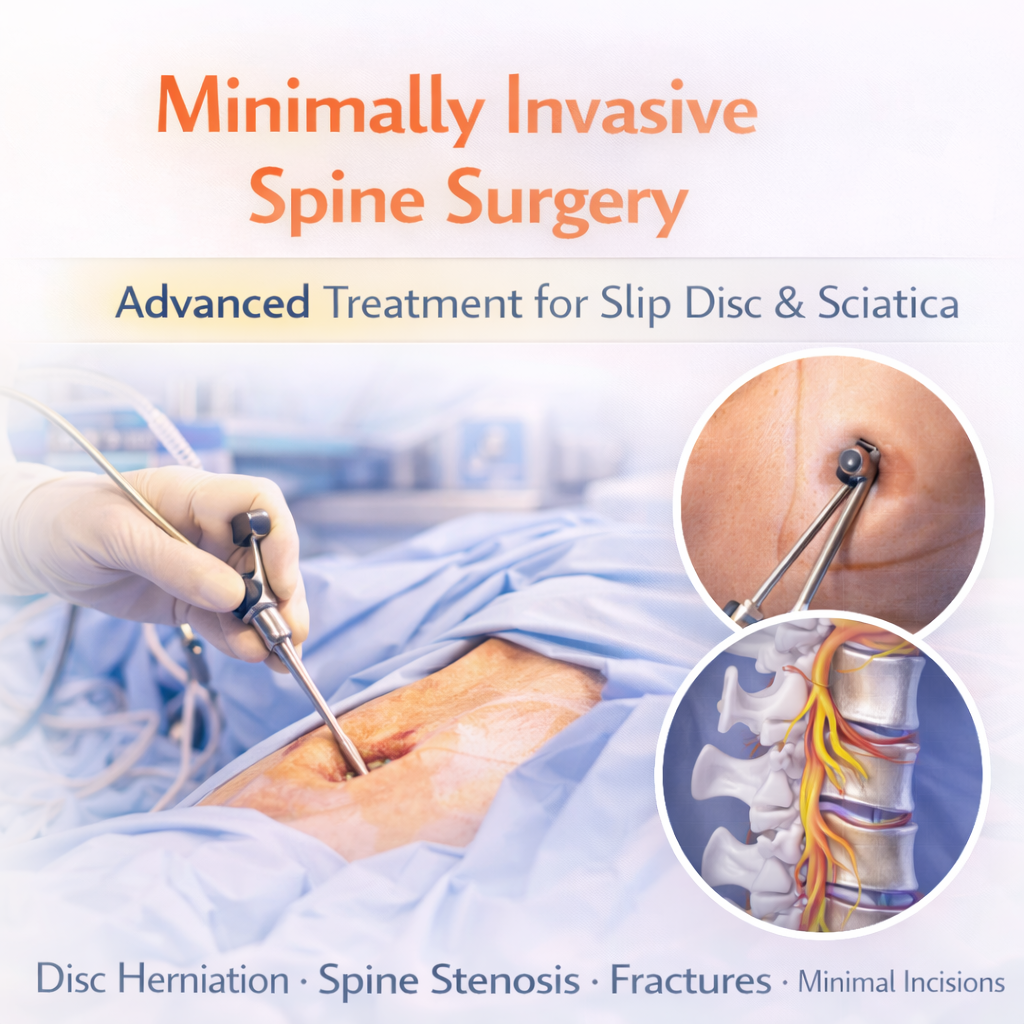
Minimally Invasive Spine Surgery
Minimally Invasive Spine Surgery (MISS) is an advanced surgical technique used to treat spinal conditions through small incisions with minimal muscle damage. Unlike traditional open spine surgery, MISS uses specialized instruments, microscopes, and imaging guidance to access the spine with precision.
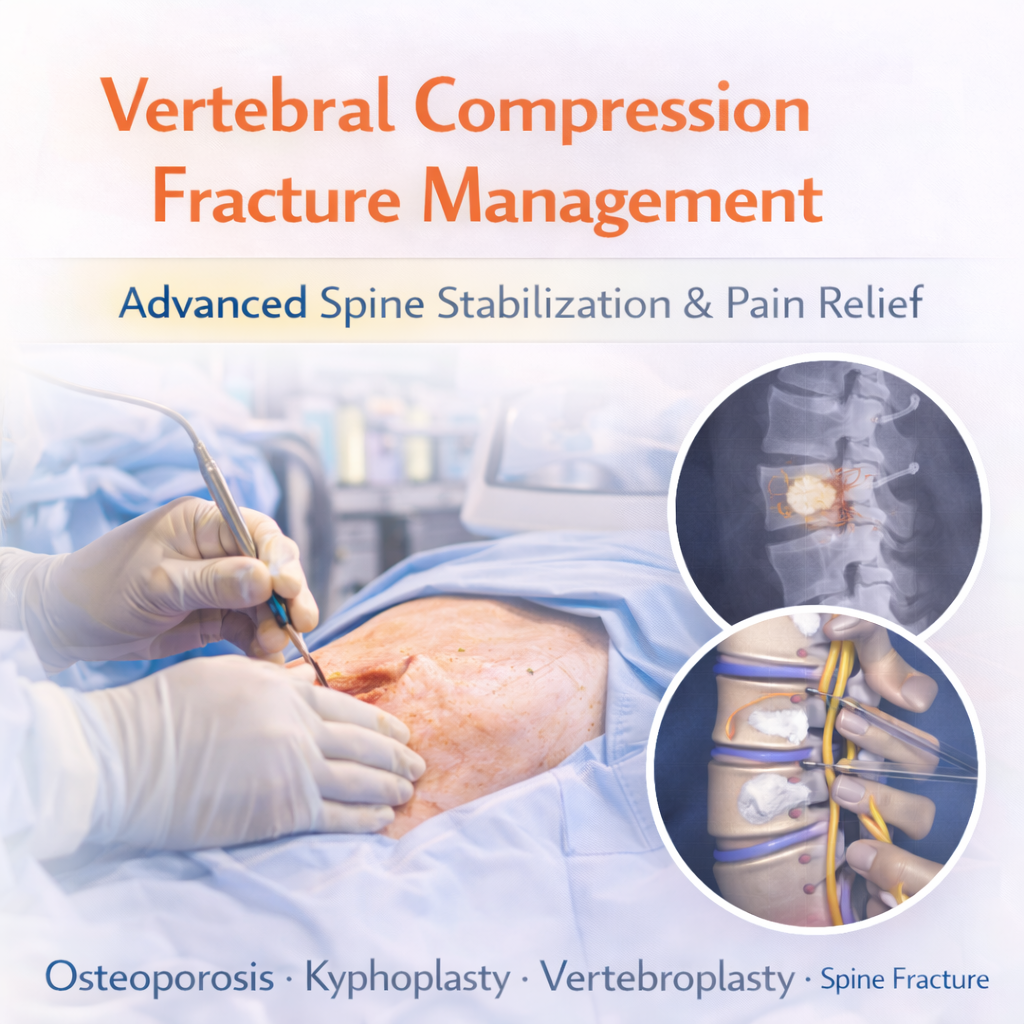
Vertebral Compression Fracture Management
Vertebral Compression Fracture (VCF) Management focuses on treating fractures of the spinal vertebrae, most commonly caused by osteoporosis, trauma, or cancer-related bone weakness. These fractures can lead to severe back pain, reduced mobility, height loss, and spinal deformity (kyphosis).
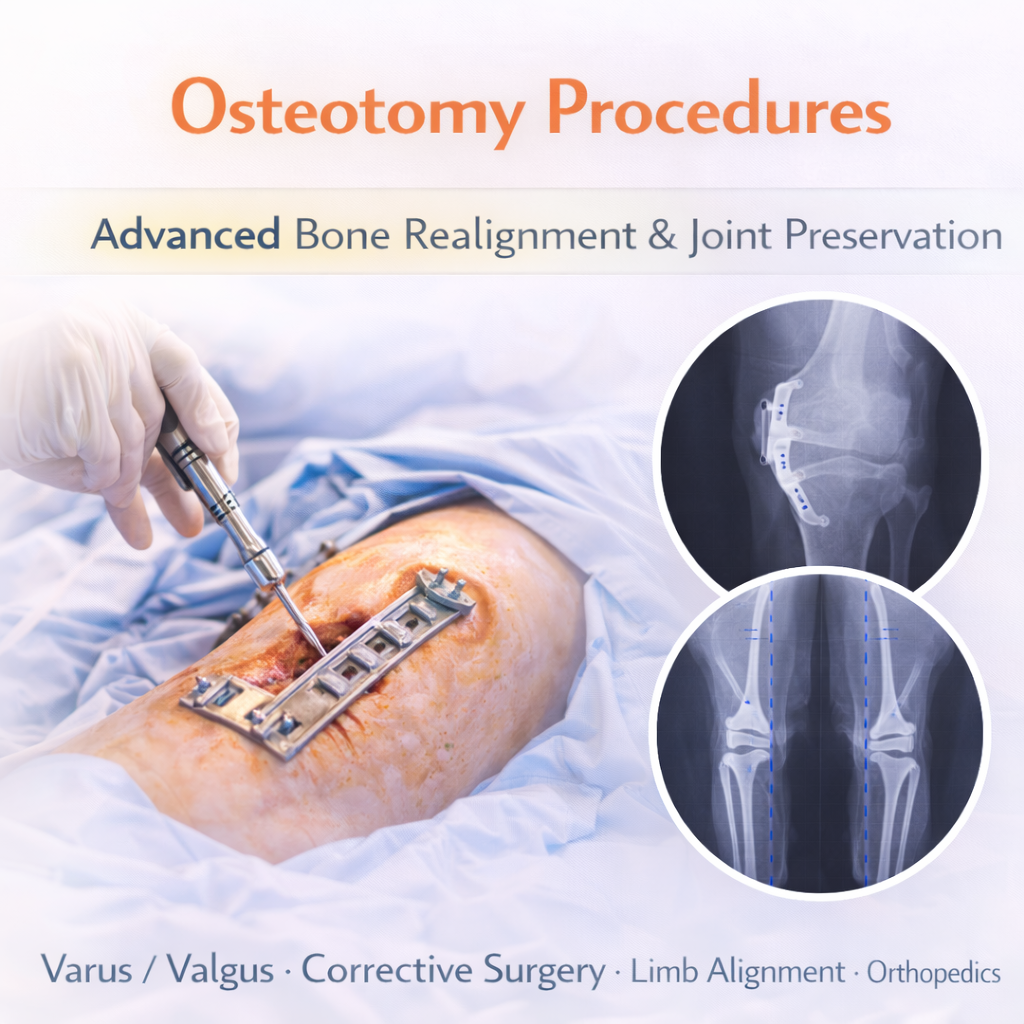
Osteotomy Procedures
Osteotomy Procedures are advanced orthopedic surgeries performed to cut and realign bone in order to correct deformity, relieve pain, and restore joint mechanics. These procedures are commonly used to treat knee, hip, and limb alignment problems, especially in younger and active patients who are not ideal candidates for joint replacement.
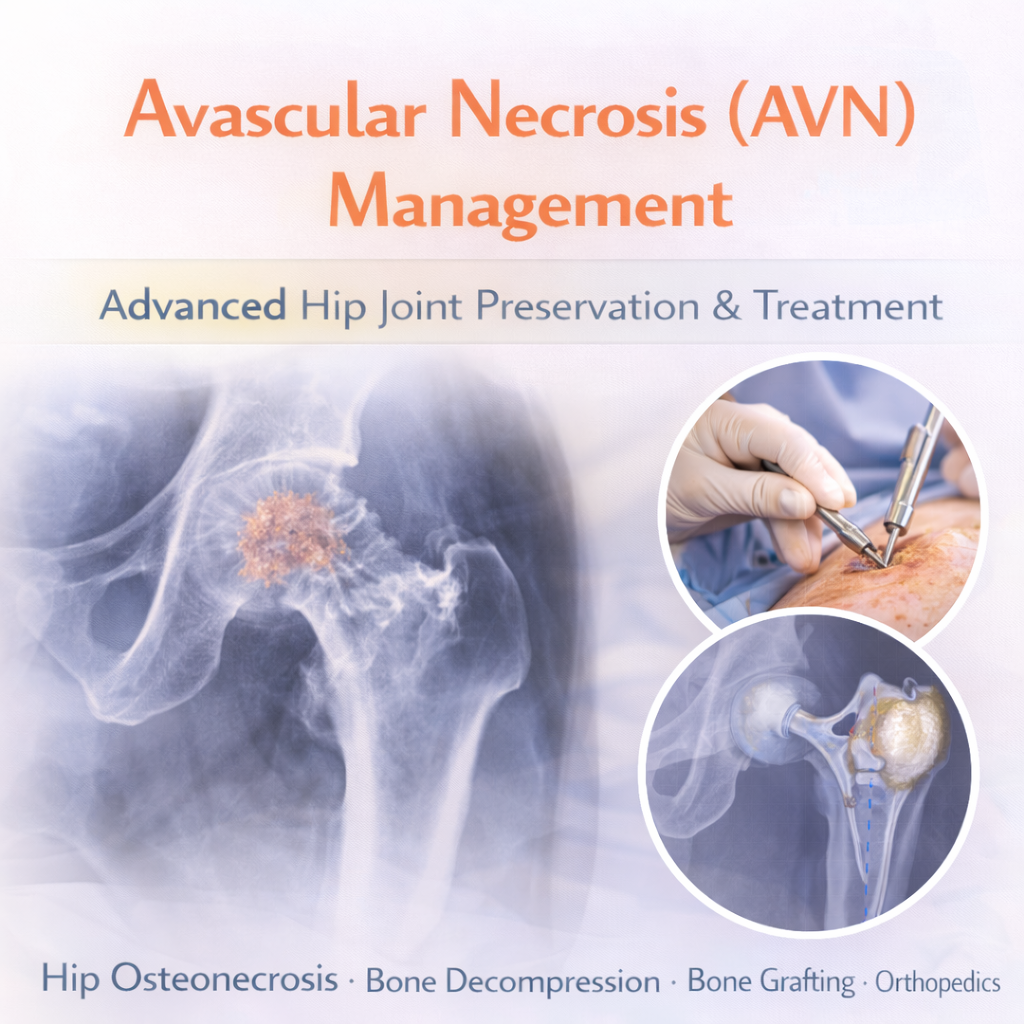
Avascular Necrosis (AVN) Management
Avascular Necrosis (AVN), also known as Osteonecrosis, is a condition where blood supply to a bone is reduced or completely interrupted, leading to bone tissue death. It most commonly affects the hip joint (femoral head) but can also involve the shoulder, knee, or ankle.
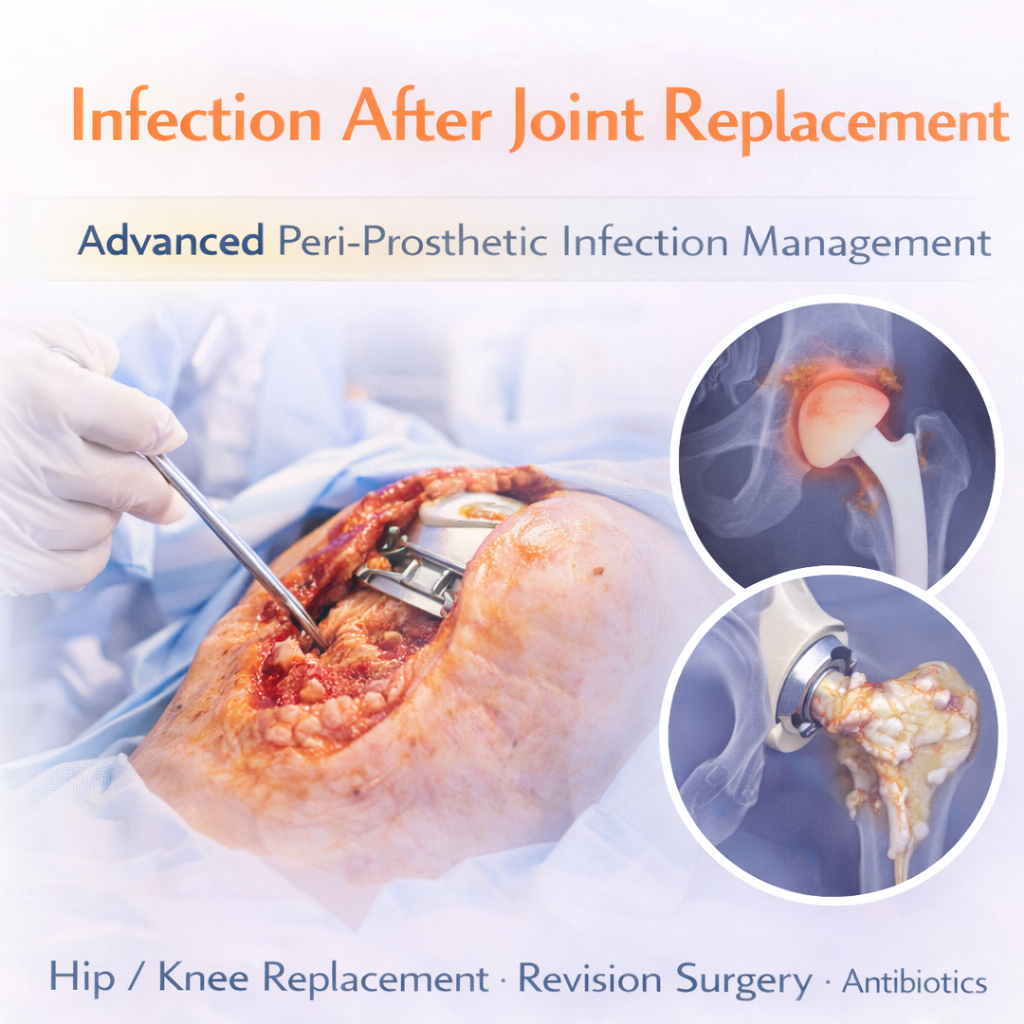
Infection After Joint Replacement
Infection After Joint Replacement (Peri-Prosthetic Joint Infection – PJI) is a serious but treatable complication that can occur after hip or knee replacement surgery. It may develop early (within weeks), delayed (within months), or even years after the procedure.
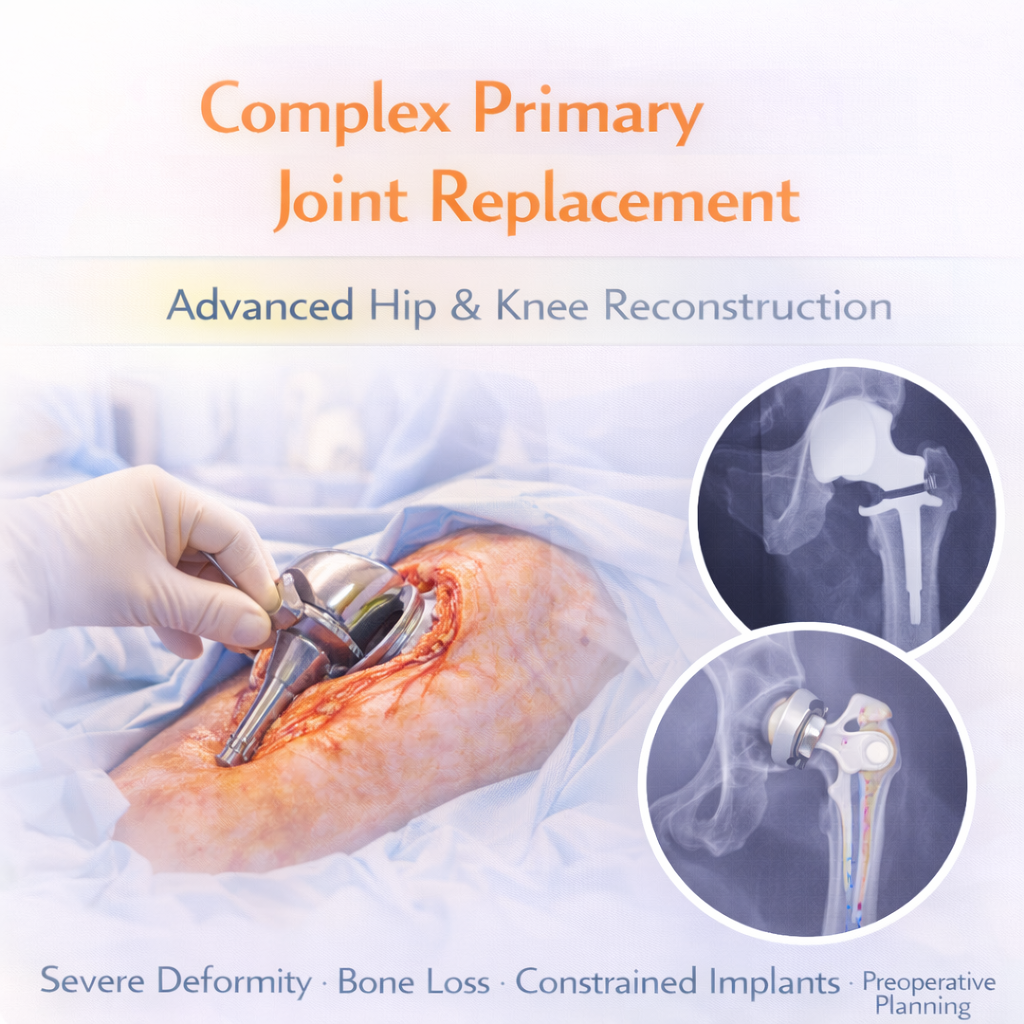
Complex Primary Joint Replacement
Complex Primary Joint Replacement refers to advanced joint replacement surgery performed in patients with severe deformity, bone loss, stiffness, previous trauma, or challenging anatomy — even though it is their first joint replacement.
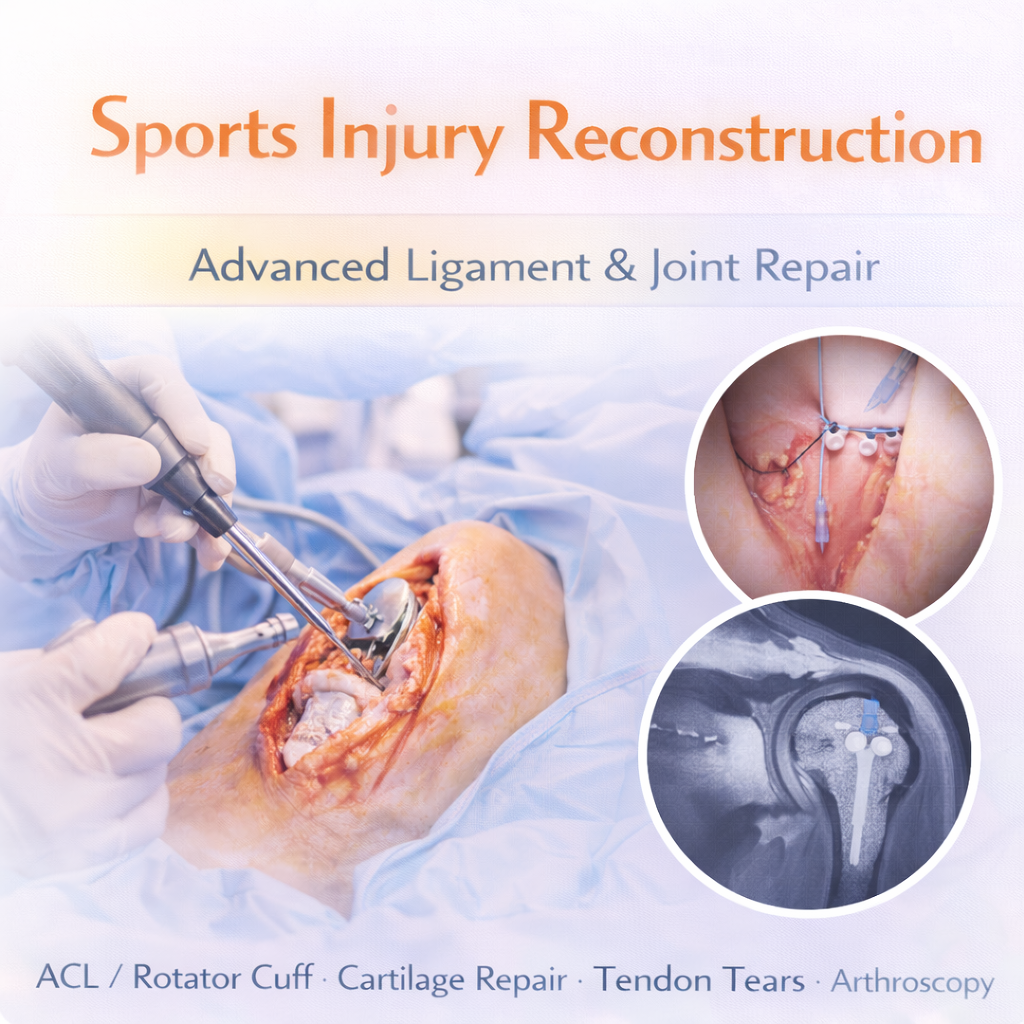
Sports Injury Reconstruction
Sports Injury Reconstruction refers to advanced surgical procedures performed to repair and restore damaged ligaments, tendons, cartilage, and joints caused by sports-related trauma. These injuries are common in athletes and active individuals involved in high-impact or pivoting activities.
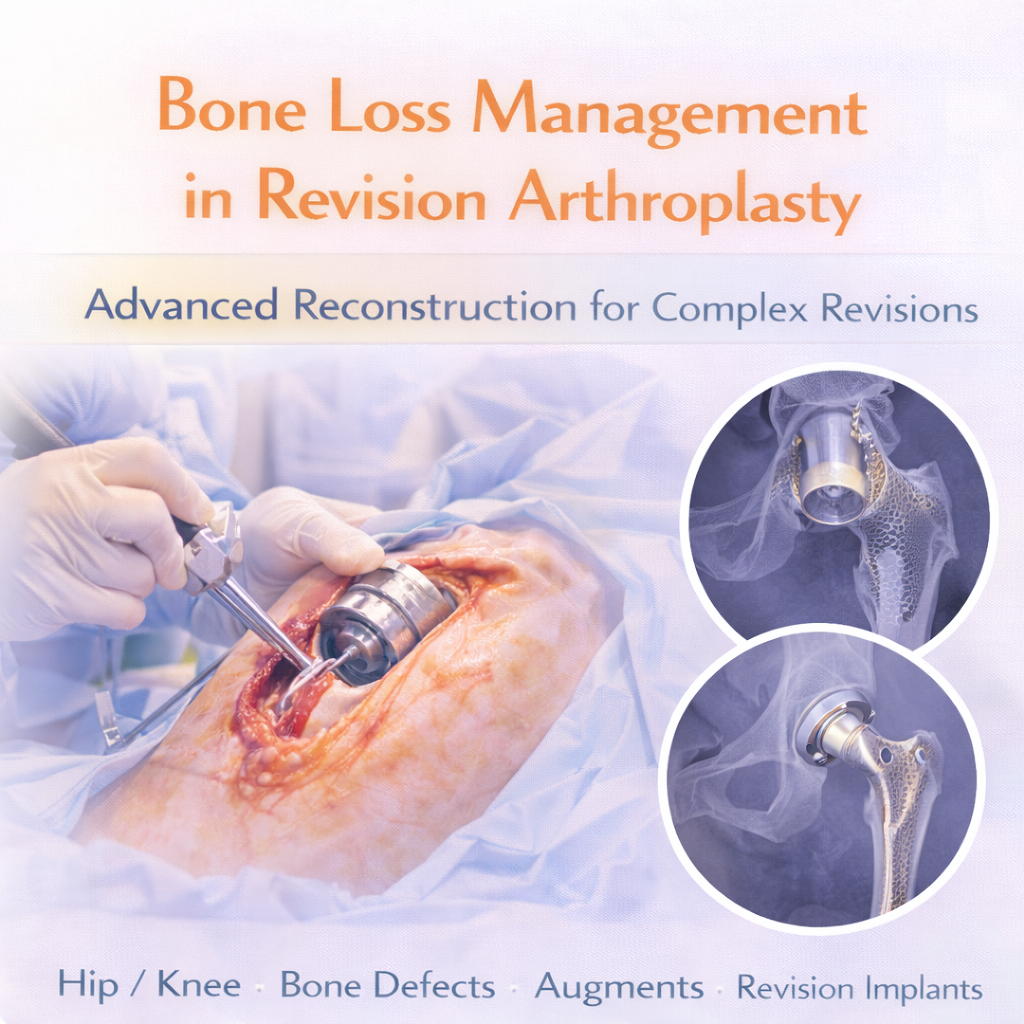
Bone Loss Management in Revision Arthroplasty
Bone Loss Management in Revision Arthroplasty is a highly specialized surgical approach used during revision hip or knee replacement when significant bone deficiency is present. Bone loss may occur due to implant loosening, infection, osteolysis, multiple previous surgeries, or long-standing implant wear.
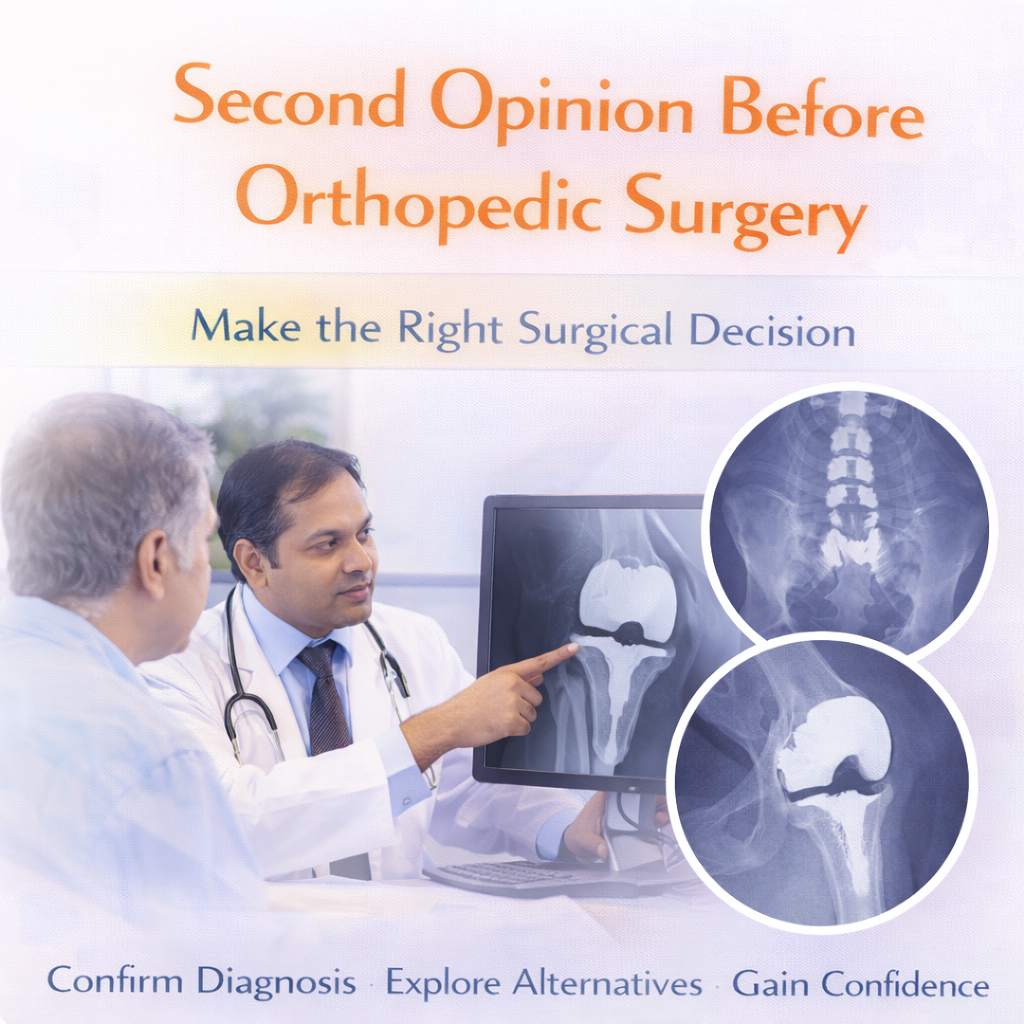
Second Opinion Before Orthopedic Surgery
A Second Opinion Before Orthopedic Surgery allows patients to confirm diagnosis, explore alternative treatments, and ensure that surgery is truly necessary. Orthopedic procedures such as joint replacement, spine surgery, or ligament reconstruction are major decisions — and getting a second expert review can provide clarity and confidence.