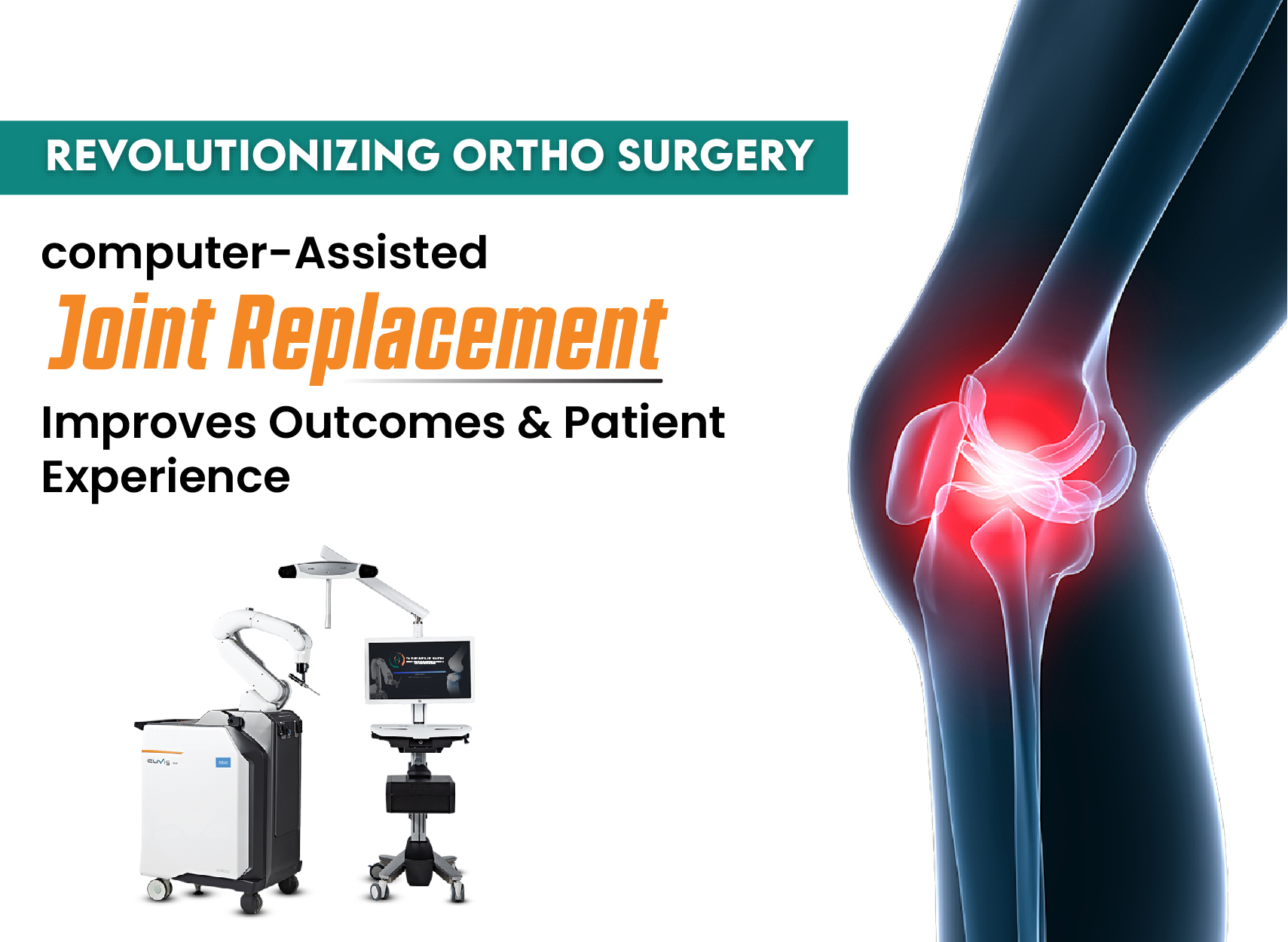
Revolutionizing ortho surgery: computer-assisted joint replacement improves outcomes & patient experience
What are Computer Assisted Joint Replacement Surgeries?
Computer-Assisted Joint Replacement Surgeries (CAJRS) use computer technology to make joint replacement surgeries more accurate and effective. Traditional surgeries depend a lot on the surgeon’s skill and experience, which can cause differences in results. CAJRS helps reduce these differences by giving surgeons detailed, real-time information and precise control during the surgery.
What Are The Benefits of Computer Assisted Joint Replacement Surgeries?
Computer-assisted knee replacement surgery in Champapet, performed by Dr. Balaraju Naidu, has revolutionized orthopedic care, offering numerous benefits in accuracy, and patient satisfaction. Using advanced imaging and real-time navigation, these systems ensure implants are placed and aligned more precisely, leading to better joint function and longer-lasting results. This technology allows Dr. Balaraju Naidu to customize surgeries for each patient, reducing complications and speeding up recovery. As a result, patients experience less pain after surgery and recover more quickly, leading to higher overall satisfaction with the outcomes.
- Enhanced Precision: Advanced imaging and real-time navigation ensure more accurate implant placement and alignment.
- Improved Results: Patients experience better joint function and longer-lasting outcomes. .
- Personalized Care: Dr. Balaraju Naidu customizes surgeries to each patient’s unique anatomy, reducing complications. .
- Faster Recovery: Patients report less pain and quicker recovery times post-surgery. .
- Higher Satisfaction: Overall, patients express higher satisfaction with the surgical outcomes. .
What happens during Computer Assisted Joint Replacement Surgeries?
In computer assisted total knee replacement surgery in hyderabad by Dr. Balaraju Naidu, the procedure closely parallels traditional knee replacement operations, with the added advantage of advanced navigation technology enhancing precision.
Patients undergoing this procedure typically receive either general anesthesia, rendering them unconscious throughout the surgery, or spinal anesthesia, numbing sensation from the waist down. Spinal anesthesia is often supplemented with sedation to maintain relaxation.
The surgical process commences with an incision into the knee joint to access the affected areas, which are then carefully removed and substituted with an implant, also referred to as an artificial knee or prosthesis.
Utilizing the robotic system, the surgeon continuously monitors and guides the movement of the new knee, making real-time adjustments as needed, ensuring optimal alignment and function. Once satisfied, the incision is meticulously closed with stitches.
Following the operation, patients undergo close monitoring to ensure a smooth recovery process. Subsequently, they are transferred to the recovery ward to commence post-operative rehabilitation.
What Are the Risks of Robotic Computer Assistance?
While computer assisted knee replacement surgery can offer numerous benefits, it’s important to acknowledge potential risks associated with the technology, especially for computer-assisted joint replacement surgeons. These risks include:
- Prolonged Surgery: Both computer-assisted and robotic-assisted surgeries may take longer than traditional procedures, increasing the duration the patient is under aesthesia, which poses potential risks.
- Mechanical Failures: Introducing robotic technology adds complexity to the surgical process, heightening the risk of mechanical failures. Components such as the camera, robotic arm, lens, or energy sources could malfunction during the surgery.
- Training Challenges: Surgeons require thorough training to master the use of computer-assisted and robotic systems effectively. A robust and consistent training program is essential to ensure surgeons are proficient with the equipment and technology.
Acknowledging these risks, computer assisted total knee arthroplasty, especially those specializing in computer assisted total knee replacement surgery like Dr. Balaraju Naidu , must prioritize patient safety and undergo continuous training to navigate the complexities associated with robotic technology. Effective communication with patients regarding potential risks and benefits is essential in making informed decisions about treatment options.
What Is the Recovery Like?
The recovery process following robotic-assisted knee replacement surgery, like its traditional counterpart, involves several stages:
- Immediate Postoperative Period: Patients are closely monitored for complications and pain management immediately after robotic-assisted knee replacement surgery.
- Hospital Stay: Patients typically stay in the hospital for a few days for initial recovery and physical therapy following robotic-assisted knee replacement.
- Early Rehabilitation: Physical therapy begins at home or in a rehabilitation facility to improve mobility and strength in the replaced knee.
- Gradual Return to Activities: Patients gradually increase activity level under guidance, starting with walking aids and progressing to daily tasks, post robotic-assisted knee replacement.
- Long-Term Rehabilitation: Rehabilitation continues for several months, focusing on improving range of motion and strength in the replaced knee, aided by robotic assistance.
- Monitoring and Follow-Up: Regular follow-up appointments with the surgeon monitor progress and address any concerns specific to robotic-assisted knee replacement recovery.
- Return to Normal Activities: Most patients can return to light activities within a few weeks, with full recovery taking several months, supported by the precision and benefits of robotic-assisted knee replacement surgery.
Following the exercises and advice given by Dr. Balaraju Naidu after computer assisted total knee replacement surgery in Hyderabad is really important. These exercises and tips help your knee heal well and work better. Also, eating healthy, staying active, and keeping your weight in check are important for your knee to stay strong and pain-free in the long run. By listening to Dr. Balaraju Naidu and taking care of yourself, you can recover well and enjoy moving around comfortably after surgery.
Conclusion:
Dr. Balaraju Naidu and his team of computer assisted total knee replacement surgery based in Champapet, Hyderabad. They use advanced technology to make joint surgeries more precise and effective, helping patients recover faster and with less pain. Following Dr. Naidu’s advice after surgery is really important to make sure everything goes smoothly. With their help and the use of computers, people having these surgeries can get back to moving comfortably and enjoying life sooner.