

Osteotomy Procedures
Osteotomy Procedures
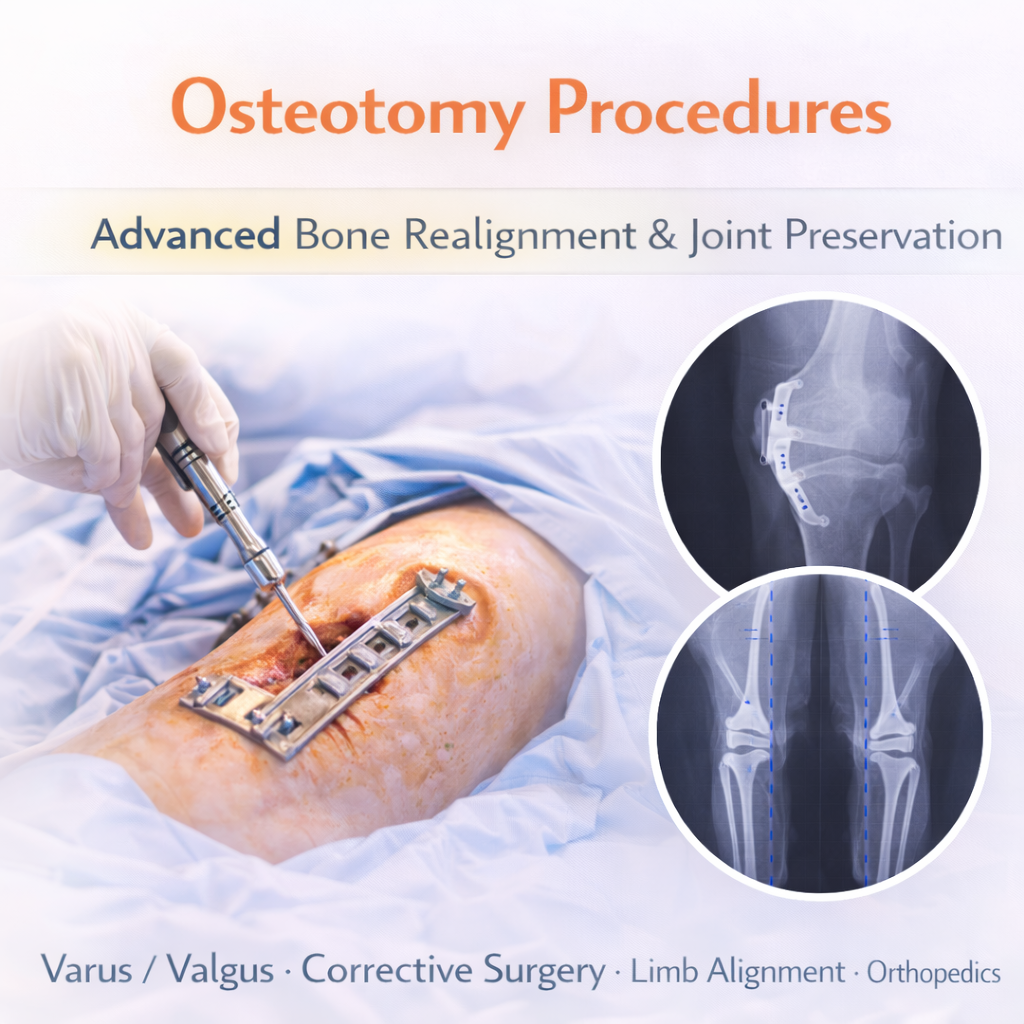
Overview
Osteotomy Procedures are advanced orthopedic surgeries performed to cut and realign bone in order to correct deformity, relieve pain, and restore joint mechanics. These procedures are commonly used to treat knee, hip, and limb alignment problems, especially in younger and active patients who are not ideal candidates for joint replacement.
By correcting alignment, osteotomy redistributes weight-bearing forces and can delay or prevent arthritis progression.
What Is an Osteotomy?
Osteotomy means “bone cutting.” During the procedure:
The bone is carefully cut
The alignment is corrected
The bone is stabilized using plates, screws, or nails
It is commonly performed around:
Knee (High Tibial Osteotomy – HTO)
Femur
Hip
Tibia
Forearm
When Is Osteotomy Recommended?
Bow legs (Varus deformity)
Knock knees (Valgus deformity)
Early knee arthritis in younger patients
Mal-union after fracture
Limb length issues
Joint overload due to misalignment
Early correction protects joint cartilage and improves long-term outcomes.
Types of Osteotomy
1️⃣ High Tibial Osteotomy (HTO)
Used for early medial compartment knee arthritis.
2️⃣ Distal Femoral Osteotomy
Corrects valgus knee deformity.
3️⃣ Periacetabular Osteotomy
Used for hip dysplasia.
4️⃣ Corrective Osteotomy After Mal-Union
Restores proper alignment after improperly healed fractures.
Benefits of Osteotomy
✅ Preserves natural joint
✅ Delays joint replacement
✅ Corrects deformity
✅ Reduces pain
✅ Improves joint function
✅ Ideal for active younger patients
Recovery & Rehabilitation
Partial weight bearing initially
Bone healing monitored via X-rays
Physiotherapy for strength and balance
Gradual return to activity
Recovery time depends on the correction magnitude and location.