

Infection After Joint Replacement
Infection After Joint Replacement
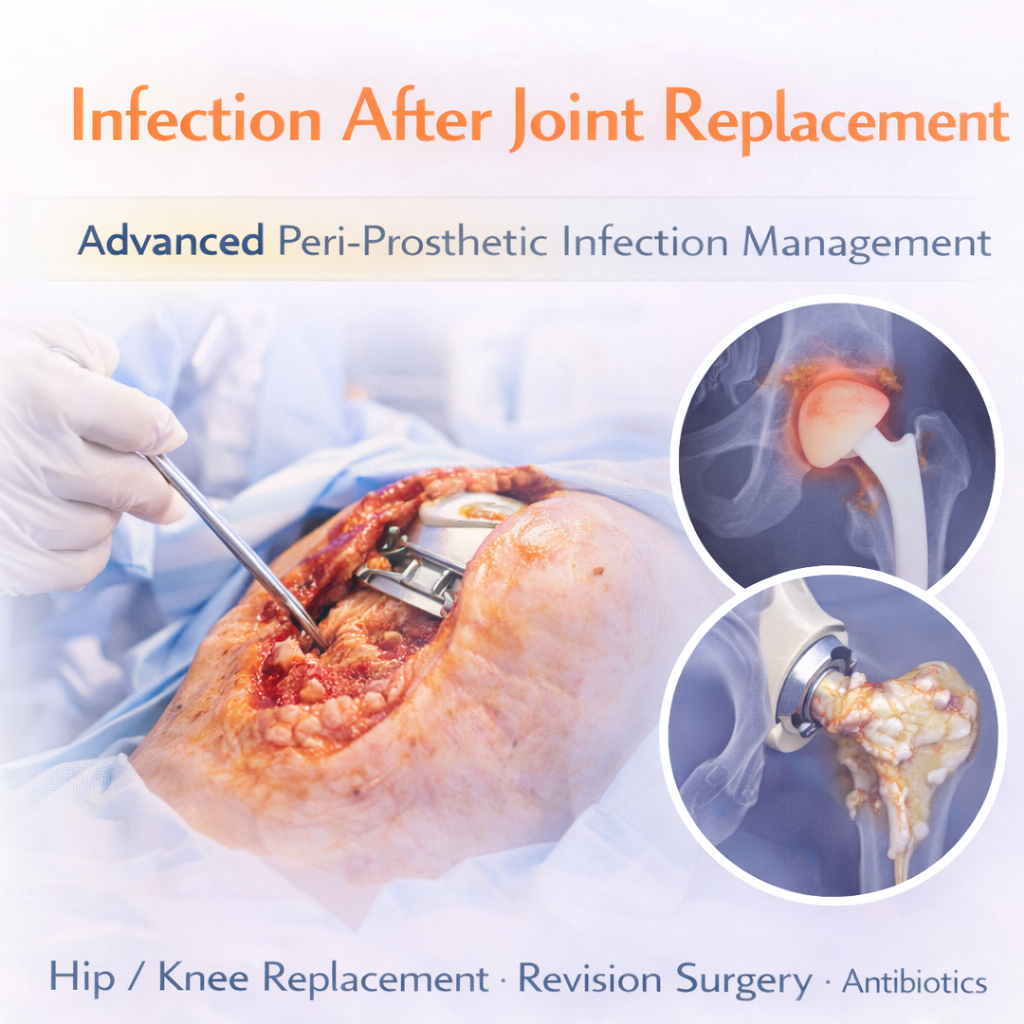
Overview
Infection After Joint Replacement (Peri-Prosthetic Joint Infection – PJI) is a serious but treatable complication that can occur after hip or knee replacement surgery. It may develop early (within weeks), delayed (within months), or even years after the procedure.
Early diagnosis and expert management are critical to preserve the implant, control infection, and restore joint function.
What Is a Peri-Prosthetic Joint Infection (PJI)?
PJI occurs when bacteria infect the tissues around an artificial joint implant. The infection can affect:
Soft tissues
Bone
Implant surface
Common causes include:
Surgical site contamination
Bloodstream infection
Poor wound healing
Diabetes or weakened immunity
Symptoms of Joint Replacement Infection
Persistent joint pain
Swelling and redness
Fever
Wound discharge
Stiffness
Implant loosening
Difficulty walking
Any persistent pain after joint replacement must be evaluated.
Diagnosis
Blood tests (CRP, ESR)
Joint fluid analysis
X-rays
Advanced imaging
Culture and sensitivity tests
Accurate diagnosis determines treatment strategy.
Treatment Options
1️⃣ Early Infection – Implant Retention
Surgical wash (Debridement)
Antibiotics
Exchange of polyethylene liner
Possible if detected early.
2️⃣ One-Stage Revision Surgery
Removal of infected implant and placement of new implant in the same surgery.
3️⃣ Two-Stage Revision (Gold Standard for Chronic Infection)
Removal of infected implant
Placement of antibiotic spacer
Long-term antibiotics
Re-implantation after infection control
4️⃣ Long-Term Suppression Therapy
For selected high-risk patients.
Challenges in Infection Management
Biofilm formation on implants
Bone loss
Multiple previous surgeries
Antibiotic resistance
Poor soft tissue condition
These cases require specialized revision expertise.
Benefits of Expert Infection Management
✅ Eradicates infection
✅ Restores joint stability
✅ Preserves limb function
✅ Reduces recurrence risk
✅ Improves quality of life
Recovery & Rehabilitation
Extended antibiotic therapy
Gradual mobilization
Regular infection monitoring
Structured physiotherapy
Strict follow-up is essential to prevent recurrence.