

Vertebral Compression Fracture Management
Vertebral Compression Fracture Management
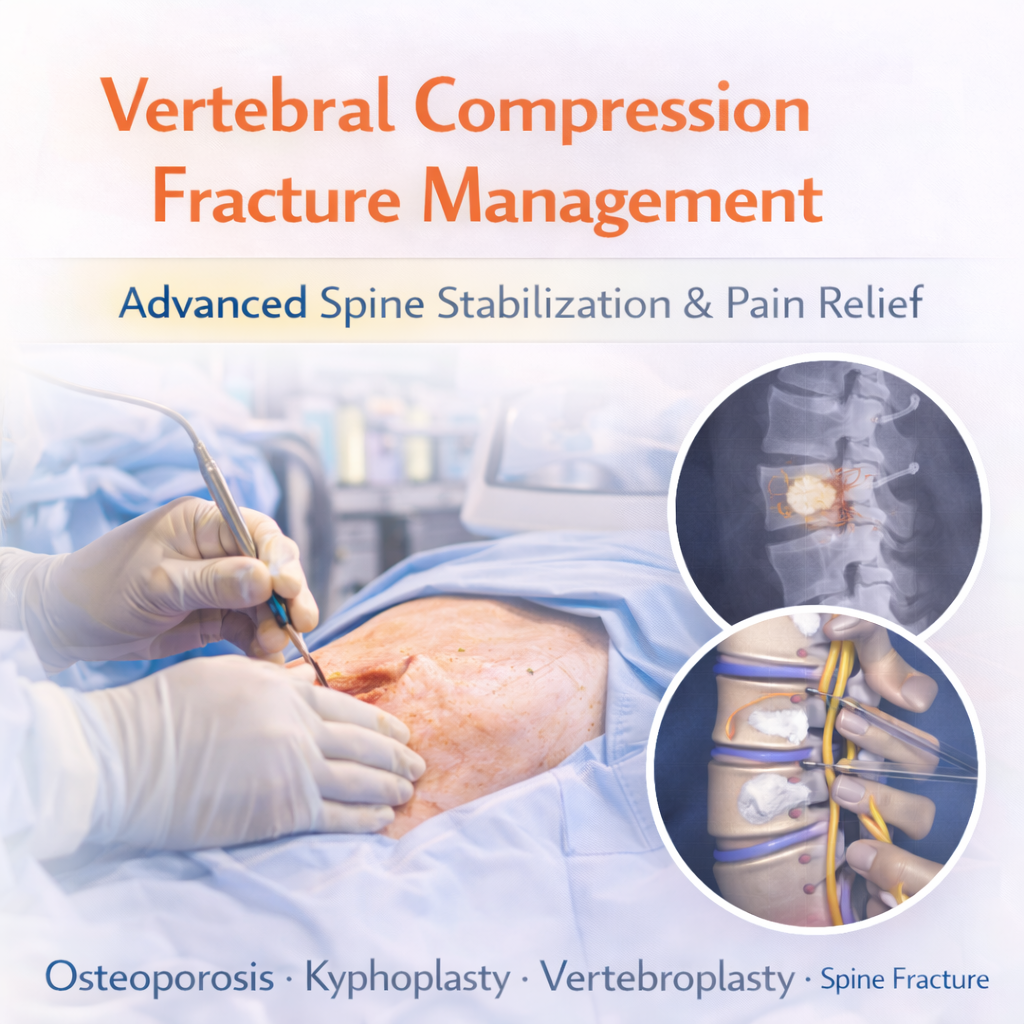
Overview
Vertebral Compression Fracture (VCF) Management focuses on treating fractures of the spinal vertebrae, most commonly caused by osteoporosis, trauma, or cancer-related bone weakness. These fractures can lead to severe back pain, reduced mobility, height loss, and spinal deformity (kyphosis).
Early diagnosis and appropriate management prevent long-term complications and improve quality of life.
What Is a Vertebral Compression Fracture?
A vertebral compression fracture occurs when a spinal bone collapses or cracks due to weakened bone structure.
Common causes include:
Osteoporosis (most common)
Fall or minor trauma in elderly
Road traffic accidents
Tumor-related bone weakness
Long-term steroid use
Symptoms may include:
Sudden severe back pain
Pain worsening on standing or walking
Height loss
Forward bending posture
Limited mobility
Treatment Options
1️⃣ Conservative Management
Pain medications
Back brace
Activity modification
Osteoporosis treatment
Suitable for stable fractures.
2️⃣ Vertebroplasty
Minimally invasive injection of bone cement into the fractured vertebra to stabilize it.
3️⃣ Kyphoplasty
Balloon-assisted technique to restore vertebral height before cement injection.
4️⃣ Surgical Stabilization
For unstable fractures or neurological compromise.
When Is Intervention Required?
Persistent severe pain
Fracture causing deformity
Progressive collapse
Nerve compression
Failure of conservative treatment
Timely treatment prevents chronic pain and spinal deformity.
Benefits of Advanced VCF Management
✅ Immediate pain relief (vertebroplasty/kyphoplasty)
✅ Improved mobility
✅ Stabilizes spine
✅ Prevents further collapse
✅ Corrects deformity
✅ Short hospital stay
Recovery & Rehabilitation
Early mobilization
Osteoporosis management
Physiotherapy for posture and strength
Regular bone health monitoring
Managing underlying osteoporosis is critical to prevent future fractures.