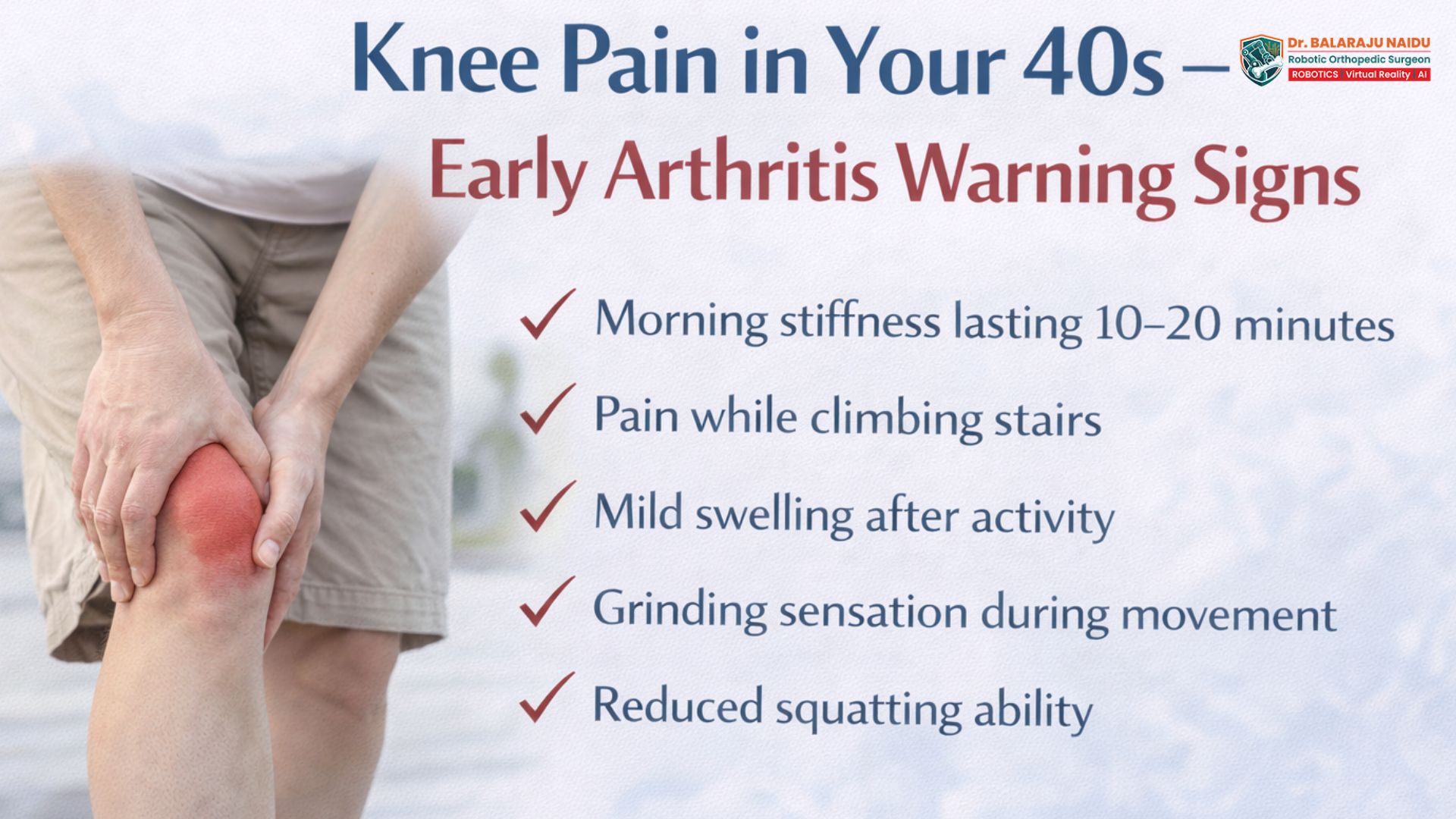
Knee Pain in Your 40s – Early Arthritis Warning Signs
Many people assume knee pain is a problem that occurs only in old age. However, an increasing number of individuals in their 40s are experiencing persistent knee discomfort.
Sedentary lifestyles, obesity, previous sports injuries, and prolonged sitting have significantly increased the risk of early joint degeneration. What may begin as mild discomfort can sometimes be the early stage of Osteoarthritis.
Recognizing early warning signs allows timely intervention and helps protect the joint before significant cartilage damage occurs.
Why Knee Pain in the 40s Is Becoming More Common
Several modern lifestyle factors contribute to early joint problems.
Common causes include:
Sedentary work and prolonged sitting
Lack of regular physical activity
Excess body weight
Previous knee injuries
Weak thigh muscles
Vitamin D deficiency
Repetitive strain from sports or occupational activities
These factors increase stress on the knee joint and gradually wear down the cartilage that cushions the bones.
Early Warning Signs of Knee Arthritis
Early osteoarthritis may present with subtle symptoms that people often ignore.
1️⃣ Morning Stiffness
Many patients notice stiffness in the knee after waking up.
This stiffness usually lasts 10–20 minutes and improves with movement.
2️⃣ Pain While Climbing Stairs
Climbing stairs places higher load on the knee joint.
Early cartilage damage often causes discomfort during this activity.
3️⃣ Mild Swelling After Activity
Inflammation inside the joint may lead to mild swelling after prolonged walking, exercise, or standing.
4️⃣ Grinding or Clicking Sensation
Some patients experience a grinding or crackling sensation while bending the knee.
This occurs when cartilage begins to wear down.
5️⃣ Reduced Ability to Squat or Sit Cross-Legged
Loss of joint flexibility and discomfort during deep bending movements can indicate early cartilage damage.
Why Early Detection Matters
Cartilage damage in osteoarthritis is progressive.
Once advanced cartilage loss occurs, it cannot be fully restored.
However, early-stage arthritis can often be managed effectively with lifestyle changes and targeted treatment.
Early intervention helps:
Reduce pain
Slow cartilage degeneration
Improve joint function
Delay or avoid surgery
Ignoring symptoms may allow the disease to progress to advanced arthritis.
Preventive Strategies to Protect Your Knee Joint
Taking proactive measures can significantly reduce the progression of early arthritis.
Maintain a Healthy Body Weight
Excess body weight increases stress on the knee joint.
Even small weight loss can significantly reduce joint pressure.
Strengthen the Quadriceps Muscles
Strong thigh muscles support the knee joint and improve stability.
Exercises such as:
Straight leg raises
Wall squats
Step-ups
can improve joint function.
Correct Vitamin Deficiencies
Vitamin D and calcium deficiencies affect bone health and joint function.
Regular screening and supplementation may be required.
Avoid Repetitive High-Impact Activities
Activities such as running on hard surfaces or excessive jumping may accelerate cartilage wear.
Low-impact exercises like cycling and swimming are safer alternatives.
Seek Early Orthopedic Consultation
Persistent knee pain should not be ignored.
Early evaluation allows doctors to identify underlying problems and recommend appropriate treatment.
When Should You See a Doctor?
Consult an orthopedic specialist if you experience:
Persistent knee pain lasting several weeks
Swelling or stiffness in the joint
Difficulty climbing stairs
Reduced knee mobility
Pain interfering with daily activities
Early medical evaluation helps prevent progression of arthritis.
Final Thought
Knee pain in your 40s should not be dismissed as “normal aging.”
It is often an early warning sign of joint degeneration.
Taking action early with lifestyle modification, strengthening exercises, and medical guidance can protect your knees and maintain long-term mobility.
Your joints will thank you later.