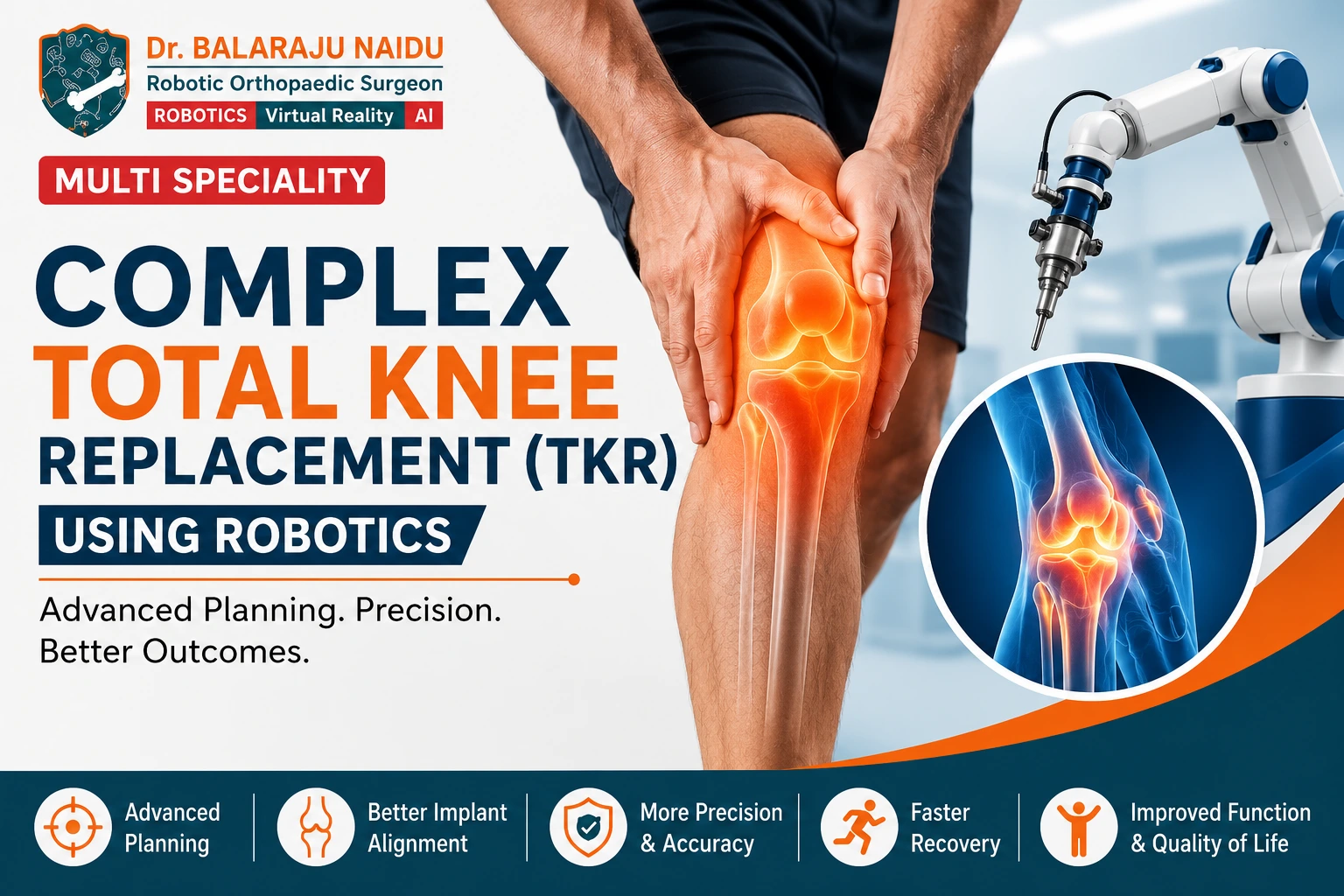
Knee Pain While Getting Up From Sitting – Causes, Early Warning Signs & Treatment – By Dr. Balaraju Naidu, Robotic Orthopedic Surgeon, ONUS Robotic Hospitals
Do you feel knee pain when standing up after sitting for a long time?
Many people notice discomfort when getting up from a chair, sofa, or car seat. While this may seem minor, it can be an early warning sign of knee joint problems, especially in adults above 35–40 years.
This symptom is commonly associated with conditions such as Osteoarthritis of the knee, Patellofemoral Pain Syndrome, or cartilage injuries.
Recognizing this symptom early allows timely treatment and helps prevent long-term joint damage.
Why Does Knee Pain Occur When Getting Up From Sitting?
When you sit for a long time, your knee remains in a bent (flexed) position. During this period:
- Joint pressure increases
- Cartilage lubrication reduces
- Muscles become temporarily inactive
When you suddenly stand up:
- Body weight shifts onto the knee joint
- Pressure on the kneecap increases
- Weak or damaged structures cause pain
This is why many patients feel stiffness or discomfort during the first few steps after sitting.
Common Causes of Knee Pain While Standing Up
1. Early Osteoarthritis
One of the most common causes of knee pain in middle-aged and older adults.
In Osteoarthritis of the knee, the cartilage that cushions the joint gradually wears down.
Typical features:
- Pain after sitting
- Morning stiffness
- Difficulty climbing stairs
- Reduced joint flexibility
Early diagnosis can slow disease progression.
2. Patellofemoral Pain Syndrome
This condition occurs when the kneecap does not move smoothly over the joint.
In Patellofemoral Pain Syndrome, pain is commonly felt in the front of the knee.
Common triggers:
- Sitting for long periods
- Standing up suddenly
- Climbing stairs
- Squatting
It is especially common in:
- Office workers
- Women
- Athletes
- Sedentary individuals
3. Muscle Weakness
Weak thigh muscles (quadriceps) reduce knee stability.
When muscles are weak:
- Joint support decreases
- Pressure on cartilage increases
- Pain occurs during movement
This is one of the most reversible causes of knee pain.
4. Meniscus Injury
The meniscus is a cartilage structure that absorbs shock in the knee.
Damage to this structure can cause:
- Pain during weight-bearing
- Clicking sensation
- Knee locking
- Swelling
Meniscus injuries may occur due to:
- Sudden twisting movements
- Sports injuries
- Degenerative changes
Symptoms to Watch For
Knee pain while standing up is often accompanied by other warning signs.
Common symptoms include:
- Pain when getting up from sitting
- Knee stiffness after rest
- Difficulty climbing stairs
- Grinding or clicking sound
- Swelling around the knee
- Reduced range of motion
If these symptoms persist, medical evaluation is recommended.
Risk Factors for Knee Pain
Certain factors increase the likelihood of developing knee problems.
Lifestyle Factors
- Sedentary lifestyle
- Prolonged sitting
- Lack of exercise
- Poor posture
Medical Factors
- Aging
- Obesity
- Previous knee injury
- Vitamin D deficiency
- Weak muscles
Addressing these factors early can significantly reduce knee problems.
How is Knee Pain Diagnosed?
Diagnosis typically includes:
Clinical Examination
Doctors evaluate:
- Joint movement
- Muscle strength
- Pain location
- Stability
Imaging Tests
In some cases, imaging may be required.
Common tests:
- X-ray
- MRI scan
- Ultrasound
These help identify cartilage damage, ligament injuries, or arthritis.
Treatment for Knee Pain While Getting Up From Sitting
Treatment depends on the underlying cause and severity of symptoms.
1. Physiotherapy
One of the most effective treatments.
Benefits:
- Improves muscle strength
- Reduces joint stress
- Improves mobility
2. Strengthening Exercises
Targeting quadriceps and hip muscles improves knee stability.
Examples:
- Straight leg raise
- Wall squats
- Step-up exercises
Regular exercise can significantly reduce pain.
3. Weight Management
Excess weight increases stress on the knee joint.
Important fact:
Every extra kilogram of body weight adds 4–5 times more pressure on the knee.
Weight reduction reduces joint strain and pain.
4. Medications
Doctors may prescribe:
- Anti-inflammatory medications
- Pain relievers
- Joint supplements
These help control symptoms.
5. Injection Therapy (Selected Cases)
In moderate to severe cases, injections may be recommended.
Examples:
- PRP therapy
- Hyaluronic acid injections
- Steroid injections
These treatments reduce inflammation and improve joint function.
Prevention Tips for Knee Health
Simple lifestyle changes can protect your knee joints.
Daily Prevention Strategies
- Avoid prolonged sitting
- Maintain healthy body weight
- Perform strengthening exercises
- Use proper sitting posture
- Stay physically active
Prevention is always easier than treatment.
When Should You See an Orthopedic Specialist?
Consult a specialist if:
- Knee pain persists for more than 2 weeks
- Pain worsens over time
- Knee swelling develops
- Walking becomes difficult
- Clicking or locking occurs
Early treatment prevents long-term joint damage.
Final Takeaway
Knee pain while getting up from sitting is:
✔ Common
✔ Often reversible
✔ An early warning sign
Ignoring this symptom can lead to arthritis progression.
Early evaluation, strengthening exercises, and lifestyle changes help maintain healthy knee function and mobility.
For Appointments:
Dr. Balaraju Naidu, Robotic Orthopedic Surgeon
ONUS Robotic Hospitals – Hyderabad