Pain in the Front of Your Knee While Climbing Stairs or Sitting – Is It Chondromalacia Patella?- By Dr. Balaraju Naidu, Robotic Orthopedic Surgeon, ONUS Robotic Hospitals
Causes, Symptoms & Treatment for Patellofemoral Knee Pain
Do you feel pain in the front of your knee while climbing stairs, getting up from a chair, or sitting for a long time?
Do you notice a grinding or clicking sensation when bending your knee?
This could be Chondromalacia Patella, also known as Patellofemoral Pain Syndrome—a common knee condition affecting young adults, athletes, and people with sedentary lifestyles.
Early treatment can prevent cartilage damage and long-term knee problems.
What Is Chondromalacia Patella?
Chondromalacia patella is a condition where the cartilage under the kneecap (patella) becomes:
- Soft
- Worn
- Damaged
This leads to friction between the kneecap and the thigh bone, causing pain and discomfort during movement.
The kneecap normally glides smoothly over the joint. When cartilage is damaged, movement becomes painful.
Why Does Front Knee Pain Occur?
Front knee pain occurs when pressure on the kneecap increases.
This commonly happens during:
- Climbing stairs
- Sitting for long periods
- Squatting
- Running
- Kneeling
These movements increase stress on the patellofemoral joint.
Common Causes of Chondromalacia Patella
1. Overuse of the Knee
Repeated knee movement can damage cartilage.
Common in:
- Athletes
- Runners
- Gym users
- Workers who climb stairs frequently
2. Muscle Imbalance
Weak thigh muscles reduce knee stability.
This causes:
- Improper kneecap movement
- Increased joint pressure
3. Obesity
Excess weight increases pressure on the knee joint.
Important fact:
Every extra kilogram increases load on the knee during movement.
4. Previous Knee Injury
Past injuries increase risk.
Examples:
- Knee trauma
- Ligament injury
- Meniscus injury
Risk Factors for Front Knee Pain
You may be at higher risk if you:
- Sit for long hours
- Climb stairs frequently
- Are overweight
- Have weak thigh muscles
- Participate in high-impact sports
- Have poor posture
These factors increase joint stress.
Common Symptoms of Chondromalacia Patella
Typical symptoms include:
- Pain in the front of the knee
- Pain while climbing stairs
- Discomfort after long sitting
- Grinding or clicking sensation
- Knee stiffness
- Mild swelling
Pain often worsens with activity.
Early Warning Signs You Should Not Ignore
These signs indicate cartilage damage.
Watch for:
- Pain when standing after sitting
- Difficulty squatting
- Reduced knee strength
- Knee instability
Early treatment prevents progression.
How Is Chondromalacia Patella Diagnosed?
Diagnosis usually involves:
Clinical Examination
Doctors assess:
- Knee movement
- Muscle strength
- Pain location
- Joint stability
Imaging Tests
If required:
- X-ray
- MRI scan
These tests help evaluate cartilage damage.
Treatment Options for Chondromalacia Patella
Most patients improve without surgery.
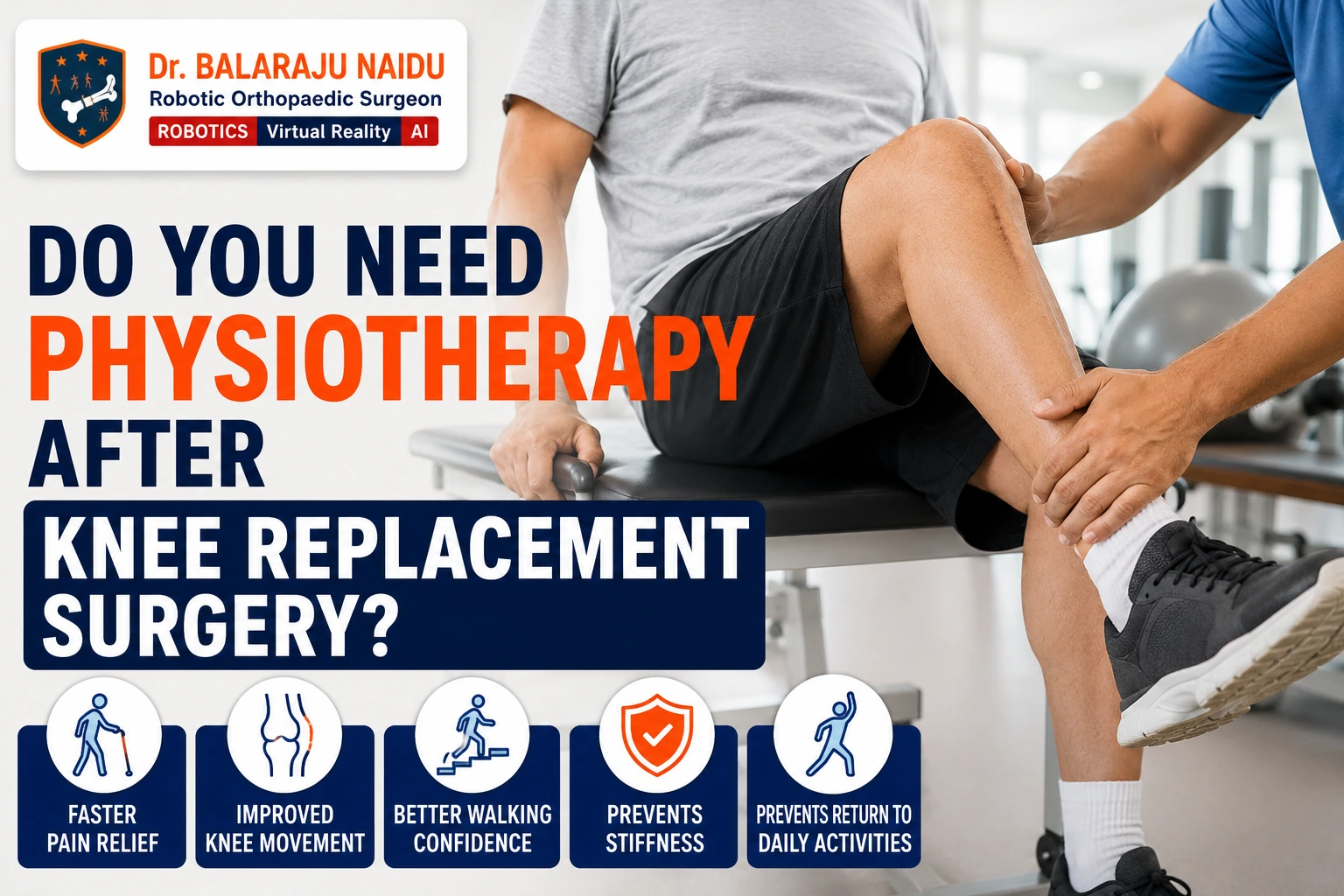
1. Physiotherapy and Strengthening Exercises
The most important treatment.
Benefits:
- Strengthens thigh muscles
- Improves knee stability
- Reduces pain
- Prevents recurrence
2. Activity Modification
Reducing knee stress helps recovery.
Recommended changes:
- Avoid prolonged sitting
- Limit stair climbing
- Avoid deep squatting
3. Knee Support or Brace
Support devices help stabilize the knee.
This reduces:
- Joint stress
- Pain during movement
4. Medications
Doctors may prescribe:
- Pain relief medication
- Anti-inflammatory drugs
These help control symptoms.
5. Injection Therapy (Selected Cases)
Used when pain persists.
Examples:
- PRP injection
- Lubricant injection
- Steroid injection
These reduce inflammation and improve joint function.
Prevention Tips for Front Knee Pain
Simple daily habits protect knee health.
Preventive Measures
- Maintain healthy body weight
- Strengthen thigh muscles
- Avoid prolonged sitting
- Wear proper footwear
- Exercise regularly
Prevention reduces recurrence.
When Should You See an Orthopedic Specialist?
Consult a doctor if:
- Knee pain lasts more than 2 weeks
- Pain worsens during activity
- Movement becomes restricted
- Swelling develops
- Daily activities become difficult
Early treatment prevents long-term damage.
Final Takeaway
Front knee pain is:
✔ Common
✔ Treatable
✔ Preventable
Ignoring early symptoms can lead to cartilage damage and chronic knee problems.
Early physiotherapy and lifestyle changes ensure long-term knee health.
For Appointments:
Dr. Balaraju Naidu, Robotic Orthopedic Surgeon
ONUS Robotic Hospitals – Hyderabad