


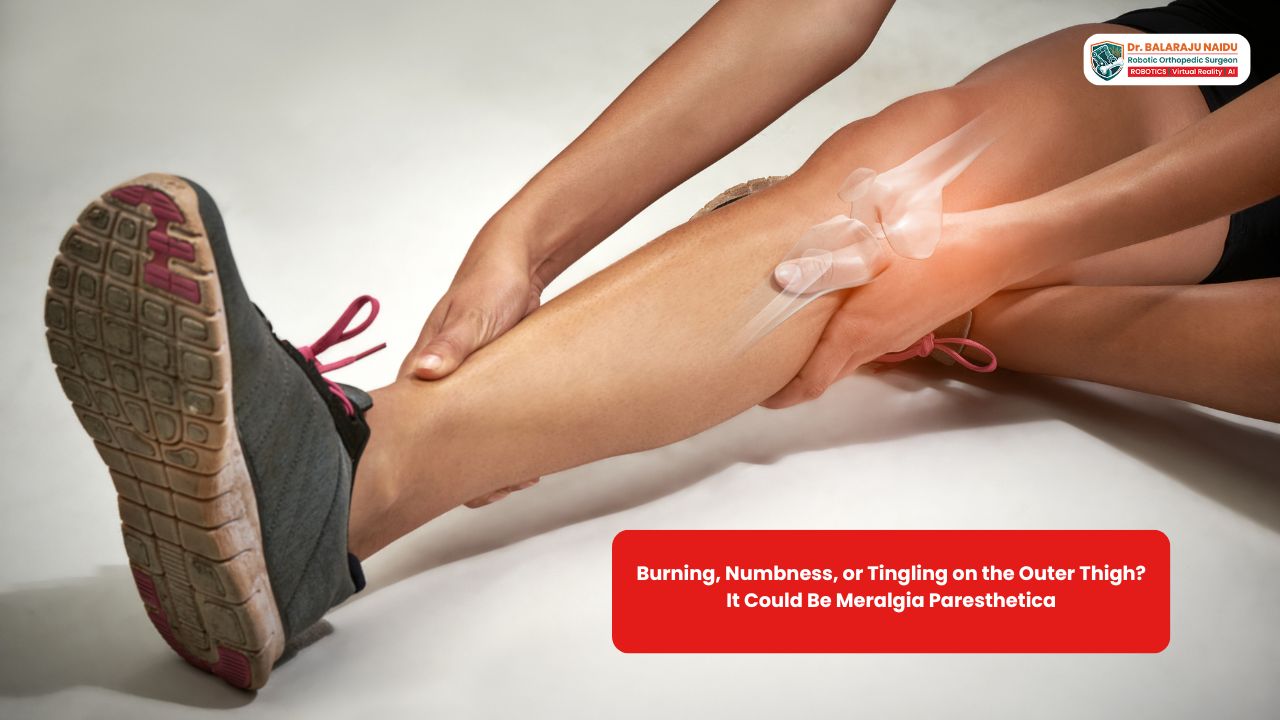
Burning, Numbness, or Tingling on the Outer Thigh? It Could Be Meralgia Paresthetica
Causes, Symptoms & Treatment for Lateral Femoral Cutaneous Nerve Compression
Do you feel burning, numbness, or tingling on the outer side of your thigh?
Does the discomfort worsen when standing or walking?
This condition may not be a muscle problem. It could be Meralgia Paresthetica, a nerve compression disorder that affects sensation in the outer thigh.
The good news: most patients recover without surgery when diagnosed early.
What Is Meralgia Paresthetica?
Meralgia paresthetica occurs when the lateral femoral cutaneous nerve becomes compressed as it passes through the pelvis into the thigh.
This nerve controls sensation (not movement).
Important clinical point:
✔ Sensory symptoms only
❌ No muscle weakness
That distinction helps differentiate it from spine-related nerve problems.
Why Is Meralgia Paresthetica Often Misdiagnosed?
Many patients assume the pain is due to:
- Muscle strain
- Sciatica
- Hip joint problems
- Back pain
However, the pain pattern is different.
Typical features:
- Burning or tingling on the outer thigh
- No weakness
- No pain below the knee
Recognizing these patterns prevents unnecessary investigations.
Common Causes of Meralgia Paresthetica
1) Tight Clothing or Belts
Compression from tight clothing is one of the most common causes.
Examples:
- Tight jeans
- Heavy belts
- Waistbands
- Tool belts
2) Obesity
Excess weight increases pressure on nerves.
Even moderate weight gain can trigger symptoms.
3) Prolonged Sitting
Long sitting periods increase pressure around the pelvic nerve.
Common in:
- Office workers
- Drivers
- Desk jobs
4) Pregnancy
Hormonal changes and weight gain can compress the nerve.
This is usually temporary.
5) Diabetes
Diabetes increases the risk of nerve irritation.
Patients with uncontrolled diabetes may develop neuropathy symptoms.
Symptoms of Meralgia Paresthetica
Typical symptoms include:
- Burning sensation on the outer thigh
- Numbness or tingling
- Increased sensitivity to touch
- Sharp or aching pain
- Pain worse while standing or walking
Important sign:
Symptoms are usually limited to one side.
Key Clinical Feature
No muscle weakness
This is the most important diagnostic clue.
If weakness is present, doctors investigate other causes.
How Is Meralgia Paresthetica Diagnosed?
Diagnosis is usually clinical.
Clinical Examination
Doctors assess:
- Pain location
- Sensory changes
- Nerve tenderness
Imaging Tests (If Needed)
In selected cases:
- MRI scan
- Ultrasound
- Nerve conduction study
These tests rule out other conditions.
Treatment Options for Meralgia Paresthetica
Most cases improve with conservative treatment.
1) Lifestyle Modification (Most Important)
Simple changes often resolve symptoms.
Examples:
- Weight loss
- Avoid tight clothing
- Improve posture
- Reduce prolonged sitting
These steps relieve nerve pressure.
2) Physiotherapy
Physiotherapy helps:
- Reduce nerve irritation
- Improve flexibility
- Strengthen supporting muscles
3) Medications
Doctors may prescribe:
- Anti-inflammatory medication
- Nerve pain medication
These reduce discomfort.
4) Nerve Block Injection (Advanced Cases)
Used when symptoms persist.
Benefits:
- Immediate pain relief
- Reduced nerve inflammation
5) Surgical Decompression (Rare)
Surgery is considered only when:
- Severe persistent symptoms
- Failure of conservative treatment
- Significant nerve compression
Most patients do not require surgery.
How Long Does Recovery Take?
Typical recovery timeline:
- Mild cases: 2–4 weeks
- Moderate cases: 1–3 months
- Chronic cases: Longer recovery
Early treatment speeds recovery.
Why You Should Not Ignore Meralgia Paresthetica
Untreated nerve compression can lead to:
- Chronic discomfort
- Persistent numbness
- Reduced quality of life
- Activity limitations
Early diagnosis prevents long-term problems.
Prevention Tips
You can reduce risk by:
- Maintaining healthy body weight
- Wearing comfortable clothing
- Avoiding tight belts
- Taking breaks during prolonged sitting
- Controlling diabetes
These measures protect nerve health.
When Should You See an Orthopedic Specialist?
Consult a doctor if:
- Symptoms persist for more than 2 weeks
- Pain worsens over time
- Numbness spreads
- Daily activities become difficult
- Symptoms interfere with walking
Early evaluation ensures faster recovery.
Final Takeaway
Meralgia paresthetica is:
✔ Common
✔ Treatable
✔ Often lifestyle-related
The key message:
Burning or numbness on the outer thigh is usually a nerve problem—not a muscle problem.
Early treatment leads to quick relief.
For Appointments:
Dr. Balaraju Naidu, Robotic Orthopedic Surgeon
ONUS Robotic Hospitals – Hyderabad

