Total Hip Replacement Surgery: Hip Pain & Hip Arthritis Treatment- By Dr. Balaraju Naidu, Robotic Orthopedic Surgeon, ONUS Robotic Hospitals
Severe hip pain, stiffness, difficulty walking, limping, hip fracture, arthritis, or avascular necrosis can affect daily life, sleep, mobility, and independence. When medicines, physiotherapy, lifestyle changes, or injections no longer provide enough relief, Total Hip Replacement Surgery may be advised after proper orthopedic evaluation.
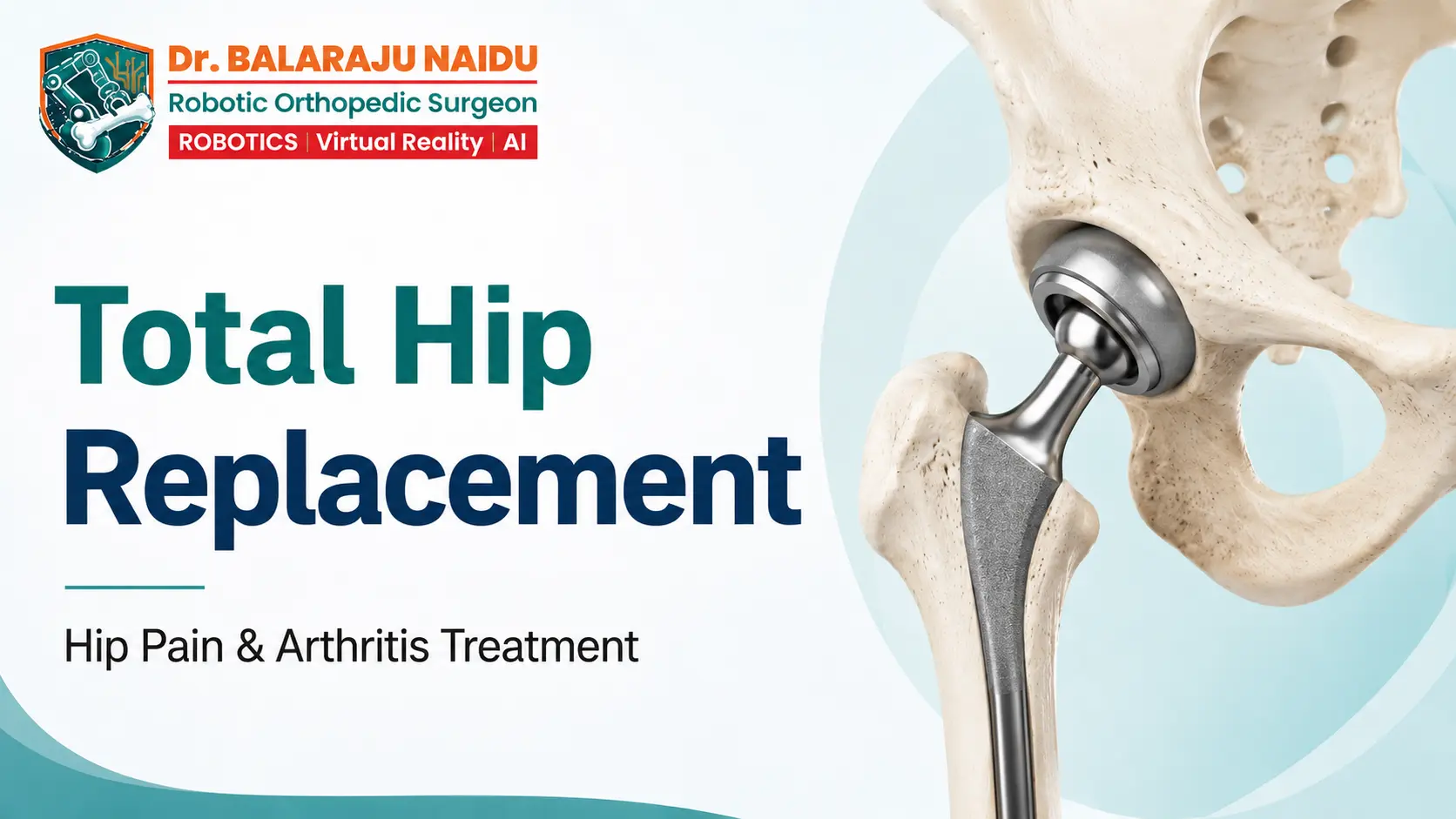
Total Hip Replacement is an advanced orthopedic procedure where the damaged parts of the hip joint are replaced with artificial components. The aim is to reduce pain, improve walking ability, restore joint movement, and support better quality of life after rehabilitation. Hip replacement can reduce pain and improve hip range of motion, though recovery and activity levels vary from patient to patient.
What Is Total Hip Replacement?
The hip is a ball-and-socket joint. The ball is the head of the thigh bone, and the socket is part of the pelvis. In a healthy hip, smooth cartilage allows painless movement. When the joint is damaged due to arthritis, fracture, AVN, or long-term wear and tear, the cartilage and bone surfaces may become painful and stiff.
In Total Hip Replacement Surgery, the damaged joint surfaces are removed and replaced with artificial implants. This helps the hip move more smoothly and reduces bone-on-bone pain.
When Is Hip Replacement Needed?
Total Hip Replacement may be considered when hip pain becomes severe and affects daily activities such as:
Walking
Climbing stairs
Standing for long periods
Sitting and getting up
Sleeping comfortably
Dressing or wearing footwear
Doing routine household or work activities
It may be advised in conditions such as advanced hip arthritis, severe hip fracture, avascular necrosis, damaged hip joint, post-traumatic arthritis, or failed conservative treatment.
Common Conditions That May Require Hip Replacement
1. Hip Arthritis
Hip arthritis causes cartilage damage inside the hip joint. As cartilage wears down, patients may feel pain, stiffness, reduced movement, and difficulty walking. Pain may be felt in the groin, thigh, buttock, or around the hip.
2. Hip Fracture
Hip fractures are common after falls, especially in elderly patients or people with weak bones. Some fractures may require fixation, while others may need hip replacement depending on the fracture type, age, bone quality, and mobility needs.
3. Avascular Necrosis
Avascular necrosis, also called AVN or osteonecrosis, happens when blood flow to the bone is reduced, causing bone tissue to weaken or die. In advanced cases, AVN can lead to joint collapse, and treatment may include surgery to restore blood flow or replace the damaged joint.
4. Severe Hip Stiffness
Long-term arthritis, injury, inflammation, or joint damage can cause stiffness. Patients may find it difficult to bend the hip, sit cross-legged, climb stairs, or walk normally.
5. Post-Traumatic Hip Damage
Previous accidents, fractures, or hip injuries may damage the joint over time, leading to pain, stiffness, and arthritis.
Warning Signs You Should Not Ignore
Consult an orthopedic specialist if you have:
Severe hip pain
Pain after a fall
Limping while walking
Difficulty standing or walking
Hip stiffness
Pain in the groin, thigh, or buttock
Reduced hip movement
Difficulty climbing stairs
Pain not improving with medicines
Night pain or disturbed sleep
Known AVN or hip arthritis
Inability to bear weight after injury
Early evaluation helps identify whether the problem is arthritis, fracture, AVN, infection, muscle-related pain, or another hip condition.
How Total Hip Replacement Helps
Total Hip Replacement can help by:
Reducing severe hip pain
Improving walking ability
Improving hip movement
Reducing stiffness
Helping patients return to daily activities
Improving stability and function
Supporting better quality of life after rehabilitation
Most patients experience significant reduction in pain and stiffness after successful hip replacement, and mobility usually improves after recovery. Cleveland Clinic notes that hip replacement often makes walking, climbing stairs, and other physical activities easier after recovery.
Diagnosis Before Hip Replacement
Before advising surgery, the orthopedic specialist may recommend:
Clinical hip examination
X-ray of hip and pelvis
MRI in AVN or early joint disease
CT scan in selected fracture or complex cases
Blood tests before surgery
Bone health evaluation when required
Medical fitness evaluation
The treatment plan depends on age, activity level, pain severity, diagnosis, bone quality, implant requirement, and overall health condition.
Recovery and Rehabilitation After Hip Replacement
Recovery after hip replacement is gradual. Patients usually begin walking with support as advised by the surgical and physiotherapy team. Rehabilitation focuses on safe walking, strengthening, balance, hip movement, and return to daily activities.
Recovery varies between patients, but many people do well by around three months, while improvement can continue during the first year after surgery.
Recovery May Include:
Pain control
Walking with walker or support
Physiotherapy exercises
Hip strengthening
Wound care
Fall prevention
Gradual return to daily activities
Regular follow-up with the surgeon
Patients should follow hip precautions, physiotherapy guidance, and medication instructions carefully after surgery.
When Should You Consult an Orthopedic Specialist?
Do not delay consultation if hip pain is severe, persistent, or affecting walking. Pain after a fall, inability to bear weight, limping, stiffness, or known AVN should be evaluated early.
Early diagnosis can help decide whether non-surgical treatment is possible or whether surgery is required for long-term mobility and pain relief.
Expert Hip Replacement Care at ONUS Robotic Hospitals
At ONUS Robotic Hospitals, patients with severe hip pain, hip arthritis, hip fracture, AVN, stiffness, and mobility problems receive advanced orthopedic evaluation and personalized treatment.
For Appointments:
Dr. Balaraju Naidu, Robotic Orthopedic Surgeon
ONUS Robotic Hospitals – Hyderabad