Bone Cysts: Types, Symptoms, Diagnosis & Treatment Options- By Dr. Balaraju Naidu, Robotic Orthopedic Surgeon, ONUS Robotic Hospitals
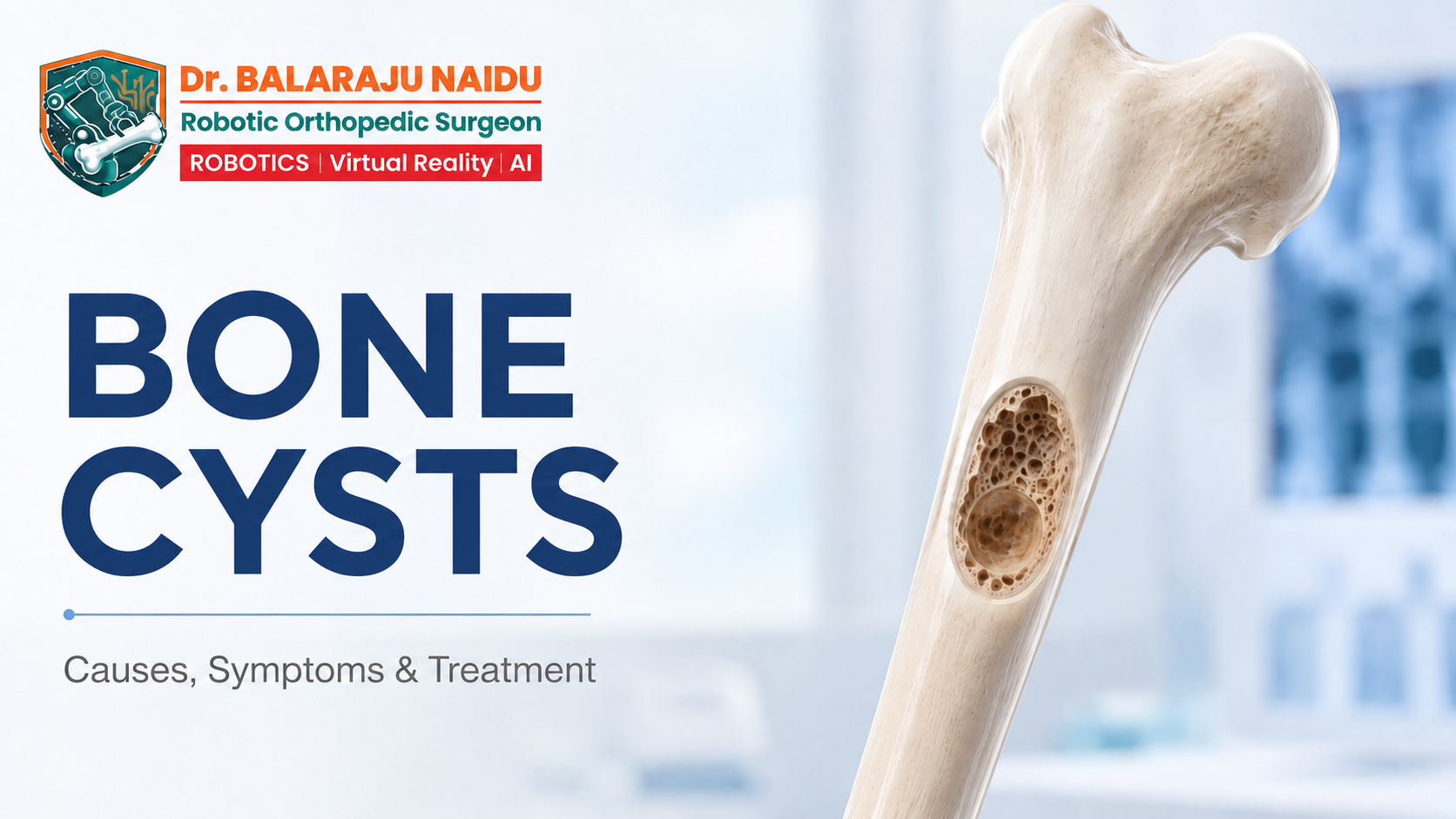
Bone cysts are fluid-filled or blood-filled cavities that develop inside bones. They are usually benign, but they can weaken the bone structure over time and increase the risk of fracture. Bone cysts are more commonly seen in children, teenagers, and young adults.
Some bone cysts may not cause symptoms and are found accidentally during an X-ray for another reason. Others may cause persistent bone pain, swelling, difficulty using the limb, or fracture after a minor injury. Early orthopedic evaluation is important because treatment depends on the type, size, location, symptoms, and fracture risk.
What Is a Bone Cyst?
A bone cyst is a hollow space that forms inside the bone. Depending on the type, it may contain fluid, blood, or fibrous tissue. As the cyst grows, it can thin the outer layer of bone and reduce bone strength.
The two important types discussed here are:
Unicameral Bone Cyst, also called Simple Bone Cyst
Aneurysmal Bone Cyst, also called ABC
Both conditions are usually benign, but they require proper diagnosis because their behavior and treatment approach can be different.
Types of Bone Cysts
1. Unicameral Bone Cyst
A unicameral bone cyst, or simple bone cyst, is a fluid-filled cavity inside the bone. It is commonly seen in children and adolescents. These cysts often occur in long bones such as the upper arm bone and thigh bone. AAOS explains that unicameral bone cysts are benign bone tumors that primarily affect children and adolescents, and they can weaken the bone and increase fracture risk.
Unicameral bone cysts may not cause symptoms until the bone becomes weak or fractures after a minor injury.
2. Aneurysmal Bone Cyst
An aneurysmal bone cyst is usually a blood-filled cyst that can expand the bone and cause pain, swelling, and deformity. ABCs are rare, noncancerous bone tumors that usually affect children and young adults. Cleveland Clinic notes that ABCs can develop in long bones, the spine, and pelvis, and can grow quickly in some patients.
Because ABCs may behave more aggressively than simple bone cysts, proper evaluation and follow-up are important.
Common Symptoms of Bone Cysts
Symptoms depend on cyst size, location, and whether the bone is weakened.
Common symptoms include:
Persistent bone pain
Swelling near a bone or joint
Pain during activity
Limping or difficulty walking
Difficulty using the arm or leg
Weak bones
Repeated fractures
Fracture after minor injury
Tenderness around the affected area
Reduced movement near a joint
Some cysts are silent and are discovered only after an X-ray.
Warning Signs You Should Not Ignore
Consult an orthopedic specialist if you notice:
Continuous bone pain
Swelling near joints
Repeated pain after activity
Pain in the upper arm, thigh, leg, or spine
Limping in children
Weakness while using a limb
Repeated fractures
Fracture after a minor fall
Bone swelling increasing in size
A bone cyst can sometimes lead to a pathological fracture, meaning the bone breaks because it has become weak due to the cyst.
Why Early Diagnosis Is Important
Early diagnosis helps identify whether the cyst is simple, aneurysmal, infection-related, tumor-like, or another bone condition. This is important because all bone cysts do not need the same treatment.
A small, asymptomatic cyst may only need observation. A larger cyst that weakens the bone may need active treatment to prevent fracture. ABCs may require more careful treatment because they can expand and damage bone strength.
How Are Bone Cysts Diagnosed?
Diagnosis begins with clinical examination and medical history. The doctor may check pain location, swelling, limb movement, walking pattern, fracture history, and age of the patient.
X-Ray
X-ray is usually the first test. It helps identify the location, size, bone thinning, and fracture risk. For unicameral bone cysts, AAOS notes that in most cases a plain X-ray is enough to diagnose the condition.
MRI Scan
MRI may be advised to understand the cyst better, especially when the diagnosis is unclear or when an aneurysmal bone cyst is suspected. MRI helps assess soft tissues, fluid levels, bone expansion, and nearby joint involvement.
CT Scan
CT scan may be advised in selected cases, especially for complex locations such as the pelvis, spine, or when surgical planning is needed.
Biopsy
In some cases, a biopsy may be needed to confirm the diagnosis and rule out other bone lesions.
Treatment Options for Bone Cysts
Treatment depends on the type of cyst, age of the patient, symptoms, cyst size, bone strength, fracture risk, and location.
1. Observation and Follow-Up
Small cysts that are not causing symptoms may be monitored with regular follow-up and repeat imaging.
2. Activity Modification
If the bone is weak, the doctor may advise avoiding high-impact activities, contact sports, or heavy loading until the bone is safe.
3. Fracture Management
If the bone cyst causes a fracture, the fracture must be treated first. Treatment may include immobilization, casting, bracing, or surgery depending on the fracture.
4. Injection-Based Treatment
Some simple bone cysts may be treated with injection-based methods depending on the case.
5. Curettage and Bone Grafting
In some cases, the cyst may be cleaned out surgically, and the empty space may be filled with bone graft or bone substitute to improve strength.
6. Internal Fixation
If the bone is very weak or has fractured, plates, screws, rods, or other fixation methods may be needed to stabilize the bone.
7. Treatment for Aneurysmal Bone Cyst
Aneurysmal bone cyst treatment may include curettage, bone grafting, sclerotherapy, embolization, or surgery depending on the location and size. Cleveland Clinic notes that treatment for ABC commonly includes surgery to remove the tumor.
When Is Surgery Needed?
Surgery may be considered when:
The cyst is large
The bone is weak
There is high fracture risk
A fracture has already occurred
Pain is persistent
The cyst is expanding
There is deformity
The cyst is near a joint
Conservative treatment is not enough
ABC is suspected or confirmed
The goal of surgery is to reduce pain, strengthen the bone, prevent fracture, treat existing fracture, and reduce recurrence risk.
Can Bone Cysts Come Back?
Yes, some bone cysts can recur after treatment, especially in growing children. Regular follow-up is important to monitor healing and detect recurrence early.
Follow-up may include repeat X-rays, clinical examination, activity guidance, and physiotherapy when required.
Bone Cysts in Children and Teenagers
Bone cysts are more common in growing children and adolescents. Parents should not ignore repeated limb pain, swelling, limping, or fracture after a minor fall. Since many bone cysts occur near growth areas, treatment planning must be careful and child-specific.
Expert Bone Cyst Care at ONUS Robotic Hospitals
At ONUS Robotic Hospitals, patients with bone cysts, bone pain, swelling, pathological fractures, unicameral bone cysts, aneurysmal bone cysts, pediatric orthopedic concerns, sports injuries, and advanced bone conditions receive expert evaluation and personalized treatment.
For Appointments:
Dr. Balaraju Naidu, Robotic Orthopedic Surgeon
ONUS Robotic Hospitals – Hyderabad
👉 link: contact-us or book-appointment