Shoulder Dislocation: Causes, Symptoms, Treatment & Recovery- By Dr. Balaraju Naidu, Robotic Orthopedic Surgeon, ONUS Robotic Hospitals
Shoulder dislocation is a painful injury where the upper arm bone comes out of the shoulder socket. Since the shoulder is one of the most movable joints in the body, it is also more prone to dislocation. It can happen due to falls, sports injuries, road traffic accidents, sudden twisting injuries, or repeated shoulder instability.
A dislocated shoulder may cause severe pain, swelling, bruising, weakness, numbness, or a shoulder that looks out of place. Mayo Clinic notes that the shoulder is the most frequently dislocated joint in the body because it moves in several directions.
What Is Shoulder Dislocation?
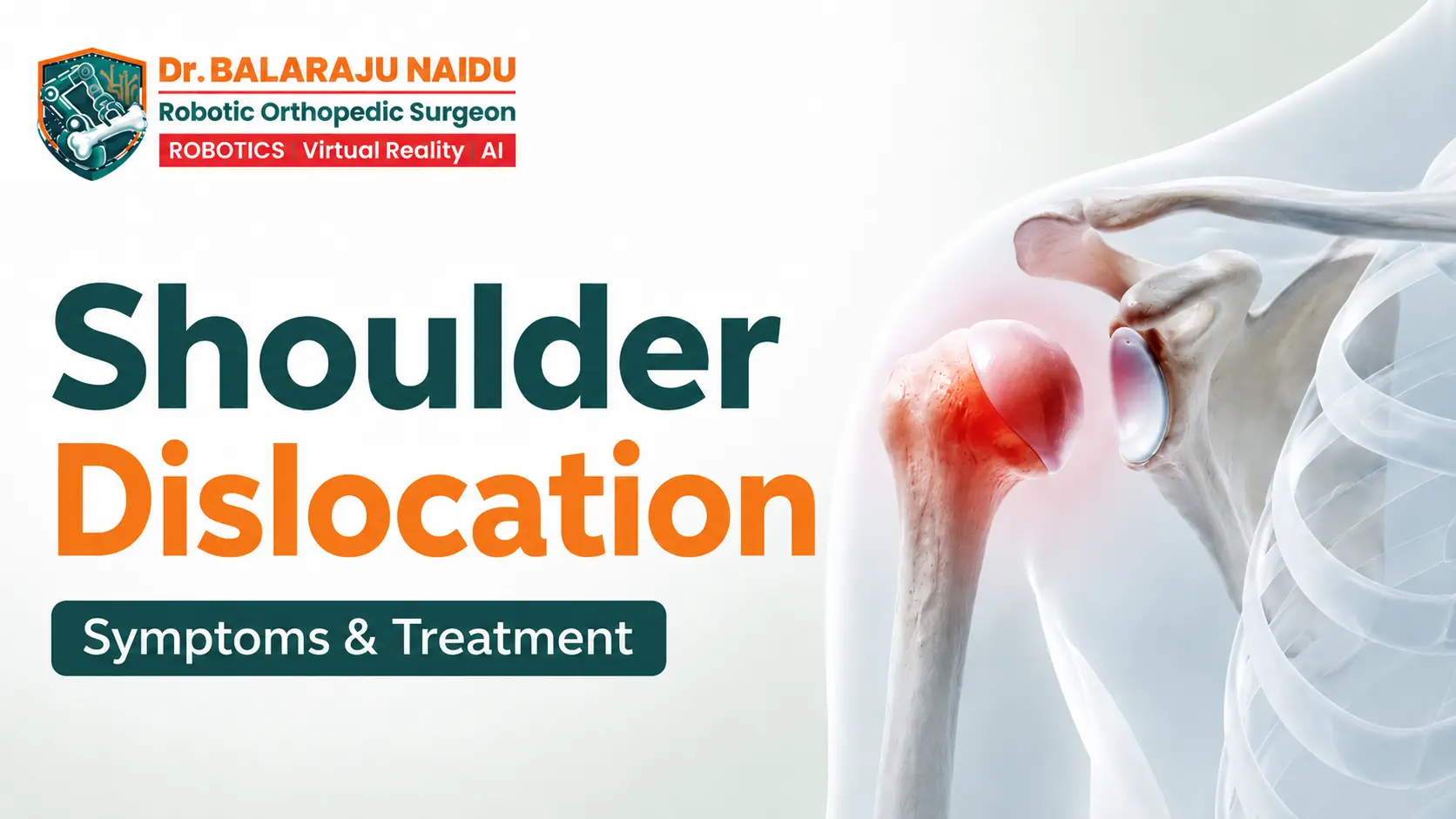
The shoulder is a ball-and-socket joint. The ball-shaped head of the upper arm bone fits into the shoulder socket. In shoulder dislocation, this ball comes out of the socket.
Shoulder dislocation may be:
Anterior dislocation: The bone comes out toward the front. This is the most common type.
Posterior dislocation: The bone moves backward.
Inferior dislocation: The bone moves downward.
Recurrent dislocation: The shoulder keeps slipping out repeatedly due to instability.
Repeated shoulder dislocation should not be ignored because it can damage the labrum, ligaments, cartilage, rotator cuff, or even cause fractures.
Common Causes of Shoulder Dislocation
Shoulder dislocation can happen due to:
Falls on an outstretched hand
Sports injuries
Road traffic accidents
Direct blow to the shoulder
Sudden twisting injury
Gym or contact sports injury
Seizure or electric shock in rare cases
Previous shoulder dislocation
Loose ligaments or shoulder instability
Young athletes, people involved in contact sports, and patients with a previous dislocation are at higher risk of repeated instability.
Symptoms of Shoulder Dislocation
Common symptoms include:
Severe shoulder pain
Shoulder deformity
Swelling
Bruising
Inability to move the shoulder
Weakness in the arm
Numbness or tingling
Muscle spasm
Shoulder appearing out of place
Pain after fall, accident, or sports injury
AAOS lists common symptoms of shoulder dislocation as deformity, swelling, numbness, weakness, bruising, and pain.
Why Repeated Shoulder Dislocation Should Not Be Ignored
After one shoulder dislocation, the soft tissues that stabilize the shoulder may become stretched or torn. This can lead to chronic shoulder instability.
Chronic shoulder instability means the shoulder repeatedly slips out or feels loose. AAOS explains that chronic shoulder instability is often first treated with nonsurgical options, but surgery may be needed if pain and instability continue.
Repeated dislocations can cause:
Labrum tear
Bankart lesion
Ligament damage
Cartilage injury
Rotator cuff injury
Bone loss
Hill-Sachs lesion
Shoulder weakness
Fear of shoulder movement
Reduced sports performance
Need for surgery
A Bankart lesion is a tear of the glenoid labrum that can occur when the shoulder comes out of the socket. Cleveland Clinic explains that it happens when the shoulder is forced out of the front of the socket and damages the tissue that helps hold the shoulder in place.
Diagnosis: X-Ray, MRI and Further Evaluation
A shoulder dislocation needs proper orthopedic evaluation. The doctor checks shoulder position, pain, swelling, movement, sensation, pulse, and nerve function.
X-Ray
X-ray is commonly used to confirm the dislocation, check direction, and rule out associated fractures.
MRI
MRI may be advised if there is suspected labrum tear, ligament injury, rotator cuff injury, cartilage damage, or recurrent instability.
CT Scan
CT scan may be advised in complex injuries, recurrent dislocation, bone loss, or suspected fracture.
Treatment Options for Shoulder Dislocation
Treatment depends on the type of dislocation, age, activity level, recurrence, associated injuries, and shoulder stability.
1. Emergency Reduction
A dislocated shoulder usually needs to be put back into position by a trained medical professional. This is called reduction. It should not be forced at home because associated fractures, nerve injury, or soft tissue damage may be present.
2. Sling Support
After reduction, the arm may be supported in a sling for a short period depending on the injury and doctor’s advice.
3. Pain and Swelling Control
Pain medicines, ice application, and rest may be advised initially.
4. Physiotherapy
Physiotherapy is important to restore shoulder movement, strength, and stability. Mayo Clinic notes that gentle exercises may be advised after the initial phase to maintain shoulder range of motion and prevent stiffness.
Physiotherapy may include:
Range-of-motion exercises
Rotator cuff strengthening
Scapular stabilization
Posture correction
Sports-specific rehab
Shoulder stability training
Gradual return-to-activity plan
5. Surgery for Recurrent Dislocation
Surgery may be required if the shoulder keeps dislocating, if there is a labrum tear, significant instability, bone loss, or failed physiotherapy.
Surgical options may include:
Arthroscopic Bankart repair
Labrum repair
Capsular tightening
Rotator cuff repair if needed
Latarjet procedure in selected bone-loss cases
Open stabilization in selected cases
When Is Surgery Needed?
Surgery may be considered when:
Dislocation is recurrent
The shoulder feels unstable
MRI shows labrum tear
There is Bankart lesion
There is significant bone loss
Sports activity is affected
Physiotherapy does not improve instability
There is associated fracture or rotator cuff injury
The patient has repeated fear of shoulder slipping
The goal of surgery is to restore stability, reduce recurrence risk, and help the patient return to daily activities or sports safely.
Recovery After Shoulder Dislocation
Recovery depends on the severity of injury, age, associated soft tissue damage, recurrence, and treatment method.
Recovery usually involves:
Initial pain control
Sling support
Follow-up examination
Physiotherapy
Strengthening
Gradual return to daily activity
Sports-specific rehabilitation if needed
Patients with recurrent dislocation may need longer rehabilitation and closer follow-up.
Warning Signs: When to Consult an Orthopedic Specialist
Consult an orthopedic specialist if you have:
Severe shoulder pain after injury
Shoulder looks out of place
Inability to move shoulder
Swelling or bruising
Numbness or tingling
Weakness in hand or arm
Repeated shoulder slipping
Pain during sports or gym activity
History of previous shoulder dislocation
Fear of lifting the arm overhead
Early diagnosis and proper treatment can help prevent long-term shoulder instability.
Expert Shoulder Dislocation Care at ONUS Robotic Hospitals
At ONUS Robotic Hospitals, patients with shoulder dislocation, recurrent shoulder instability, labrum tear, rotator cuff injury, sports injuries, arthroscopy needs, and trauma-related shoulder problems receive expert evaluation and personalized treatment.
For Appointments:
Dr. Balaraju Naidu, Robotic Orthopedic Surgeon
ONUS Robotic Hospitals – Hyderabad