Knee Arthritis in Kids: Causes, Symptoms, Diagnosis & Treatment – By Dr. Balaraju Naidu, Robotic Orthopedic Surgeon, ONUS Robotic Hospitals
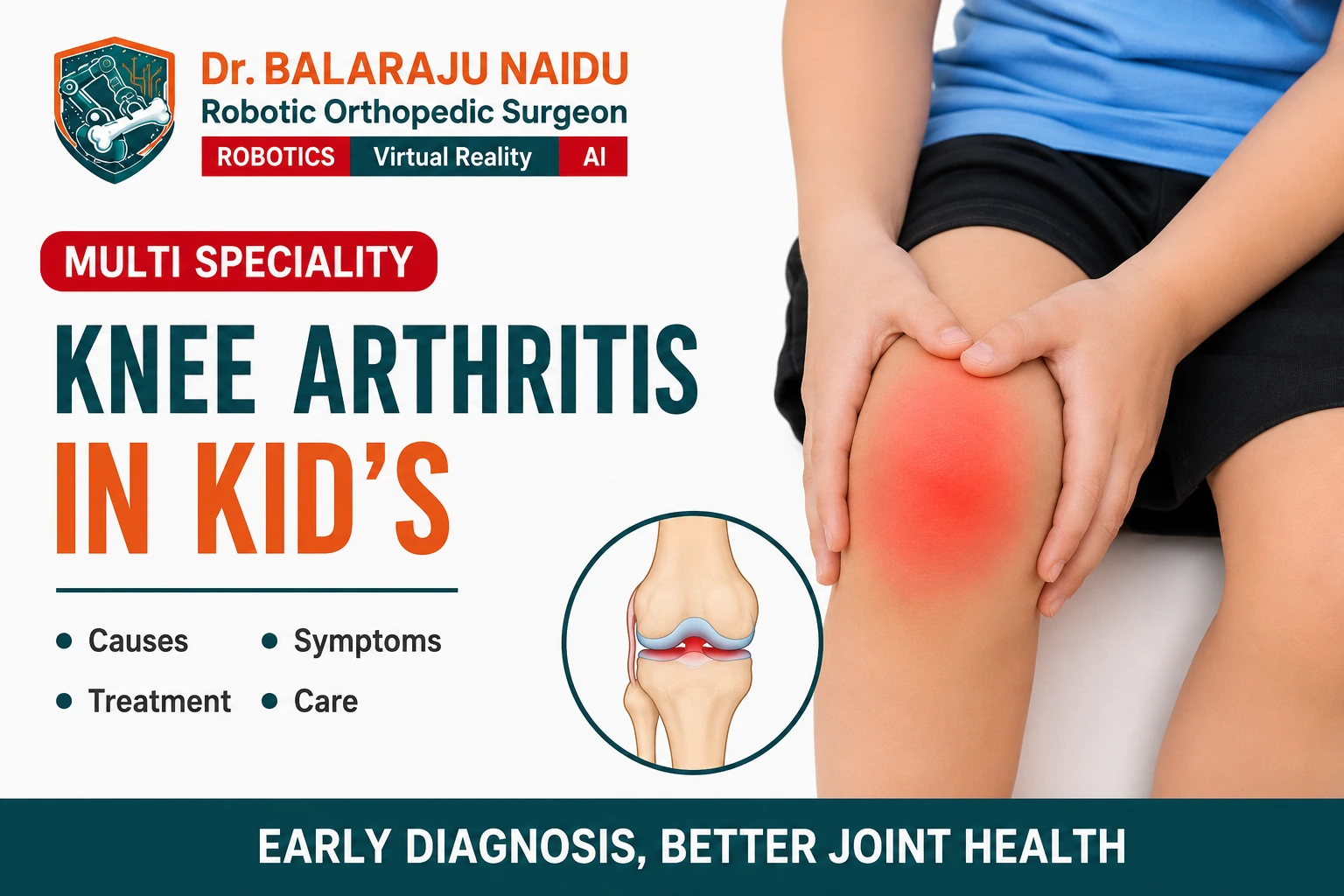
Many people associate arthritis with older adults, but arthritis can also affect children. Knee arthritis in kids, commonly known as Juvenile Idiopathic Arthritis (JIA), is an inflammatory condition that causes pain, swelling, stiffness, and reduced movement in one or more joints. The knee is one of the most commonly affected joints.
Early diagnosis and appropriate treatment are essential to reduce inflammation, prevent joint damage, and allow children to grow and remain active.
What is Knee Arthritis in Children?
Juvenile arthritis is an autoimmune condition in which the body’s immune system mistakenly attacks healthy joint tissues, leading to inflammation. Unlike arthritis caused by aging, childhood arthritis is usually not due to wear and tear.
The condition may affect one knee, both knees, or multiple joints and can sometimes involve the eyes or other organs.
Causes of Knee Arthritis in Kids
The exact cause is not fully understood, but contributing factors include:
- Autoimmune disorders
- Genetic predisposition
- Abnormal immune system response
- Environmental triggers
- Previous viral or bacterial infections (in some cases)
It is important to note that arthritis in children is not contagious and is not caused by routine physical activity.
Common Symptoms
Children with knee arthritis may experience:
✔ Persistent knee pain
✔ Swelling around the knee joint
✔ Morning stiffness lasting more than 30 minutes
✔ Limping or difficulty walking
✔ Difficulty bending or straightening the knee
✔ Warmth around the affected joint
✔ Reduced physical activity due to pain
✔ Fatigue or low-grade fever in some cases
Young children may simply avoid walking, running, or playing because of discomfort.
Types of Juvenile Arthritis
Oligoarticular JIA
- Affects four or fewer joints.
- Knees are commonly involved.
Polyarticular JIA
- Involves five or more joints.
- May affect both large and small joints.
Systemic JIA
- Associated with fever, rash, and inflammation affecting multiple organs along with joints.
How is Knee Arthritis Diagnosed?
Diagnosis involves a combination of clinical evaluation and investigations.
Medical History and Physical Examination
The doctor checks joint swelling, stiffness, pain, and range of motion.
Blood Tests
Tests may include:
- ESR
- CRP
- Rheumatoid Factor (RF)
- ANA
- HLA-B27 (when indicated)
Imaging Studies
- X-rays
- Ultrasound
- MRI scan for detailed joint assessment
Early diagnosis helps prevent long-term joint damage.
Treatment Options
Treatment depends on the severity and type of arthritis.
Medications
Doctors may prescribe:
- Anti-inflammatory medications (NSAIDs)
- Disease-Modifying Anti-Rheumatic Drugs (DMARDs)
- Biologic medications
- Corticosteroids (selected cases)
Physiotherapy
Regular physiotherapy helps:
- Maintain joint mobility
- Strengthen muscles
- Improve flexibility
- Reduce stiffness
Lifestyle Measures
Parents should encourage:
- Low-impact exercises
- Swimming
- Cycling
- Balanced nutrition
- Maintaining a healthy weight
Regular Follow-Up
Ongoing monitoring is important to assess growth, joint function, and response to treatment.
Can Knee Arthritis Be Cured?
There is currently no permanent cure for Juvenile Idiopathic Arthritis. However, with early diagnosis, proper medication, physiotherapy, and regular follow-up, many children achieve excellent symptom control and lead active, healthy lives.
When Should Parents Consult a Doctor?
Seek medical evaluation if your child has:
- Knee swelling lasting more than a few days
- Persistent joint pain
- Morning stiffness
- Limping without injury
- Difficulty walking or climbing stairs
- Recurrent knee swelling
- Fever associated with joint pain
Early treatment significantly improves long-term outcomes.
Tips for Parents
- Do not ignore persistent knee pain.
- Encourage gentle daily movement.
- Ensure your child follows the prescribed medication schedule.
- Attend regular medical follow-ups.
- Watch for changes in walking, playing, or physical activity.
- Seek specialist care if symptoms persist.
Conclusion
Knee arthritis in children is more common than many people realize. Persistent knee pain, swelling, or stiffness should never be ignored, especially if symptoms continue for several weeks. Early diagnosis and appropriate treatment can control inflammation, protect the joints, and help children enjoy a healthy and active childhood.
If your child experiences ongoing knee pain or swelling, consult an orthopedic specialist or pediatric rheumatologist for a comprehensive evaluation.
For Appointments:
Dr. Balaraju Naidu, Robotic Orthopedic Surgeon
ONUS Robotic Hospitals – Hyderabad
👉 link: contact-us or book-appointment