Frozen Shoulder – Why It Can Last 1–2 Years If Ignored
Shoulder pain and stiffness are common complaints among adults, especially between the ages of 40 and 60. One of the most frequent causes is Adhesive capsulitis, commonly known as frozen shoulder.
This condition causes progressive pain and stiffness in the shoulder joint, making even simple movements such as lifting the arm, combing hair, or reaching overhead difficult.
What makes frozen shoulder particularly frustrating for patients is its long natural course, which can last 18–24 months if untreated.
Understanding why this condition lasts so long and when to seek treatment can help reduce disability and speed recovery.
What Is Frozen Shoulder?
Frozen shoulder is a condition in which the capsule surrounding the shoulder joint becomes inflamed and thickened.
Over time, the capsule develops scar tissue and contracts, leading to:
Severe stiffness
Reduced range of motion
Persistent shoulder pain
Because the joint capsule tightens, movement becomes progressively restricted.
Who Is at Risk?
Frozen shoulder most commonly affects:
People between 40 and 60 years of age
Patients with diabetes
Individuals with thyroid disorders
People recovering from shoulder injuries
Patients who keep the shoulder immobilized for long periods
Diabetic patients are particularly prone to frozen shoulder and often experience more severe symptoms.
Why Frozen Shoulder Takes So Long to Heal
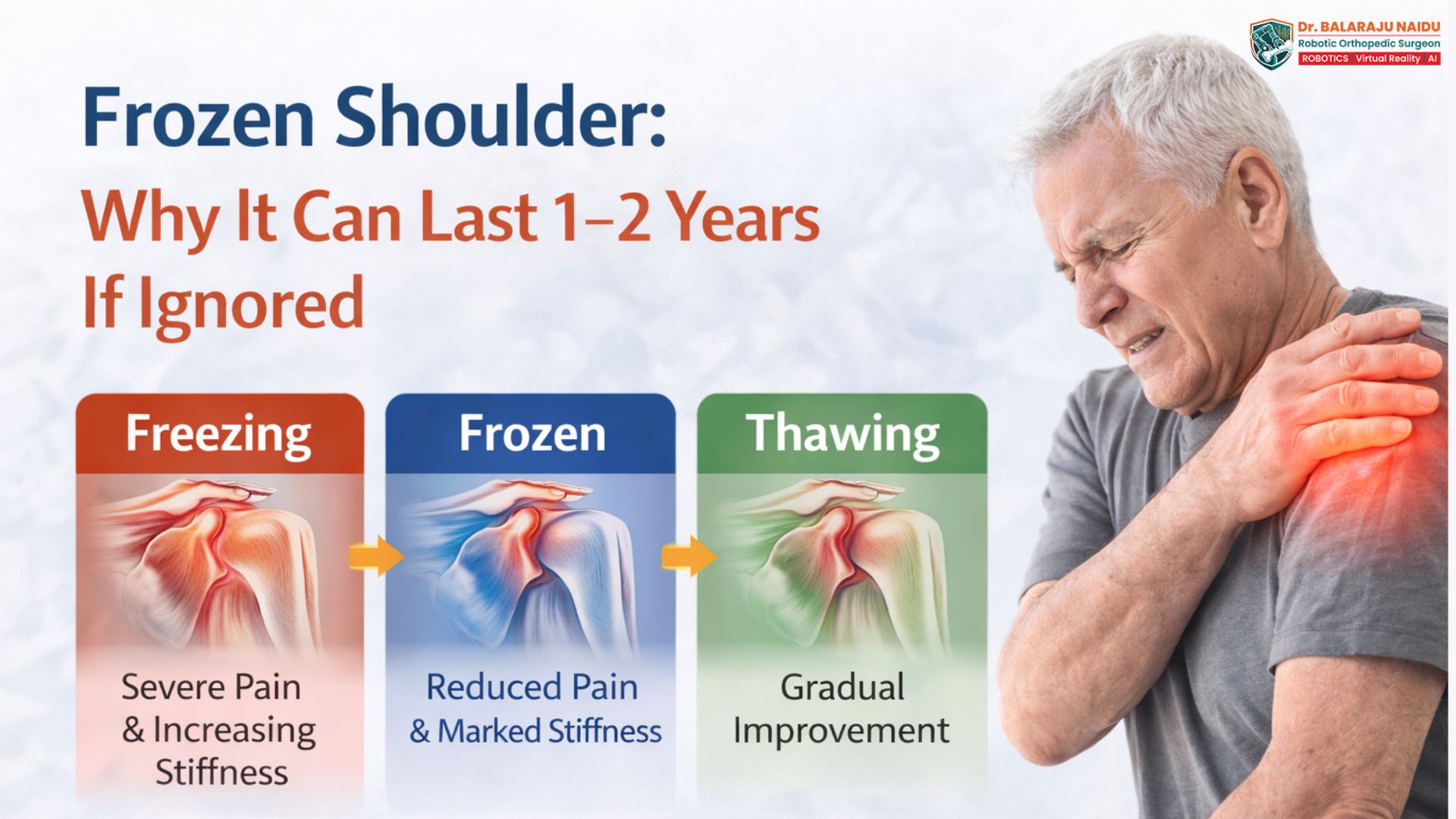
Frozen shoulder progresses through three characteristic stages, each lasting several months.
1️⃣ Freezing Stage
This is the initial phase of the condition.
Patients experience:
Increasing shoulder pain
Gradual loss of range of motion
Pain worsening at night
Even simple movements become uncomfortable.
This stage may last 2–9 months.
2️⃣ Frozen Stage
During this phase:
Pain gradually reduces
Shoulder stiffness becomes severe
Range of motion becomes significantly restricted
Daily activities such as dressing, reaching overhead, or lifting objects become difficult.
This stage may last 4–12 months.
3️⃣ Thawing Stage
In the final stage, the shoulder slowly regains mobility.
Symptoms improve gradually as the capsule loosens and scar tissue remodels.
This stage may last 6–12 months.
Without treatment, the full cycle may take 18–24 months.
Why the Recovery Takes Time
The prolonged course occurs because frozen shoulder involves capsular fibrosis.
The sequence typically includes:
Inflammation of the joint capsule
Formation of scar tissue
Contracture of the capsule
Gradual remodeling of tissue
These biological processes take time to reverse, which explains the slow recovery.
Can Frozen Shoulder Recovery Be Shortened?
Yes. Early treatment can significantly reduce the duration of symptoms.
Effective treatment options include:
Physiotherapy
Targeted shoulder exercises help maintain mobility and prevent severe stiffness.
Steroid Injections
Corticosteroid injections can reduce inflammation and pain, especially in the early stages.
Pain Management
Anti-inflammatory medications may help control symptoms.
Controlled Mobilization
Gentle movement prevents worsening capsular tightening.
Early intervention often reduces recovery time and prevents prolonged disability.
Warning Signs That Should Not Be Ignored
Seek medical attention if you notice:
Progressive loss of shoulder motion
Difficulty raising your arm
Shoulder pain disturbing sleep
Persistent shoulder pain lasting more than 6 weeks
Early evaluation helps identify frozen shoulder before stiffness becomes severe.
Preventive Measures
Although frozen shoulder cannot always be prevented, certain measures may reduce risk.
Helpful strategies include:
Maintaining shoulder mobility with regular stretching
Early rehabilitation after shoulder injury
Good diabetes control
Avoiding prolonged shoulder immobilization
Keeping the shoulder joint active is essential.
Final Thought
Frozen shoulder is not simply muscle pain.
It is a condition involving inflammation and tightening of the shoulder joint capsule.
If ignored, it may take 1–2 years to resolve naturally. Early diagnosis and treatment can significantly shorten recovery time and restore shoulder function sooner.
If shoulder stiffness and pain persist, consulting an orthopedic specialist early can prevent long-term limitation of movement.