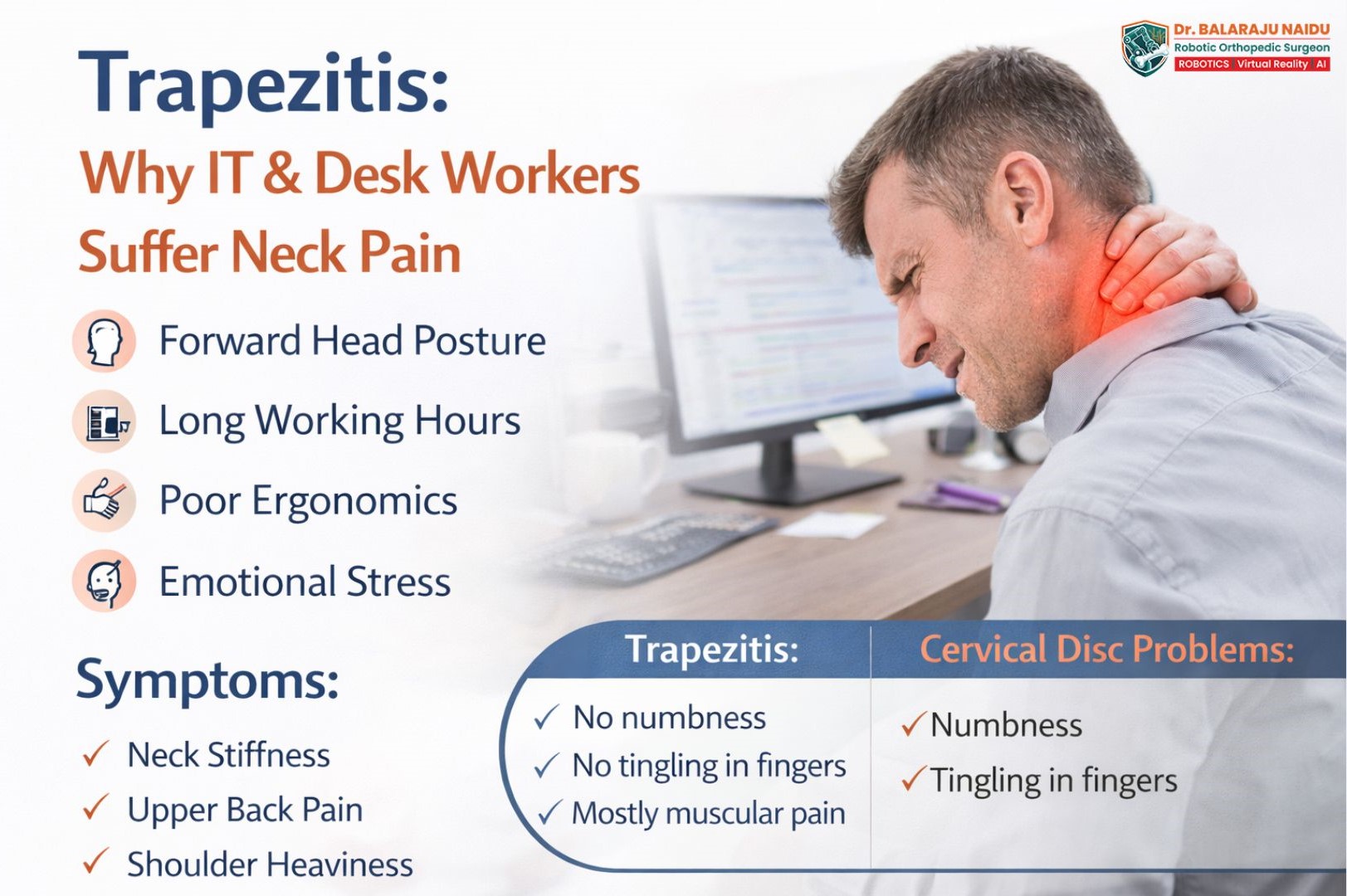
Trapezitis – Why IT & Desk Workers Frequently Experience Neck Pain
Neck and upper back pain are among the most common complaints seen in people who work long hours on computers. One frequently overlooked cause is Trapezitis, a condition caused by prolonged muscle strain in the upper back and neck.
IT professionals, desk workers, students, and anyone spending extended hours at a computer are particularly vulnerable. Although trapezitis is not a serious spinal disease, it can significantly affect daily comfort and productivity if ignored.
Understanding its causes, symptoms, and preventive strategies can help reduce the risk of chronic neck pain.
What Is Trapezitis?
Trapezitis refers to inflammation or muscle strain of the trapezius muscle, a large muscle that extends from the back of the head to the shoulders and upper back.
The trapezius muscle plays an important role in:
Supporting head posture
Stabilizing the shoulders
Allowing neck and shoulder movement
When this muscle is continuously strained due to poor posture or prolonged static positions, it becomes tight and painful.
Why IT and Desk Workers Are at High Risk
Modern work environments often involve prolonged computer use, which places constant stress on neck muscles.
Common risk factors include:
Prolonged Forward Head Posture
Looking down at a laptop or leaning toward a computer screen places excessive load on the neck muscles.
Long Working Hours Without Breaks
Sitting continuously for hours reduces blood circulation to muscles and causes stiffness.
Poor Ergonomic Setup
Improper workstation design — such as low monitors, unsupportive chairs, or incorrect keyboard height — increases strain on the trapezius muscle.
Emotional Stress
Stress causes involuntary muscle tightening around the neck and shoulders, worsening muscle pain.
Common Symptoms of Trapezitis
People with trapezitis often experience symptoms that worsen by the end of the workday.
Typical symptoms include:
Neck stiffness
Upper back pain
Shoulder heaviness
Tightness across the upper back
Occipital headache (pain at the back of the head)
Pain increasing by evening after prolonged work
These symptoms are usually muscular rather than nerve-related.
How Trapezitis Differs from Cervical Disc Problems
Many patients worry that neck pain indicates a serious spinal condition. However, trapezitis is different from **Cervical disc herniation.
Key differences include:
| Feature | Trapezitis | Cervical Disc Problem |
|---|---|---|
| Pain Type | Muscular pain | Nerve compression pain |
| Numbness | Usually absent | Often present |
| Tingling in fingers | Rare | Common |
| Weakness in arm | No | Possible |
| Pain radiation | Localized to neck/shoulder | May radiate to arm |
This distinction helps doctors determine appropriate treatment.
Prevention Strategies for Desk Workers
Because trapezitis is largely related to lifestyle and work habits, prevention plays a crucial role.
Maintain Ergonomic Posture
Ensure that:
The computer screen is at eye level
The chair supports the lower back
Feet remain flat on the floor
Shoulders stay relaxed while typing
Proper ergonomics significantly reduces neck strain.
Take Regular Breaks
Following the 20–30 minute rule can help:
Stand up
Stretch the neck and shoulders
Walk briefly
Frequent breaks reduce muscle fatigue.
Strengthen Postural Muscles
Exercises that strengthen the upper back and shoulder muscles help maintain correct posture.
Examples include:
Shoulder blade squeezes
Neck stretching exercises
Resistance band exercises
Manage Stress
Relaxation techniques such as deep breathing, yoga, and regular physical activity help reduce muscle tension.
Treatment Options
If trapezitis develops, early treatment helps prevent chronic pain.
Management may include:
Physiotherapy
Postural correction exercises
Muscle relaxants or anti-inflammatory medications
Heat therapy
Ergonomic modifications
Most patients improve with conservative treatment.
When to See a Doctor
Consult a doctor if you experience:
Neck pain lasting more than two weeks
Pain radiating to the arm
Numbness or tingling in fingers
Weakness in the upper limb
These symptoms may indicate nerve compression rather than simple muscular strain.
Final Thought
Trapezitis is largely a lifestyle-related condition, not a spinal emergency.
However, ignoring early symptoms can lead to chronic neck and shoulder pain.
Correct posture, regular movement, and workplace ergonomics are the most effective ways to prevent this common problem among desk workers.
Taking care of your posture today can prevent years of discomfort tomorrow.