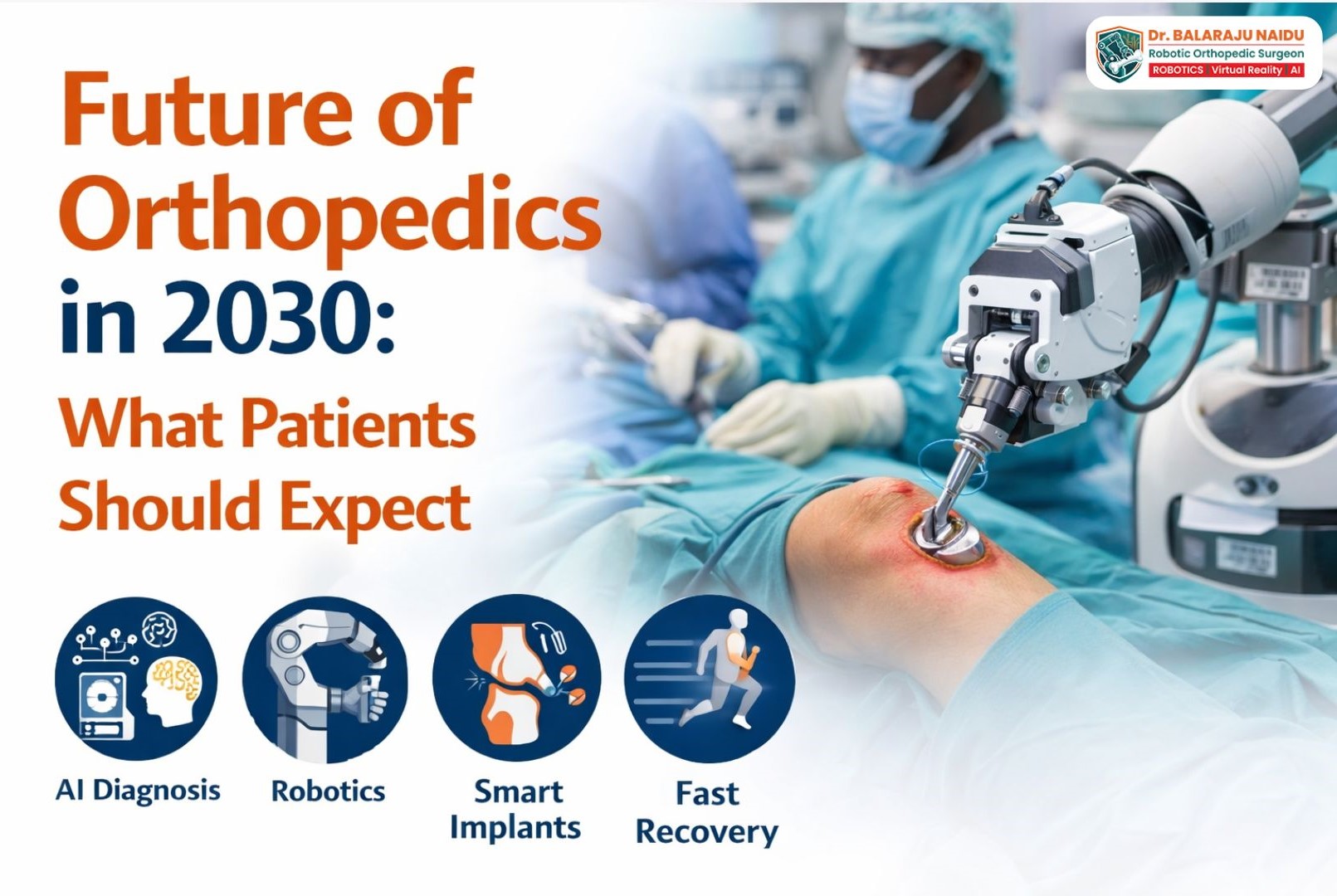
Future of Orthopedics in 2030 – What Patients Should Expect
Orthopedics is entering a transformative era driven by rapid technological advancements. Innovations in artificial intelligence, robotics, implant design, and regenerative medicine are reshaping how musculoskeletal disorders are diagnosed and treated.
By 2030, orthopedic care is expected to become more precise, personalized, and predictive, allowing patients to receive earlier diagnosis, safer surgeries, faster recovery, and longer-lasting implants.
Here is what patients can expect from the future of orthopedic medicine.
AI-Based Early Diagnosis
Artificial Intelligence is increasingly being integrated into medical imaging and diagnostics.
AI algorithms can analyze X-rays, MRI scans, and CT scans to detect early cartilage damage, bone changes, and joint degeneration that may be difficult to identify in early stages.
This technology may allow doctors to:
Detect arthritis earlier
Predict joint deterioration
Recommend preventive treatments before severe damage occurs
Early detection can help delay or even prevent the need for surgery in many patients.
Personalized Robotic Joint Replacement
Robotic-assisted surgery is already transforming joint replacement procedures.
Advanced systems such as Mako robotic arm assisted surgery system allow surgeons to plan procedures using 3D imaging and perform highly precise bone preparation.
By 2030, robotic joint replacement is expected to become standard in many advanced orthopedic centers.
Benefits include:
Improved implant alignment
Better soft tissue balancing
Greater surgical precision
Consistent and reproducible results
This leads to improved implant longevity and faster recovery.
Custom 3D-Printed Implants
Another major innovation is the development of patient-specific implants.
Using advanced imaging and 3D printing technology, implants can be designed specifically for an individual patient’s anatomy.
Advantages include:
Better anatomical fit
Improved joint biomechanics
Reduced implant wear
Enhanced stability and durability
Customized implants may be particularly useful in complex joint reconstruction cases.
Smart Implants with Embedded Sensors
Researchers are developing smart orthopedic implants equipped with tiny sensors capable of monitoring joint function.
These sensors may help measure:
Load distribution across the implant
Stress levels during activity
Early signs of implant loosening or failure
Such real-time data could allow doctors to detect complications early and intervene before serious problems occur.
Faster Recovery and Enhanced Rehabilitation
Orthopedic recovery protocols are also evolving rapidly.
Enhanced Recovery After Surgery (ERAS) programs aim to minimize surgical stress and accelerate healing.
Future recovery models may include:
Wearable monitoring devices
Remote physiotherapy guidance
AI-assisted rehabilitation programs
Personalized recovery tracking
These innovations will help patients return to normal activity much sooner.
Growth of Regenerative Medicine
Regenerative therapies are an exciting frontier in orthopedics.
Biologic treatments such as stem cells, platelet-rich plasma (PRP), and tissue engineering aim to repair damaged cartilage and delay joint degeneration.
While joint replacement remains the gold standard for advanced arthritis, regenerative medicine may help selected patients postpone surgery for many years.
What This Means for Patients
The future of orthopedic care is moving toward:
Earlier detection of joint disease
More precise surgical techniques
Personalized treatment strategies
Faster and safer recovery
Longer-lasting implants
These innovations will significantly improve patient outcomes and quality of life.
Final Thought
Orthopedics in 2030 will be defined by three key principles:
Precision + Personalization + Prediction
With the integration of advanced technology and surgical expertise, patients can expect safer treatments, improved mobility, and better long-term results.
The future of orthopedic care is not just about replacing joints—it is about preserving them, restoring movement, and enhancing overall quality of life.
For Appointments:
Dr. Balaraju Naidu, Robotic Orthopedic Surgeon
ONUS Robotic Hospitals – Hyderabad
👉 link: contact-us or book-appointment