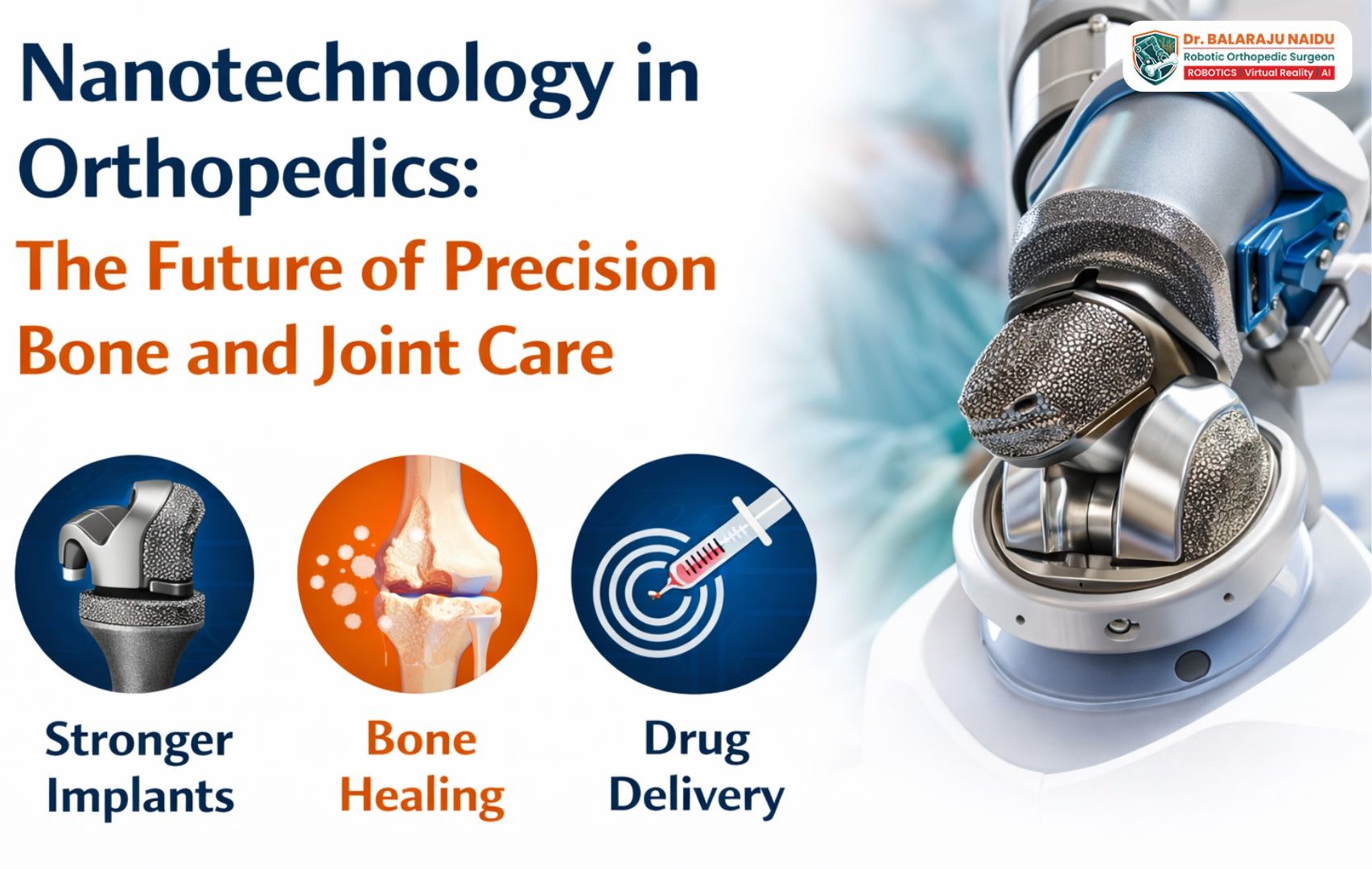
Nanotechnology in Orthopedics: The Future of Precision Bone and Joint Care
Orthopedic science is rapidly evolving with the integration of advanced technologies. One of the most promising innovations shaping the future of musculoskeletal medicine is nanotechnology. By manipulating materials at an extremely small scale, nanotechnology is opening new possibilities for improving bone healing, implant longevity, infection prevention, and regenerative treatments.
In the coming years, nanotechnology may significantly transform the way orthopedic diseases are diagnosed and treated, offering more precise, personalized, and durable solutions for bone and joint care.
What is Nanotechnology?
Nanotechnology refers to the manipulation of materials at the nanometer scale (one-billionth of a meter). At this microscopic level, materials behave differently and can be engineered to interact with biological tissues more effectively.
In orthopedics, nanotechnology is being explored to improve:
Implant surfaces
Drug delivery systems
Bone regeneration
Infection prevention
Tissue engineering
These developments could revolutionize orthopedic treatment strategies in the future.
Nanotechnology in Orthopedic Implants
One of the most promising applications of nanotechnology is in joint replacement implants.
Modern implants can be enhanced with nano-engineered surface coatings that improve integration between the implant and the surrounding bone.
Benefits of nano-coated implants include:
Better bone attachment to implants
Reduced implant loosening
Improved durability
Faster healing after surgery
Such technologies may help extend the lifespan of implants used in procedures like **Total Knee Replacement and Total Hip Replacement.
Nanotechnology for Bone Regeneration
Bone healing is another area where nanotechnology shows enormous potential.
Nano-scale materials can mimic the natural structure of bone and stimulate the growth of new bone cells.
These materials may be used to:
Treat complex fractures
Support bone graft procedures
Improve healing in osteoporosis-related fractures
Nanotechnology-based scaffolds may help guide the regeneration of bone tissue more efficiently.
Targeted Drug Delivery
Another breakthrough application is targeted drug delivery using nanoparticles.
Instead of delivering medication throughout the entire body, nanoparticles can carry drugs directly to the affected bone or joint.
This approach may help treat conditions such as:
Bone infections
Inflammatory joint diseases
Bone tumors
Targeted delivery reduces side effects and improves treatment effectiveness.
Preventing Implant Infections
Infection remains one of the most serious complications after joint replacement surgery.
Nanotechnology is being used to develop antibacterial coatings for implants that can prevent bacteria from attaching to implant surfaces.
These coatings may significantly reduce the risk of post-surgical infections, improving patient safety and outcomes.
Nanotechnology and Cartilage Repair
Cartilage damage is a major cause of joint pain and arthritis.
Researchers are developing nano-based biomaterials that support cartilage regeneration. These materials can stimulate cartilage cells to grow and repair damaged joint surfaces.
Such advances may help delay or reduce the need for joint replacement surgery in certain patients.
The Role of Nanotechnology in Future Orthopedic Care
The integration of nanotechnology into orthopedic medicine could lead to:
Stronger and longer-lasting implants
Faster bone healing
Reduced infection rates
Personalized regenerative treatments
Improved outcomes in complex orthopedic conditions
Although many of these technologies are still under research and clinical trials, the progress in this field is highly promising.
Challenges and Future Research
Despite its potential, nanotechnology in orthopedics still faces several challenges:
High research and manufacturing costs
Long-term safety evaluations
Regulatory approvals
Clinical validation
However, ongoing research continues to bring these innovations closer to real-world clinical applications.
Final Thought
Nanotechnology represents a major step toward the future of orthopedic care. By combining advanced materials science with biological understanding, doctors may soon be able to treat bone and joint conditions with unprecedented precision.
The future of orthopedics will increasingly focus on precision medicine, regenerative healing, and smarter implants, ensuring better mobility and improved quality of life for patients.
For Appointments:
Dr. Balaraju Naidu, Robotic Orthopedic Surgeon
ONUS Robotic Hospitals – Hyderabad