Shoulder Pain: Causes, Symptoms, Diagnosis & Treatment Options- By Dr. Balaraju Naidu, Robotic Orthopedic Surgeon, ONUS Robotic Hospitals
Introduction
Shoulder pain is one of the most common musculoskeletal complaints affecting people of all ages. Whether you’re struggling to lift your arm, reach behind your back, wear clothes comfortably, or sleep without pain, shoulder problems can significantly impact your daily life.
The shoulder is one of the most mobile joints in the human body, allowing a wide range of movement. However, this flexibility also makes it vulnerable to injuries, inflammation, and degenerative conditions.
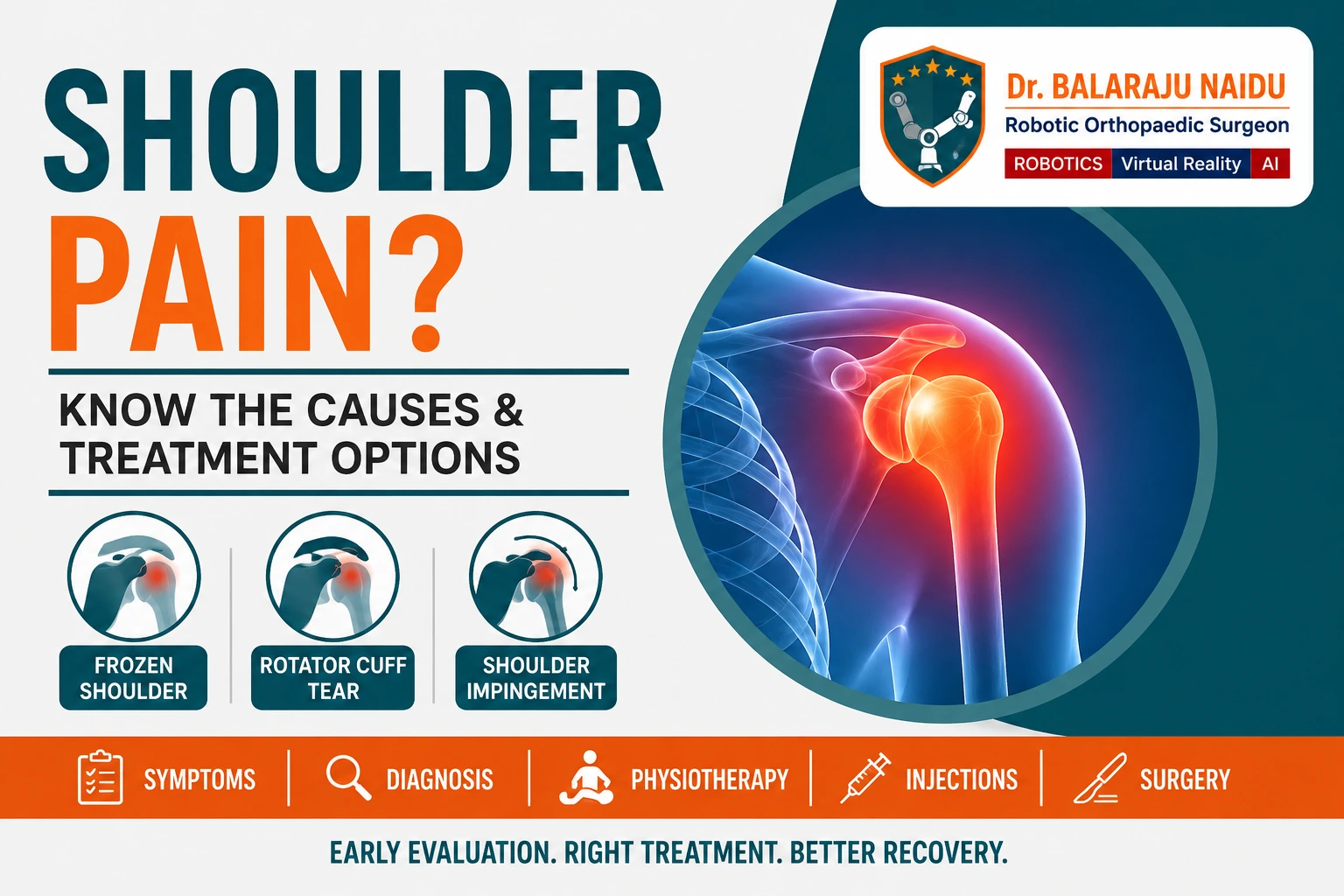
In this article, Dr. Balaraju Naidu, Senior Robotic Orthopedic Surgeon at ONUS Robotic Hospitals, explains the most common causes of shoulder pain, including Frozen Shoulder, Subacromial Impingement Syndrome, and Rotator Cuff Tears, along with their diagnosis and treatment options.
Understanding the Shoulder Joint
The shoulder is a complex joint made up of:
- Bones
- Muscles
- Tendons
- Ligaments
- Bursa (fluid-filled sacs)
These structures work together to provide stability and movement.
Any injury, inflammation, or degeneration affecting these components can lead to pain and restricted shoulder function.
Common Symptoms of Shoulder Problems
Shoulder conditions may present with:
- Pain while lifting the arm
- Difficulty reaching overhead
- Pain while combing hair
- Trouble wearing clothes
- Difficulty reaching behind the back
- Shoulder stiffness
- Pain during sleep
- Weakness in the arm
- Clicking or catching sensations
- Reduced range of motion
Persistent symptoms should be evaluated by an orthopedic specialist.
Frozen Shoulder (Adhesive Capsulitis)
What is Frozen Shoulder?
Frozen Shoulder is a condition in which the capsule surrounding the shoulder joint becomes thickened and tight, resulting in pain and severe stiffness.
The condition develops gradually and can significantly limit shoulder movement.
Who is at Risk?
Frozen Shoulder is more common in:
- Individuals aged 40–60 years
- Diabetic patients
- Thyroid disorder patients
- People recovering from injury
- Individuals with prolonged shoulder immobilization
Symptoms of Frozen Shoulder
Early Stage
- Gradual onset of pain
- Discomfort during movement
- Difficulty sleeping on the affected side
Stiffness Stage
- Reduced shoulder mobility
- Difficulty lifting the arm
- Difficulty reaching behind the back
Recovery Stage
- Gradual improvement in movement
- Reduced pain
Treatment for Frozen Shoulder
Treatment may include:
- Physiotherapy
- Stretching exercises
- Anti-inflammatory medications
- Corticosteroid injections
- Joint distension procedures
- Arthroscopic release in severe cases
Most patients improve significantly with timely treatment.
Subacromial Impingement Syndrome
What is Shoulder Impingement?
Subacromial Impingement Syndrome occurs when the tendons of the rotator cuff become compressed between the shoulder bones during movement.
This repeated compression causes inflammation and pain.
Causes of Impingement
- Repetitive overhead activities
- Sports injuries
- Poor posture
- Age-related degeneration
- Shoulder muscle imbalance
Symptoms
- Pain while lifting the arm
- Pain during overhead activities
- Shoulder weakness
- Pain at night
- Reduced shoulder function
Many patients describe a painful arc when raising their arm.
Treatment
Conservative Treatment
- Activity modification
- Physiotherapy
- Posture correction
- Anti-inflammatory medications
Injection Therapy
Targeted injections may help reduce inflammation and improve function.
Surgical Treatment
Persistent cases may require arthroscopic decompression surgery.
Rotator Cuff Tears
What is the Rotator Cuff?
The rotator cuff is a group of four muscles and tendons that stabilize the shoulder and assist arm movements.
These tendons can become damaged due to injury or wear and tear over time.
Causes of Rotator Cuff Tears
Acute Injuries
- Falls
- Sports injuries
- Heavy lifting accidents
Degenerative Tears
- Aging
- Repetitive shoulder use
- Chronic impingement
- Tendon degeneration
Symptoms of Rotator Cuff Tears
- Shoulder pain
- Weakness while lifting the arm
- Difficulty lifting objects
- Night pain
- Clicking sensation
- Reduced range of motion
Large tears may make it difficult to raise the arm above shoulder level.
Diagnosis of Rotator Cuff Tears
Clinical Examination
The orthopedic surgeon evaluates:
- Muscle strength
- Shoulder movement
- Pain patterns
- Functional limitations
Imaging Studies
X-Ray
Used to evaluate:
- Bone abnormalities
- Arthritis
- Joint alignment
MRI Scan
MRI provides detailed visualization of:
- Rotator cuff tendons
- Inflammation
- Partial tears
- Complete tears
MRI is often the gold standard for diagnosing rotator cuff injuries.
How is Shoulder Pain Diagnosed?
Accurate diagnosis begins with a detailed medical history and physical examination.
Additional investigations may include:
- X-rays
- Ultrasound
- MRI scans
- Functional assessments
The exact cause of pain determines the most effective treatment approach.
Non-Surgical Treatment Options
Many shoulder conditions can be successfully treated without surgery.
Physiotherapy
Physiotherapy plays a crucial role in:
- Restoring movement
- Strengthening muscles
- Improving flexibility
- Reducing pain
Medications
Doctors may prescribe:
- Anti-inflammatory medications
- Pain relievers
- Muscle relaxants
Injection Therapy
Targeted injections can help reduce inflammation and improve shoulder mobility in selected patients.
When is Surgery Required?
Surgical treatment may be considered when:
- Conservative treatment fails
- Large rotator cuff tears are present
- Severe impingement persists
- Frozen shoulder remains significantly restricted
- Daily activities are severely affected
Modern Arthroscopic Shoulder Surgery
Many shoulder conditions can now be treated using minimally invasive arthroscopic techniques.
Benefits
- Smaller incisions
- Less postoperative pain
- Faster recovery
- Reduced tissue damage
- Improved functional outcomes
Arthroscopy is commonly used for:
- Rotator cuff repair
- Shoulder decompression
- Frozen shoulder release
Recovery and Rehabilitation
Successful recovery depends on:
- Early diagnosis
- Appropriate treatment
- Consistent physiotherapy
- Following medical advice
Rehabilitation focuses on:
- Pain control
- Mobility restoration
- Muscle strengthening
- Functional recovery
When Should You Consult an Orthopedic Surgeon?
Seek medical attention if you experience:
- Persistent shoulder pain
- Difficulty lifting the arm
- Night pain
- Shoulder weakness
- Restricted movement
- Symptoms lasting several weeks
- Recurrent shoulder injuries
Early evaluation can prevent worsening of the condition and improve treatment outcomes.
Conclusion
Shoulder pain should never be ignored, especially when it interferes with daily activities or sleep. Conditions such as Frozen Shoulder, Rotator Cuff Tears, and Subacromial Impingement Syndrome are common causes of shoulder discomfort and restricted movement.
Fortunately, modern diagnostic tools and advanced treatment options—including physiotherapy, injections, and minimally invasive arthroscopic surgery—can help restore shoulder function and improve quality of life.
If you are experiencing ongoing shoulder pain or stiffness, consult an orthopedic specialist for a comprehensive evaluation and personalized treatment plan.
For Appointments:
Dr. Balaraju Naidu, Robotic Orthopedic Surgeon
ONUS Robotic Hospitals – Hyderabad