

Computer-Navigated Knee Replacement
Computer-Navigated Knee Replacement
Overview
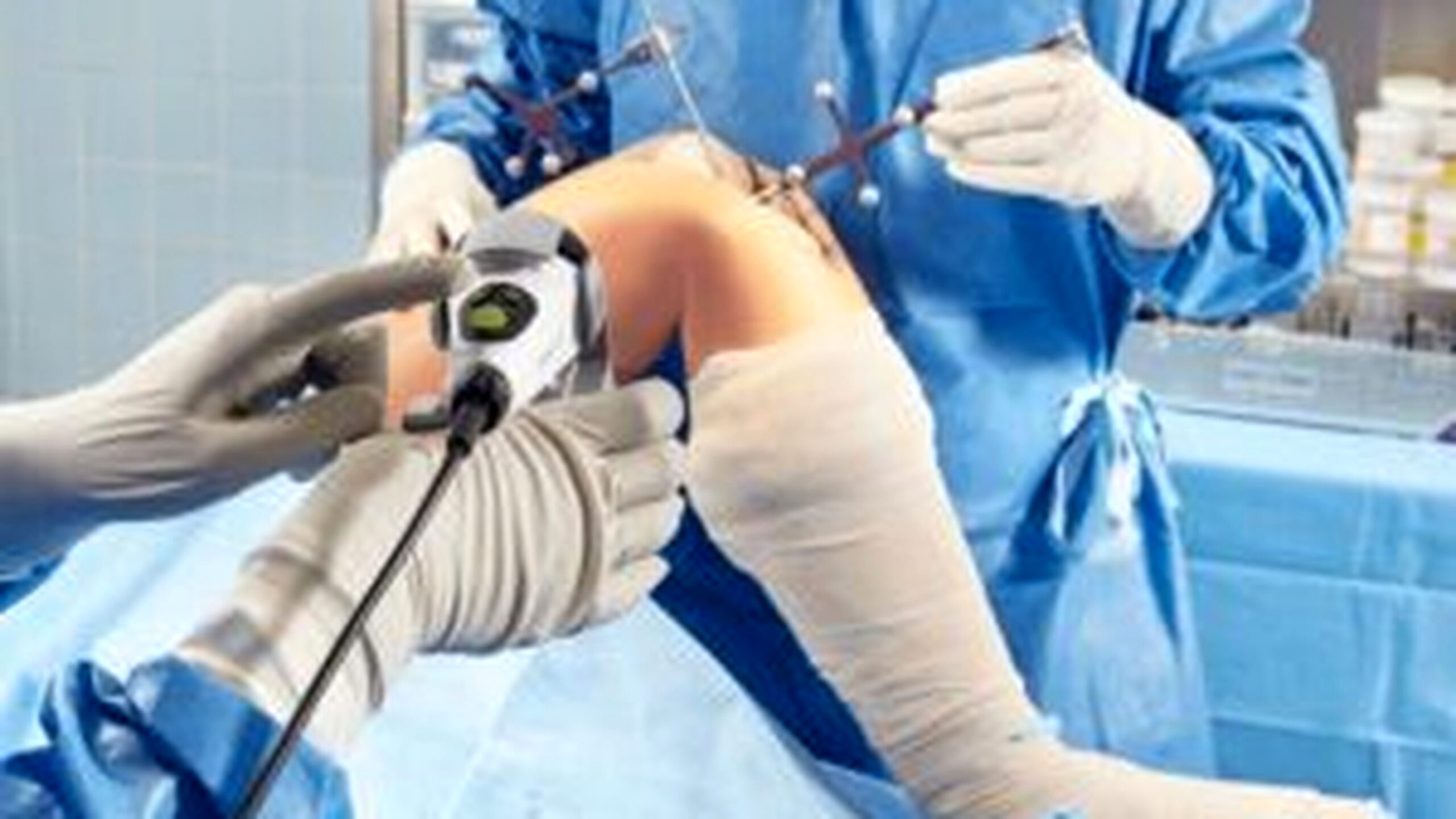
Computer-Navigated Knee Replacement is an advanced form of knee replacement surgery that uses real-time computer navigation technology to guide implant positioning and limb alignment—without the use of a robotic arm. This technique significantly improves accuracy compared to conventional knee replacement and is especially valuable in patients with complex knee anatomy or severe deformities.
With formal fellowship training in computer navigation joint replacement in Tübingen, Germany, Dr. Balaraju Naidu brings internationally proven navigation techniques to ensure precise alignment, balanced ligaments, and long-term implant performance.
What Is Computer-Navigated Knee Replacement?
In navigation-assisted knee replacement, a sophisticated computer system tracks the position of the patient’s bones and surgical instruments in real time using infrared cameras and sensors.
The system helps the surgeon by:
Creating a dynamic digital map of the knee
Displaying exact limb alignment angles
Guiding accurate bone cuts
Assisting in ligament balancing
Verifying implant position before final fixation
The surgeon performs the entire operation, with navigation acting as a precision guidance tool.
Who Needs Computer-Navigated Knee Replacement?
Indications
This technique is particularly recommended for patients with:
Severe bow-leg (varus) or knock-knee (valgus) deformities
Abnormal bone anatomy
Previous fractures around the knee
Retained implants or hardware
Obesity affecting mechanical alignment
Inaccurate alignment risk with conventional surgery
Complex primary knee replacement cases
Navigation is especially helpful where standard alignment tools may be unreliable.
Benefits of Navigation-Guided Knee Replacement
✅ Highly accurate limb alignment
✅ Improved implant positioning
✅ Better ligament balance
✅ Reduced risk of early implant failure
✅ Improved long-term implant survival
✅ Consistent outcomes in complex knees
✅ No robotic arm required
Accurate alignment is one of the strongest predictors of knee replacement longevity.
Expertise of Dr. Balaraju Naidu
Dr. Balaraju Naidu has completed advanced fellowship training in computer-navigated joint replacement surgery in Germany, where navigation-based precision is widely used for complex orthopedic cases.
His expertise includes:
Managing severe deformities with navigation
Correcting mechanical axis accurately
Balancing soft tissues in difficult knees
Performing complex primary and revision-like cases
Combining navigation with modern implant designs
This experience allows safe and predictable results even in challenging knee replacements.
Procedure: Step-by-Step
Preoperative Assessment
Detailed clinical examination and imaging to assess deformity and alignment.Navigation Setup
Sensors are placed to track bone movement and alignment during surgery.Navigation-Guided Bone Cuts
Real-time feedback guides accurate bone preparation.Implant Placement & Verification
Final alignment and ligament balance are verified digitally before closure.
Recovery After Navigation-Guided Knee Replacement
Early mobilization within 24 hours
Hospital stay of 2–3 days
Predictable rehabilitation outcomes
Reduced risk of revision due to malalignment
Return to daily activities in 4–6 weeks
Recovery is comparable to robotic knee replacement, with excellent long-term results.
Why Choose Computer-Navigated Knee Replacement?
Ideal for complex and deformed knees
Improves accuracy over conventional techniques
Proven European surgical methodology
Surgeon-controlled precision
Cost-effective alternative to robotic surgery