

ARTHROSCOPIC KNEE SURGERY
ARTHROSCOPIC KNEE SURGERY
Overview
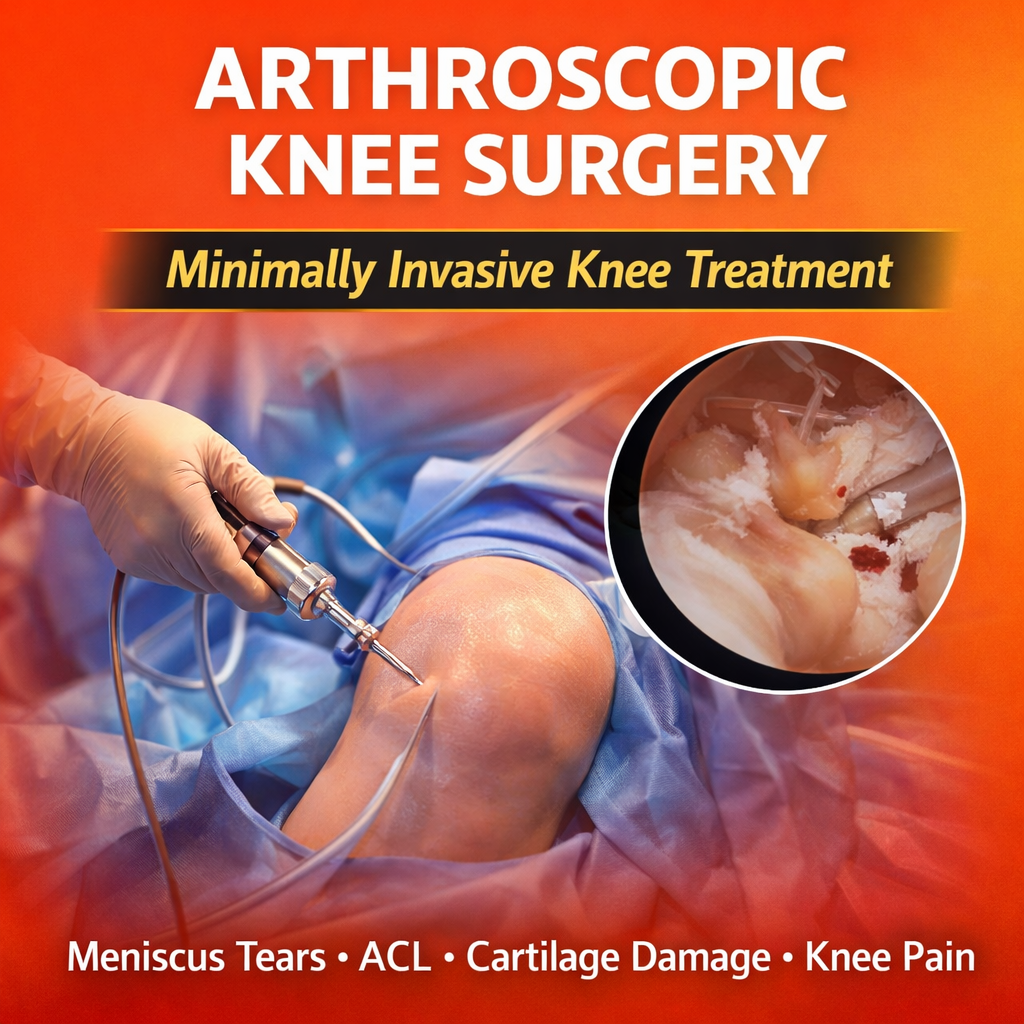
Arthroscopic Knee Surgery is a minimally invasive keyhole procedure used to diagnose and treat various knee joint problems through small incisions. Using a high-definition camera (arthroscope), the surgeon visualizes the inside of the knee and performs precise treatment without large cuts.
Compared to open surgery, arthroscopy offers less pain, smaller scars, faster recovery, and quicker return to daily activities and sports.
What Is Arthroscopic Knee Surgery?
Arthroscopy involves inserting a tiny camera and specialized instruments into the knee joint through 2–3 small incisions. The joint is displayed on a monitor, allowing accurate diagnosis and treatment.
Common conditions treated include:
Meniscus tears
ACL & ligament injuries
Cartilage damage
Loose bodies inside the joint
Early arthritis
Synovitis
Patellar problems
When Is Arthroscopy Recommended?
You may need arthroscopic knee surgery if you experience:
Persistent knee pain
Locking or catching sensation
Knee instability
Swelling not responding to medication
Sports injury
Difficulty bending or straightening the knee
Early treatment prevents long-term joint damage.
Benefits of Arthroscopic Knee Surgery
✅ Small incisions
✅ Minimal blood loss
✅ Faster recovery
✅ Short hospital stay (often same day discharge)
✅ Reduced post-operative pain
✅ Early mobilization
✅ Better cosmetic outcome
Procedure – Step by Step
Pre-operative evaluation and MRI assessment
Small keyhole incisions
Camera insertion and joint visualization
Repair or removal of damaged tissue
Closure with minimal stitches
Duration: 30–90 minutes depending on complexity.
Recovery After Arthroscopy
Walking often starts same day or next day
Physiotherapy begins early
Return to desk work: 1–2 weeks
Return to sports: 4–12 weeks (based on procedure)
Recovery is significantly faster compared to open surgery.