

Arthroscopic Shoulder Surgery
Arthroscopic Shoulder Surgery
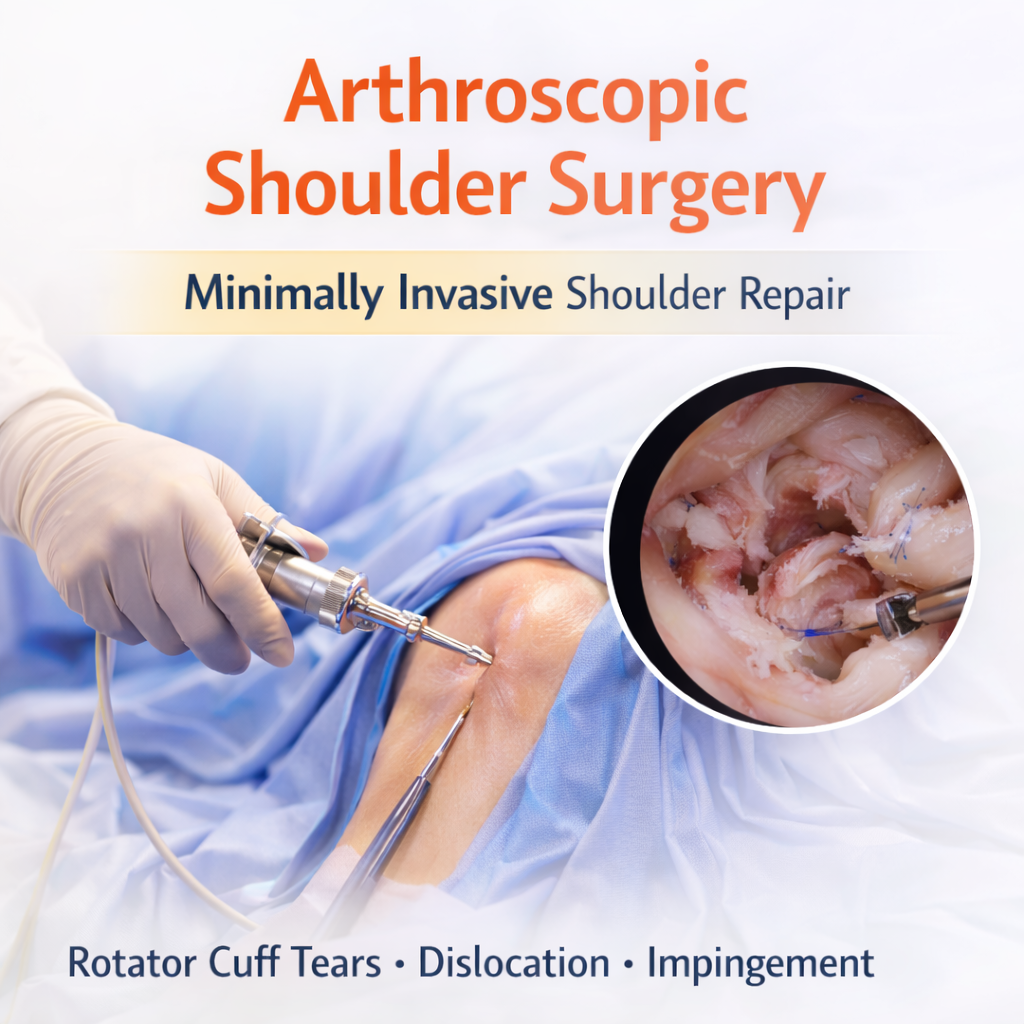
Overview
Arthroscopic Shoulder Surgery is a minimally invasive keyhole procedure used to diagnose and treat various shoulder joint problems. Using a high-definition camera (arthroscope) and specialized instruments, the surgeon repairs damaged tissues through small incisions instead of large open cuts.
This technique allows precise treatment with less pain, smaller scars, and faster recovery compared to traditional open surgery.
What Is Arthroscopic Shoulder Surgery?
Arthroscopy involves inserting a small camera into the shoulder joint. The internal structures are displayed on a monitor, allowing accurate diagnosis and repair.
Common conditions treated include:
Rotator cuff tears
Shoulder impingement syndrome
Labral tears (Bankart / SLAP lesions)
Recurrent shoulder dislocation
Frozen shoulder (capsular release)
AC joint problems
Shoulder instability
When Is Surgery Recommended?
Surgery may be required if you have:
Persistent shoulder pain
Weakness while lifting the arm
Recurrent shoulder dislocation
Night pain disturbing sleep
Failed physiotherapy treatment
Sports-related shoulder injury
Early intervention prevents long-term joint degeneration.
Benefits of Arthroscopic Shoulder Surgery
✅ Minimally invasive
✅ Small incisions
✅ Less post-operative pain
✅ Faster recovery
✅ Better cosmetic results
✅ Short hospital stay
✅ Early rehabilitation
Procedure – Step by Step
Clinical evaluation & MRI confirmation
Small keyhole incisions
Camera insertion and joint inspection
Repair of torn structures
Closure with minimal stitches
Duration: 45–120 minutes depending on complexity.
Recovery & Rehabilitation
Sling support for few weeks
Early passive physiotherapy
Gradual strengthening exercises
Return to routine work: 2–4 weeks
Return to sports: 3–6 months
Structured rehabilitation is essential for optimal outcomes.