

Pediatric Orthopedic Surgery
Pediatric Orthopedic Surgery
Overview
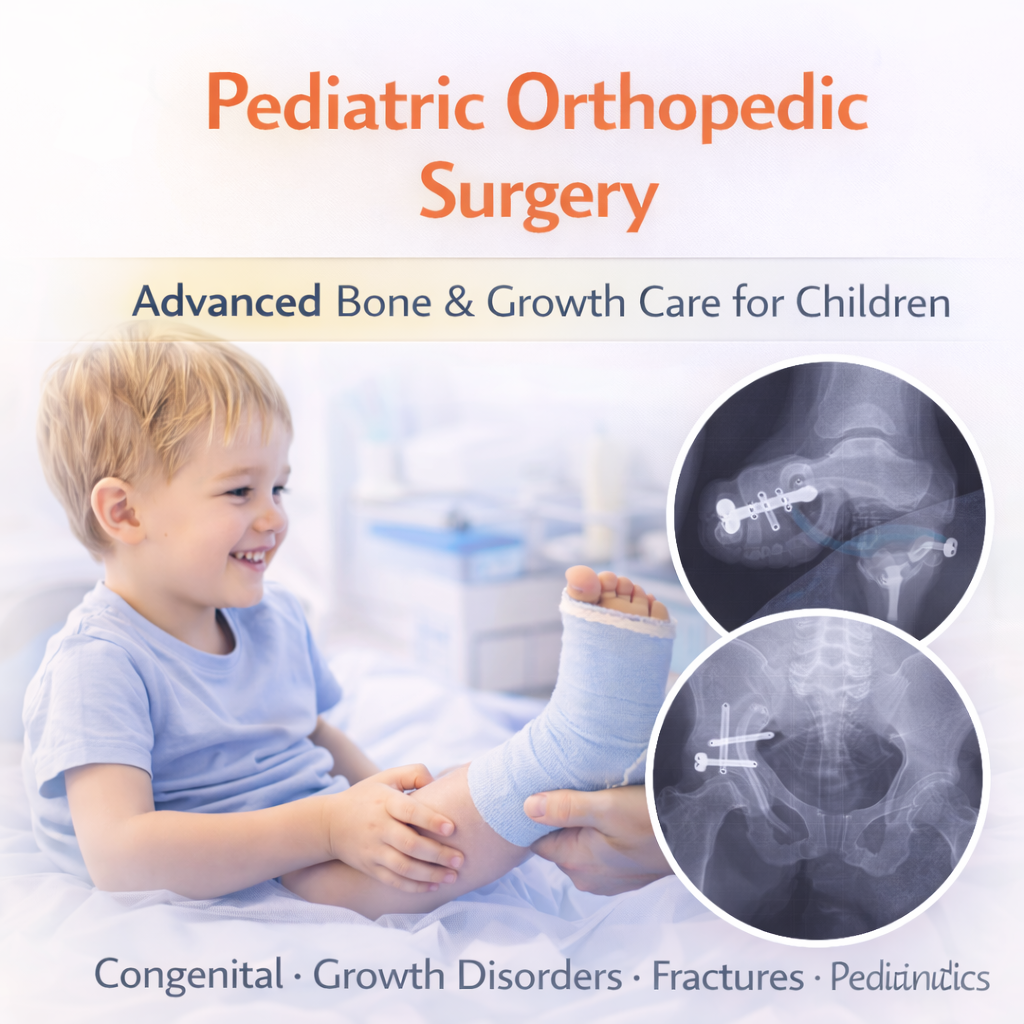
Pediatric Orthopedic Surgery focuses on the diagnosis and treatment of bone, joint, and muscle conditions in infants, children, and adolescents. Children are not just “small adults” — their growing bones require specialized evaluation and age-appropriate surgical techniques.
Early treatment ensures proper growth, prevents deformity progression, and supports normal development.
Common Pediatric Orthopedic Conditions
🦴 Congenital Disorders
Clubfoot
Developmental Dysplasia of Hip (DDH)
Limb deformities
🏃 Growth-Related Conditions
Knock knees / Bow legs
Limb length discrepancy
Growth plate injuries
⚽ Sports & Trauma Injuries
Fractures
Ligament injuries
Dislocations
🦵 Neuromuscular Conditions
Cerebral palsy-related deformities
Contractures
When Is Surgery Required?
Surgery may be recommended if:
Progressive deformity
Growth plate disturbance
Joint instability
Failed conservative treatment
Functional limitation
Congenital abnormalities requiring correction
Early intervention often leads to better long-term outcomes.
Types of Pediatric Orthopedic Procedures
1️⃣ Growth Modulation Surgery
Guided growth to gradually correct deformities.
2️⃣ Corrective Osteotomy
Realignment of bones for deformity correction.
3️⃣ Fracture Fixation
Child-friendly fixation methods protecting growth plates.
4️⃣ Clubfoot & Hip Surgery
Specialized correction techniques.
Benefits of Pediatric Orthopedic Care
✅ Preserves normal growth
✅ Prevents future arthritis
✅ Corrects deformity early
✅ Improves mobility
✅ Enhances confidence
✅ Supports active childhood
Recovery & Rehabilitation
Faster healing compared to adults
Child-focused physiotherapy
Regular growth monitoring
Long-term follow-up for optimal development
Children generally recover quicker with proper guidance.