

Avascular Necrosis (AVN) Management
Avascular Necrosis (AVN) Management
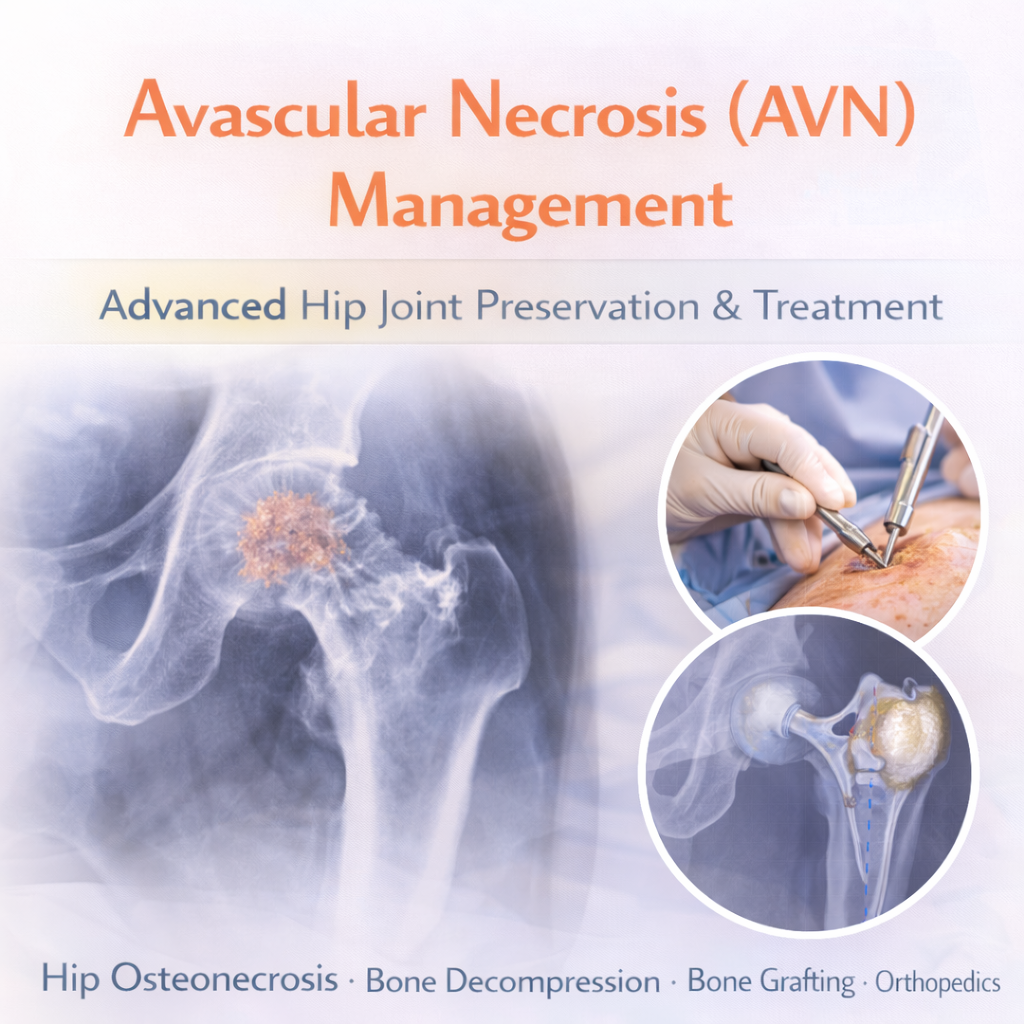
Overview
Avascular Necrosis (AVN), also known as Osteonecrosis, is a condition where blood supply to a bone is reduced or completely interrupted, leading to bone tissue death. It most commonly affects the hip joint (femoral head) but can also involve the shoulder, knee, or ankle.
If untreated, AVN can lead to joint collapse and severe arthritis. Early diagnosis and timely management are crucial to preserve the natural joint.
What Is Avascular Necrosis?
AVN occurs when bone cells die due to lack of blood supply. Over time, the bone weakens and may collapse, especially in weight-bearing joints.
Common Causes
Long-term steroid use
Alcohol abuse
Trauma or hip fracture
Dislocation
Blood disorders
Autoimmune conditions
Post-COVID complications (rare cases reported)
Symptoms of AVN
Groin or hip pain
Pain while walking
Stiffness in joint
Reduced range of motion
Limping
Pain even at rest (advanced stages)
Early stages may show minimal symptoms.
Stages of AVN
Stage 1: Normal X-ray, MRI changes present
Stage 2: Bone changes visible, no collapse
Stage 3: Early collapse of bone
Stage 4: Joint destruction & arthritis
Treatment depends on the stage of disease.
Treatment Options
1️⃣ Non-Surgical Management
Medications
Restricted weight bearing
Physiotherapy
Bone-strengthening treatment
Effective mainly in early stages.
2️⃣ Core Decompression
Relieves pressure inside bone and improves blood supply. Often combined with bone grafting or stem cell therapy.
Best for early-stage AVN.
3️⃣ Bone Grafting Procedures
Supports regeneration and structural stability.
4️⃣ Total Hip Replacement
Required in advanced stages when joint collapse has occurred.
Provides pain relief and restores mobility.
Benefits of Early AVN Management
✅ Preserves natural joint
✅ Prevents joint collapse
✅ Reduces pain
✅ Delays need for joint replacement
✅ Improves mobility
Recovery & Rehabilitation
Weight-bearing restrictions initially
Physiotherapy for joint mobility
Regular MRI follow-up
Long-term monitoring for progression
Early detection dramatically improves outcomes.