Avascular Necrosis (AVN) of the Hip After COVID-19 and Steroid Use: Symptoms, Stages & Treatment- By Dr. Balaraju Naidu, Robotic Orthopedic Surgeon, ONUS Robotic Hospitals
Avascular Necrosis (AVN), also known as Osteonecrosis, is a serious orthopedic condition that occurs when the blood supply to a bone is reduced or completely interrupted. Without adequate blood flow, bone tissue begins to die, eventually leading to the collapse of the affected bone and damage to the surrounding joint.
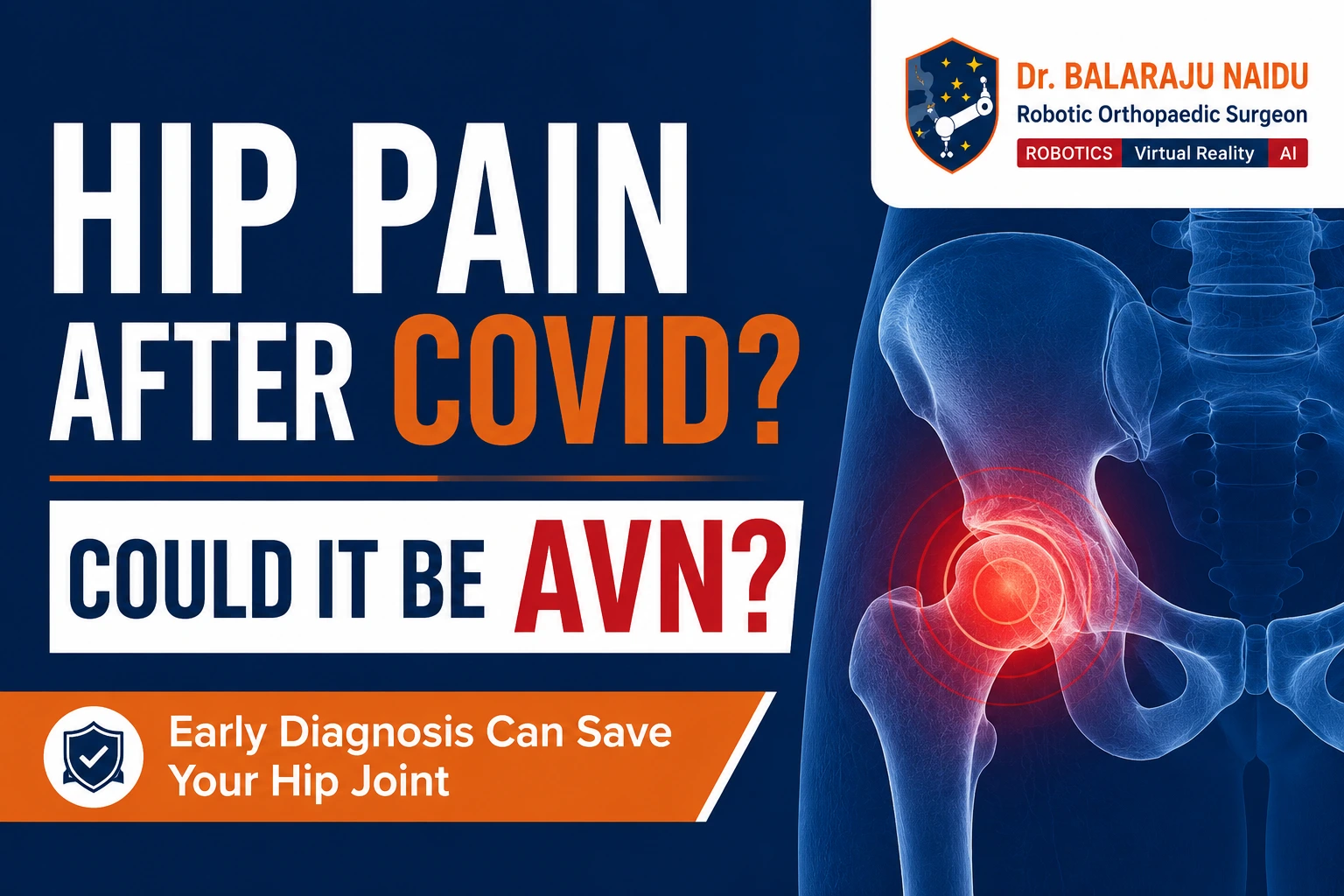
The hip joint is one of the most commonly affected areas. Following the COVID-19 pandemic, orthopedic specialists across the world observed an increase in AVN cases, particularly among patients who received prolonged or high-dose steroid therapy during their COVID treatment.
In this article, Dr. Balaraju Naidu, Senior Robotic Orthopedic Surgeon at ONUS Robotic Hospitals, explains the causes, symptoms, stages, diagnosis, and treatment options for AVN of the hip.
What is Avascular Necrosis (AVN)?
Avascular Necrosis is a condition where the blood supply to a portion of the bone is disrupted. Since bone tissue requires a constant blood supply to remain healthy, a lack of circulation causes the bone cells to die.
Over time, the weakened bone structure may collapse, leading to severe pain, restricted movement, arthritis, and disability.
The femoral head—the ball-shaped upper part of the thigh bone (femur) that fits into the hip socket—is particularly vulnerable to AVN because of its delicate blood supply.
Why Did AVN Cases Increase After COVID-19?
During the COVID-19 pandemic, steroids played a crucial role in managing severe respiratory complications. While these medications helped save lives, excessive or prolonged steroid use was associated with several complications, including AVN.
How Steroids Contribute to AVN
Steroids can:
- Affect blood circulation to bones
- Increase fat deposits within blood vessels
- Cause blockage of small blood vessels supplying the femoral head
- Reduce the bone’s ability to repair itself
Not everyone who receives steroids develops AVN, but patients who received high doses or prolonged treatment may be at a higher risk.
Other Causes of AVN
Apart from steroid use, AVN can develop due to:
- Hip injuries or fractures
- Joint dislocations
- Excessive alcohol consumption
- Blood clotting disorders
- Autoimmune diseases
- Sickle cell disease
- Certain medications
- Radiation therapy
- Unknown causes (Idiopathic AVN)
Early Symptoms of AVN
One of the biggest challenges with AVN is that symptoms may be absent in the early stages.
As the condition progresses, patients may experience:
Common Symptoms
- Deep pain in the groin region
- Hip pain while walking
- Pain while climbing stairs
- Stiffness in the hip joint
- Limping while walking
- Difficulty sitting cross-legged
- Reduced range of motion
- Pain radiating to the thigh or buttock
Initially, pain may occur only during activity but later becomes persistent even at rest.
Stages of Avascular Necrosis (AVN)
Orthopedic surgeons classify AVN into four stages based on imaging findings and the extent of bone damage.
Stage 1 – Early AVN
- X-rays may appear normal
- MRI can detect early changes
- Mild or occasional pain
- No collapse of the femoral head
At this stage, treatment aims to preserve the natural hip joint.
Stage 2 – Bone Damage Begins
- Structural changes become visible
- Bone tissue starts deteriorating
- Increased pain during movement
- Joint surface remains intact
Early intervention is highly effective during this stage.
Stage 3 – Collapse of Femoral Head
- The weakened bone begins to collapse
- Joint shape becomes irregular
- Significant pain and stiffness
- Daily activities become difficult
Joint-preserving procedures may still be possible in selected patients.
Stage 4 – Advanced Arthritis
- Severe collapse of the femoral head
- Joint cartilage damage
- Advanced arthritis develops
- Severe pain and restricted mobility
Hip replacement surgery is often the most effective treatment at this stage.
How is AVN Diagnosed?
Early diagnosis is critical for preserving the hip joint.
Clinical Evaluation
Your orthopedic surgeon may assess:
- Walking pattern
- Hip movement
- Pain location
- Joint flexibility
Imaging Tests
X-Ray
Useful for detecting advanced stages of AVN.
MRI Scan
The most sensitive test for detecting AVN in its earliest stages.
CT Scan
May help evaluate the extent of bone collapse in certain cases.
Treatment Options for AVN
Treatment depends on:
- Stage of the disease
- Patient’s age
- Severity of symptoms
- Amount of bone damage
Core Decompression Surgery
Core decompression is commonly performed in early-stage AVN before significant bone collapse occurs.
Procedure
The surgeon creates small channels within the affected bone to:
- Reduce internal bone pressure
- Improve blood circulation
- Promote healing
- Stimulate new bone formation
Benefits
- Preserves the natural hip joint
- Relieves pain
- Delays disease progression
- May prevent the need for hip replacement
Patients diagnosed in Stages 1 and 2 often achieve the best outcomes.
Total Hip Replacement Surgery
When AVN progresses to advanced stages and the femoral head collapses, hip replacement surgery may be necessary.
During Hip Replacement
The damaged:
- Femoral head
- Hip socket surfaces
are replaced with artificial implants.
Advantages
- Significant pain relief
- Improved mobility
- Better quality of life
- Long-term durability
Modern robotic-assisted hip replacement techniques provide enhanced precision and faster recovery in suitable patients.
Why Early Diagnosis Matters
Many patients ignore persistent hip pain, assuming it is arthritis, muscle strain, or age-related discomfort.
However, identifying AVN early can:
- Preserve the natural hip joint
- Reduce the need for major surgery
- Improve long-term outcomes
- Prevent joint collapse
- Maintain an active lifestyle
If you have a history of COVID treatment involving steroid use and are experiencing persistent hip pain, consult an orthopedic specialist without delay.
When Should You See an Orthopedic Surgeon?
Seek medical attention if you experience:
- Persistent hip or groin pain
- Pain while walking
- Limping
- Reduced hip movement
- Difficulty climbing stairs
- Hip pain after COVID recovery
- History of prolonged steroid treatment
Early evaluation can make a significant difference in preserving your hip joint.
Conclusion
Avascular Necrosis (AVN) of the hip is a potentially disabling condition that can progress silently before causing significant joint damage. Increased awareness following COVID-19 has highlighted the importance of monitoring patients who have received prolonged steroid therapy.
The good news is that early diagnosis and timely treatment—including core decompression or advanced hip replacement procedures—can help patients regain mobility and maintain an active, pain-free life.
If you are experiencing unexplained hip pain after COVID recovery or steroid treatment, consult an orthopedic specialist for evaluation and appropriate management.
For Appointments:
Dr. Balaraju Naidu, Robotic Orthopedic Surgeon
ONUS Robotic Hospitals – Hyderabad