Meralgia Paresthetica – Why Does Burning Pain Occur in the Thigh?- By Dr. Balaraju Naidu, Robotic Orthopedic Surgeon, ONUS Robotic Hospitals
Introduction
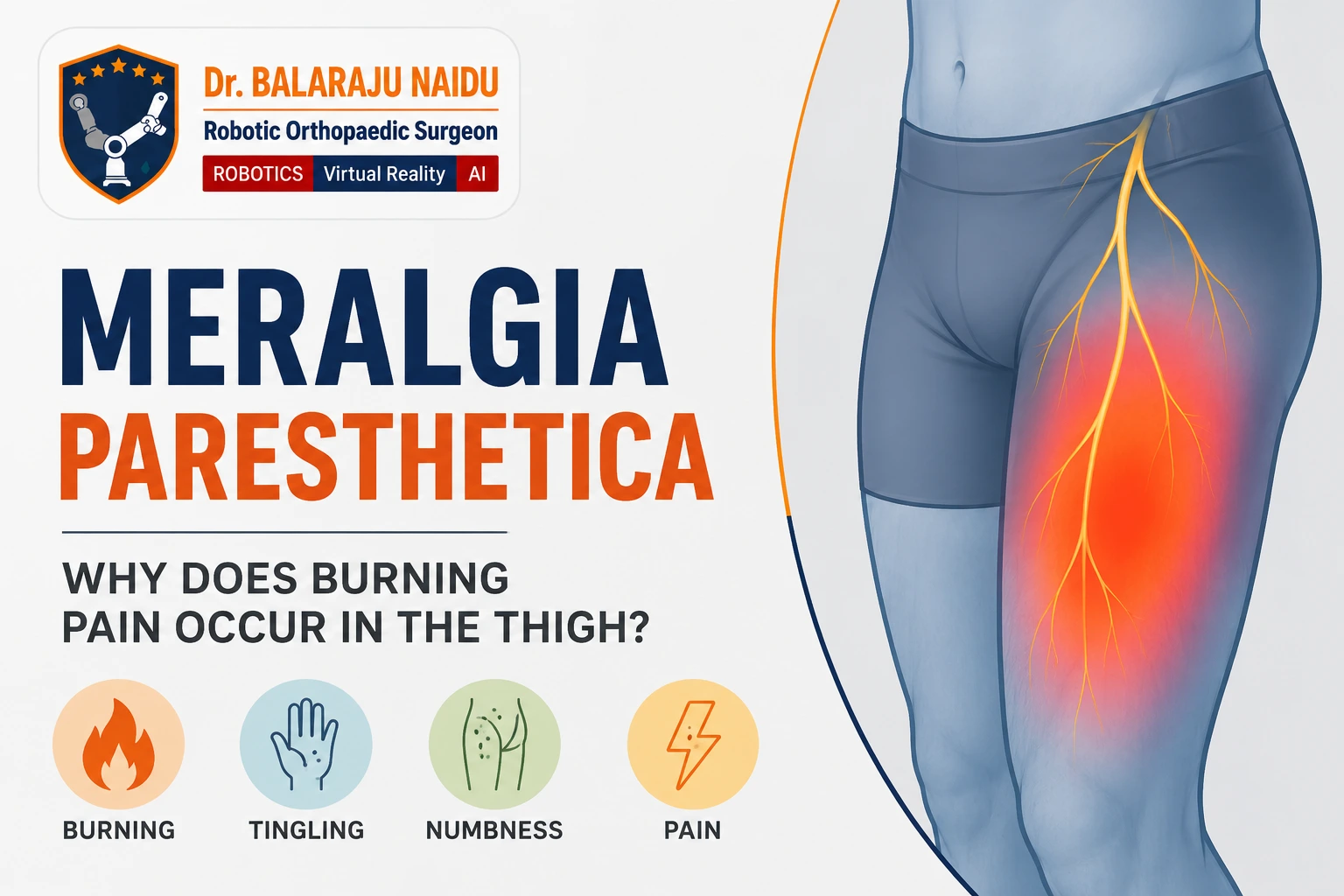
Do you experience a burning sensation, tingling, numbness, or pain on the outer side of your thigh? While many people assume these symptoms are related to muscle strain or back problems, they may actually be caused by a condition known as Meralgia Paresthetica.
Meralgia Paresthetica occurs when a sensory nerve called the lateral femoral cutaneous nerve becomes compressed or irritated. Although the condition is not usually dangerous, it can significantly affect comfort, mobility, and quality of life if left untreated.
In this article, Dr. Balaraju Naidu, Robotic Orthopedic Surgeon, explains the causes, symptoms, diagnosis, and treatment options for Meralgia Paresthetica.
What Is Meralgia Paresthetica?
Meralgia Paresthetica is a nerve compression syndrome affecting the lateral femoral cutaneous nerve (LFCN). This nerve originates from the lower spine and travels through the pelvis to provide sensation to the outer part of the thigh.
Because this nerve is responsible only for sensation and not muscle movement, patients typically experience symptoms such as numbness, burning, or tingling rather than weakness.
When the nerve becomes compressed, irritated, or trapped along its path, it sends abnormal signals to the brain, resulting in discomfort and unusual sensations in the thigh.
Common Symptoms of Meralgia Paresthetica
Symptoms usually affect only one side of the body and may include:
Burning Pain
A persistent burning sensation on the outer or front portion of the thigh.
Tingling Sensation
Many patients describe a “pins and needles” feeling that comes and goes.
Numbness
Loss of sensation or reduced sensitivity in the affected area.
Increased Skin Sensitivity
Even light touch from clothing may feel uncomfortable or painful.
Sharp or Aching Pain
Some individuals experience intermittent stabbing pain or dull aching discomfort.
Symptoms That Worsen With Standing or Walking
Prolonged standing, walking, or certain movements may aggravate symptoms.
What Causes Meralgia Paresthetica?
The most common cause is pressure on the lateral femoral cutaneous nerve as it passes near the groin and hip region.
Obesity or Excess Weight
Extra abdominal weight increases pressure around the pelvis, which can compress the nerve.
Pregnancy
Weight gain and changes in body posture during pregnancy may place additional stress on the nerve.
Tight Clothing
Tight belts, waistbands, corsets, shapewear, or restrictive clothing can compress the nerve pathway.
Prolonged Standing or Walking
Certain occupations or activities involving extended standing or walking may contribute to nerve irritation.
Heavy Tool Belts or Equipment
Workers who wear heavy belts or equipment around the waist may be at higher risk.
Previous Surgery or Injury
Scar tissue, trauma, or surgical procedures involving the pelvis, hip, or abdomen can sometimes affect the nerve.
Diabetes
Diabetes may increase susceptibility to nerve-related problems and can contribute to symptom development.
Who Is at Risk?
Individuals with the following factors are more likely to develop Meralgia Paresthetica:
- Obesity
- Pregnancy
- Diabetes
- Tight clothing habits
- Repetitive hip movements
- Occupations requiring prolonged standing
- Previous pelvic or hip surgeries
- Rapid weight gain
How Is Meralgia Paresthetica Diagnosed?
Diagnosis usually begins with a detailed medical history and physical examination.
Your doctor may assess:
- Location of symptoms
- Sensory changes in the thigh
- Activities that worsen symptoms
- Medical conditions such as diabetes
Additional tests may include:
Nerve Conduction Studies
These help evaluate nerve function and identify nerve compression.
Electromyography (EMG)
Used to rule out other neurological conditions.
Imaging Studies
MRI, CT scans, or ultrasound may be recommended if another underlying cause is suspected.
Treatment Options
The good news is that many cases improve with conservative treatment.
Lifestyle Modifications
Reducing pressure on the affected nerve is often the first step.
This may include:
- Wearing loose-fitting clothing
- Avoiding tight belts
- Weight reduction
- Modifying activities that worsen symptoms
Medications
Doctors may prescribe:
- Anti-inflammatory medications
- Pain-relieving medicines
- Medications for nerve pain
Physical Therapy
Specific stretching and strengthening exercises may help reduce nerve irritation and improve mobility.
Nerve Block Injections
In some cases, local anesthetic or corticosteroid injections may provide symptom relief.
Surgical Treatment
Surgery is rarely required but may be considered when symptoms are severe and do not respond to conservative measures.
Can Meralgia Paresthetica Be Prevented?
While not all cases can be prevented, certain measures may reduce risk:
- Maintain a healthy body weight
- Avoid excessively tight clothing
- Take breaks during prolonged standing
- Manage diabetes effectively
- Maintain good posture and body mechanics
When Should You See a Doctor?
Seek medical evaluation if you experience:
- Persistent burning pain in the thigh
- Ongoing numbness or tingling
- Symptoms that interfere with daily activities
- Increasing discomfort despite home measures
Early diagnosis can help prevent chronic nerve irritation and improve treatment outcomes.
Conclusion
Meralgia Paresthetica is a common nerve compression condition that causes burning pain, tingling, numbness, and discomfort on the outer thigh. Although it is often associated with obesity, pregnancy, tight clothing, or prolonged pressure on the nerve, the condition is usually treatable with lifestyle modifications and appropriate medical care.
If you are experiencing persistent thigh pain or abnormal sensations, consult an orthopedic specialist for proper evaluation and treatment.
Dr. Balaraju Naidu, Robotic Orthopedic Surgeon, emphasizes that early diagnosis and timely treatment can help relieve symptoms and improve quality of life.
For Appointments:
Dr. Balaraju Naidu, Robotic Orthopedic Surgeon
ONUS Robotic Hospitals – Hyderabad