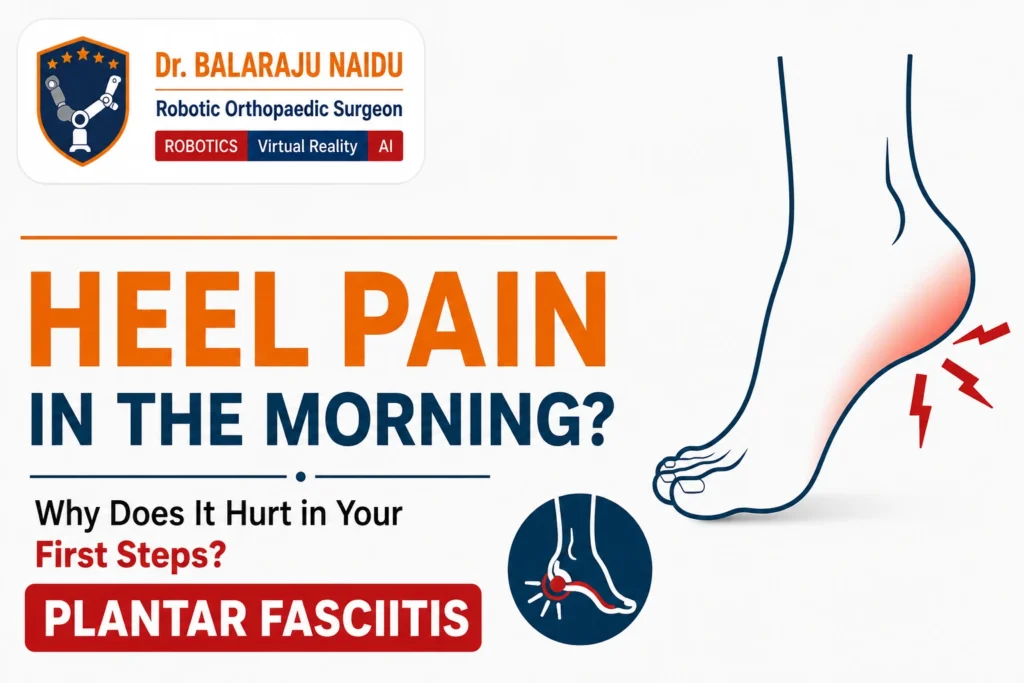
Plantar Fasciitis: Why Does Your Heel Hurt During the First Steps in the Morning?- By Dr. Balaraju Naidu, Robotic Orthopedic Surgeon, ONUS Robotic Hospitals
Introduction
Do you experience a sharp, stabbing pain in your heel when you take your first few steps after getting out of bed? If so, you may be suffering from Plantar Fasciitis, one of the most common causes of heel pain in adults.
Many people notice that the pain is most severe during the first steps of the morning or after sitting for a long period. Although the discomfort may improve after walking for a few minutes, it often returns after prolonged standing, walking, or physical activity.
Plantar fasciitis can significantly affect daily activities, exercise routines, and overall quality of life. Fortunately, early diagnosis and appropriate treatment can help relieve symptoms and prevent long-term problems.
What Is Plantar Fasciitis?
The plantar fascia is a thick band of connective tissue that runs along the bottom of the foot, connecting the heel bone to the toes.
Its primary functions include:
- Supporting the arch of the foot
- Absorbing shock during walking and running
- Maintaining foot stability
When excessive stress is placed on this tissue, tiny tears and irritation can develop, resulting in inflammation and pain. This condition is known as Plantar Fasciitis.
Why Is Heel Pain Worse in the Morning?
One of the hallmark symptoms of plantar fasciitis is severe pain during the first few steps after waking up.
This happens because:
- During sleep, the plantar fascia remains shortened and relaxed.
- When you stand up and begin walking, the tissue suddenly stretches.
- This stretching places stress on the irritated fascia, causing sharp heel pain.
As you continue walking, the tissue gradually loosens, and the pain may temporarily decrease.
Common Symptoms of Plantar Fasciitis
Sharp Heel Pain
Pain is usually felt underneath or near the heel.
Morning Pain
Symptoms are often most intense during the first steps after waking.
Pain After Rest
Discomfort may return after sitting for long periods.
Pain After Activity
Extended walking, standing, or exercise may worsen symptoms.
Foot Stiffness
Many patients notice tightness in the heel and arch.
Tenderness Around the Heel
Pressing on specific areas of the heel may trigger pain.
What Causes Plantar Fasciitis?
Several factors can contribute to irritation of the plantar fascia.
Excess Body Weight
Being overweight increases the amount of pressure placed on the feet during daily activities.
This additional stress can contribute to inflammation and tissue damage.
Prolonged Standing
People who stand for long hours at work may place repetitive strain on the plantar fascia.
Common examples include:
- Teachers
- Healthcare workers
- Retail employees
- Factory workers
Improper Footwear
Footwear that lacks adequate support or cushioning may increase stress on the heel and arch.
Examples include:
- Worn-out shoes
- Unsupportive footwear
- Flat sandals without arch support
Lack of Regular Exercise
Weak foot and calf muscles may reduce the foot’s ability to absorb stress efficiently.
Tight Calf Muscles
Tight calf muscles can increase tension on the plantar fascia and contribute to heel pain.
High-Impact Activities
Running, jumping, and repetitive sports activities may increase the risk of plantar fascia irritation.
What Is the Relationship Between Heel Spurs and Plantar Fasciitis?
Many patients are told they have a heel spur after an X-ray.
A heel spur is a small bony growth that develops near the heel bone.
Important facts include:
- Not everyone with a heel spur has pain.
- Not everyone with plantar fasciitis has a heel spur.
- Heel spurs are often associated with long-term stress on the plantar fascia.
The presence of a heel spur does not automatically mean surgery is required.
Who Is Most at Risk?
Plantar fasciitis is more common among:
- Adults between 40 and 60 years of age
- Individuals who are overweight
- People who stand for long periods
- Runners and athletes
- Individuals with flat feet
- People with high arches
- Those who wear unsupportive footwear
How Is Plantar Fasciitis Diagnosed?
An orthopedic specialist typically diagnoses plantar fasciitis through:
Medical History
Understanding the pattern of pain and symptoms.
Physical Examination
Checking:
- Heel tenderness
- Foot structure
- Arch alignment
- Calf muscle tightness
Imaging Studies
X-rays or other imaging may be recommended when necessary to rule out other causes of heel pain.
Treatment Options for Plantar Fasciitis
Most patients improve with non-surgical treatment.
Stretching Exercises
Stretching the plantar fascia and calf muscles can help reduce tension and improve flexibility.
Regular stretching is often one of the most effective treatments.
Physiotherapy
Physiotherapy may help:
- Reduce pain
- Improve mobility
- Strengthen supporting muscles
- Improve foot mechanics
Proper Footwear
Choosing supportive footwear can significantly reduce stress on the heel.
Good footwear should provide:
- Arch support
- Cushioning
- Stability
- Shock absorption
Weight Management
Reducing excess body weight decreases pressure on the plantar fascia and may improve symptoms.
Activity Modification
Temporarily reducing activities that aggravate symptoms may allow the tissue to heal.
Orthotic Supports
Some patients may benefit from customized arch supports or shoe inserts.
Can Plantar Fasciitis Be Prevented?
Although not all cases can be prevented, several strategies may reduce risk.
Wear Proper Footwear
Replace worn-out shoes and choose supportive footwear.
Maintain a Healthy Weight
Reducing excess body weight decreases foot stress.
Stretch Regularly
Stretching the calves and plantar fascia can improve flexibility.
Avoid Sudden Increases in Activity
Gradually increase exercise intensity to avoid overloading the foot.
Strengthen Foot Muscles
Regular exercise can improve foot function and stability.
When Should You See a Doctor?
Consult an orthopedic specialist if:
- Heel pain persists for several weeks
- Walking becomes difficult
- Symptoms interfere with daily activities
- Pain worsens despite rest
- Home remedies fail to provide relief
Early treatment can prevent chronic pain and long-term complications.
Conclusion
Plantar fasciitis is one of the most common causes of heel pain and is especially known for causing sharp pain during the first steps of the morning. Factors such as excess weight, prolonged standing, improper footwear, tight calf muscles, and repetitive stress can contribute to the condition.
The good news is that most patients improve with non-surgical treatment, including stretching exercises, physiotherapy, proper footwear, and weight management.
If persistent heel pain is affecting your daily life, seek a proper orthopedic evaluation. Early diagnosis and treatment can help you return to comfortable, pain-free movement.
For Appointments:
Dr. Balaraju Naidu, Robotic Orthopedic Surgeon
ONUS Robotic Hospitals – Hyderabad