


Minimally Invasive Spine Surgery
Minimally Invasive Spine Surgery
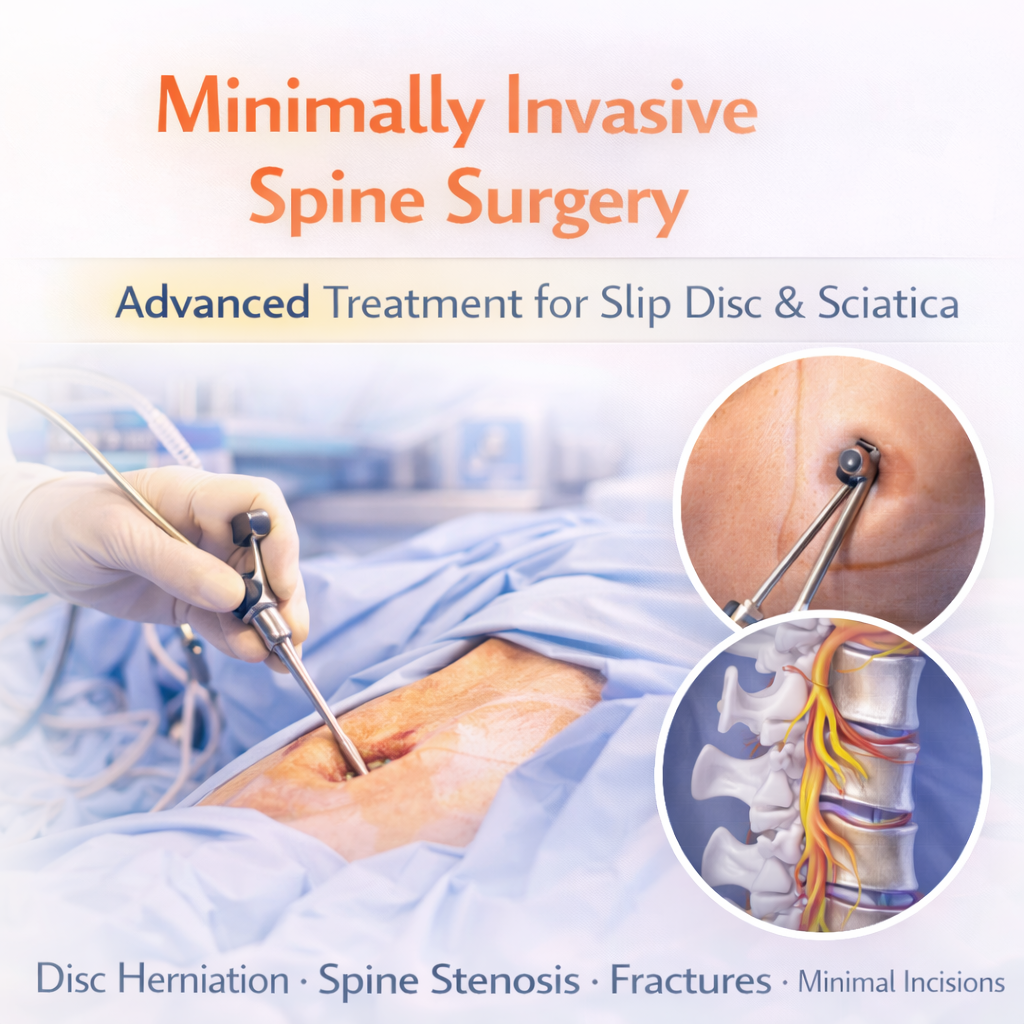
Overview
Minimally Invasive Spine Surgery (MISS) is an advanced surgical technique used to treat spinal conditions through small incisions with minimal muscle damage. Unlike traditional open spine surgery, MISS uses specialized instruments, microscopes, and imaging guidance to access the spine with precision.
This approach results in less pain, faster recovery, and reduced hospital stay.
Conditions Treated with MISS
Slip disc (Lumbar Disc Herniation)
Sciatica
Spinal stenosis
Degenerative disc disease
Spondylolisthesis
Vertebral fractures
Nerve compression
Spinal instability
What Makes It “Minimally Invasive”?
Instead of large muscle-cutting incisions:
Small tubular retractors are used
Muscles are gently separated, not cut
High-definition magnification improves precision
Real-time imaging ensures accuracy
This protects surrounding tissues and reduces complications.
Types of Minimally Invasive Spine Procedures
1️⃣ Microdiscectomy
Removal of herniated disc pressing on nerve.
2️⃣ Minimally Invasive Decompression
Relieves pressure in spinal stenosis.
3️⃣ Minimally Invasive Fusion
Stabilizes unstable spine segments using small incisions.
4️⃣ Vertebroplasty / Kyphoplasty
Treats spinal compression fractures.
When Is Surgery Recommended?
Surgery is considered if:
Severe back or leg pain
Numbness or weakness
Failed conservative treatment
MRI showing nerve compression
Difficulty walking
Progressive neurological symptoms
Early intervention prevents permanent nerve damage.
Benefits of Minimally Invasive Spine Surgery
✅ Smaller incisions
✅ Less blood loss
✅ Reduced muscle damage
✅ Less post-operative pain
✅ Shorter hospital stay
✅ Faster return to daily activities
✅ Lower infection risk
Recovery & Rehabilitation
Walking often within 24 hours
Early physiotherapy
Return to desk work: 2–4 weeks
Full recovery depends on procedure type
Proper rehabilitation enhances long-term outcomes.