


Pelvic & Acetabular Fracture Surgery
Pelvic & Acetabular Fracture Surgery
Overview
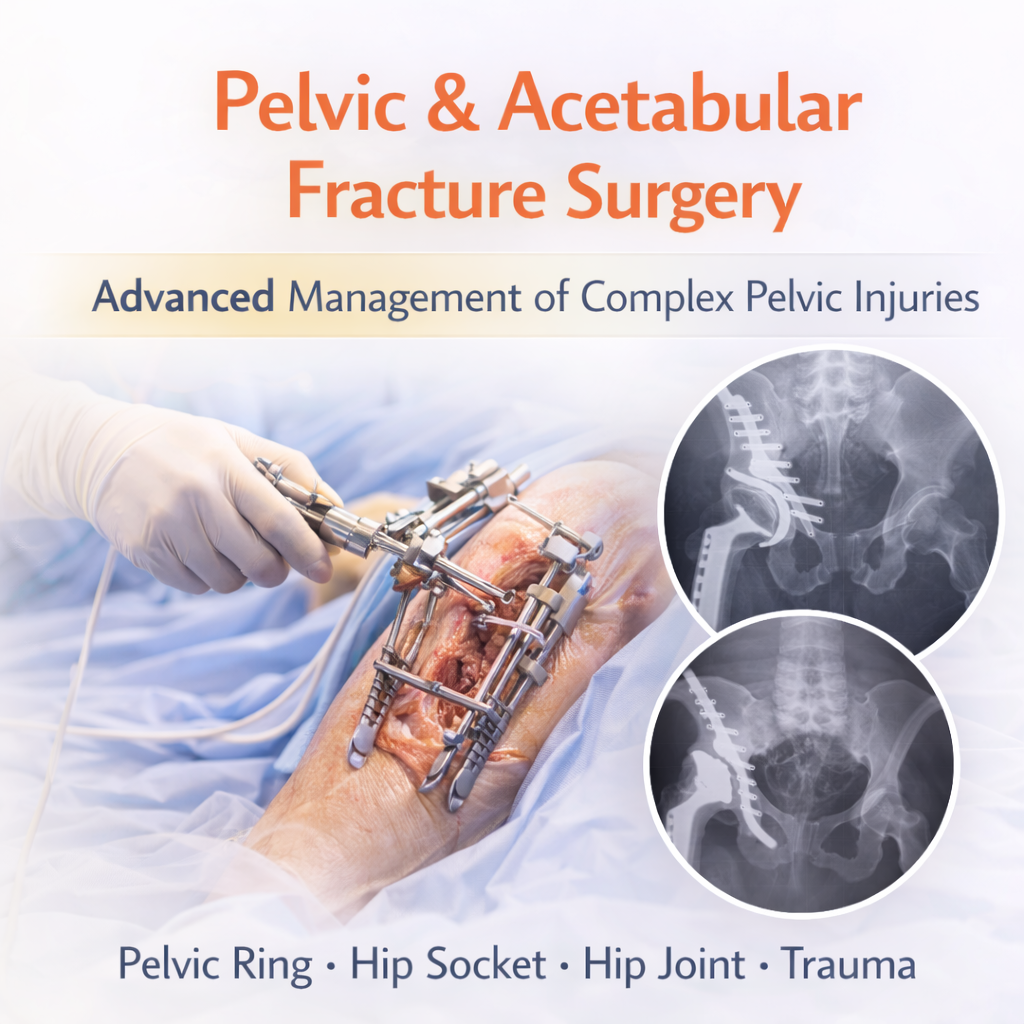
Pelvic & Acetabular Fracture Surgery is a highly specialized orthopedic procedure performed to treat complex fractures of the pelvic ring and hip socket (acetabulum). These injuries usually occur due to high-energy trauma such as road traffic accidents, falls from height, or severe crush injuries.
Because the pelvis protects major blood vessels, nerves, and internal organs, these fractures require urgent assessment and expert surgical management.
What Are Pelvic & Acetabular Fractures?
Pelvic Fractures
Involve breaks in the pelvic ring and may be stable or unstable.
Acetabular Fractures
Involve the hip socket where the femoral head fits. These are complex intra-articular fractures that directly affect hip movement and long-term joint health.
If not properly treated, they can lead to:
Chronic hip pain
Post-traumatic arthritis
Limb shortening
Hip instability
When Is Surgery Required?
Surgery is recommended when there is:
Displaced fracture
Hip joint incongruity
Pelvic instability
Multiple fracture fragments
Associated nerve or vessel injury
Inability to bear weight
Early anatomical reduction improves long-term outcomes.
Surgical Techniques
Open Reduction & Internal Fixation (ORIF)
Realignment of fracture fragments using plates and screws.
Percutaneous Fixation
Minimally invasive screw fixation for selected cases.
Combined Approaches
Used in complex acetabular patterns.
Reconstruction with Bone Grafting
For cases with bone loss.
Each surgery is planned using advanced imaging and 3D evaluation.
Challenges in Pelvic & Acetabular Surgery
Complex 3D anatomy
Proximity to major vessels and nerves
High blood loss risk
Need for precise joint alignment
Risk of post-traumatic arthritis
These procedures demand experienced trauma and reconstruction expertise.
Benefits of Expert Surgical Management
✅ Restores pelvic stability
✅ Preserves hip joint function
✅ Reduces risk of arthritis
✅ Corrects limb alignment
✅ Enables early mobilization
✅ Improves long-term mobility
Recovery & Rehabilitation
Initial bed rest with monitored mobilization
Gradual weight bearing
Physiotherapy for hip strengthening
Regular imaging follow-up
Recovery depends on fracture severity and associated injuries.