

Robotic Total Knee Replacement (TKR)
Robotic Total Knee Replacement (TKR)
Robotic Total Knee Replacement (TKR)
Overview
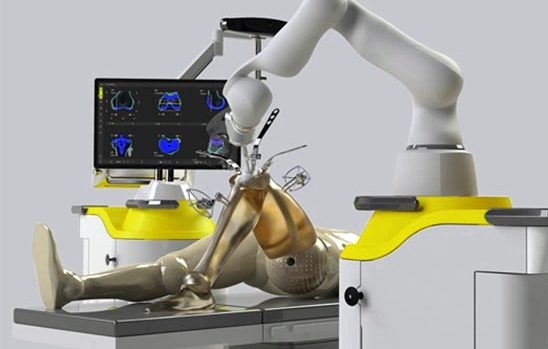
Robotic Total Knee Replacement (TKR) is an advanced form of knee replacement surgery that uses computer-assisted robotic technology to achieve exceptional precision, personalized alignment, and long-lasting results. Unlike conventional knee replacement, robotic-assisted TKR allows the surgeon to plan and execute the surgery based on the patient’s unique knee anatomy, resulting in better function, faster recovery, and improved implant longevity.
Under the expertise of Dr. Balaraju Naidu, robotic knee replacement is performed with a strong focus on accuracy, safety, and long-term joint performance—especially in complex cases involving deformities or severe arthritis.
What Makes Robotic Knee Replacement Different?
Robotic knee replacement is surgeon-controlled technology. The robot does not perform surgery on its own; instead, it assists the surgeon by:
Creating a 3D virtual model of the patient’s knee
Allowing pre-surgical planning with millimeter-level accuracy
Providing real-time feedback during surgery
Ensuring precise bone cuts and implant positioning
Protecting surrounding soft tissues and ligaments
This leads to a more natural-feeling knee and consistent surgical outcomes.
Who Needs Robotic Total Knee Replacement?
Indications
Robotic TKR is recommended for patients suffering from:
Advanced osteoarthritis of the knee
Rheumatoid arthritis
Severe knee pain affecting daily activities
Bow-leg or knock-knee deformities
Stiffness and reduced knee movement
Failed conservative treatments (medications, injections, physiotherapy)
Early failure or dissatisfaction with previous knee surgery
It is particularly beneficial for younger, active patients and those with complex knee anatomy.
Benefits of Robotic Total Knee Replacement
✅ Highly accurate implant positioning
✅ Better alignment and joint balance
✅ Reduced pain after surgery
✅ Faster recovery and rehabilitation
✅ Lower risk of implant loosening
✅ Improved knee function and movement
✅ Longer implant lifespan
✅ Higher patient satisfaction
Clinical studies show that robotic knee replacement significantly reduces alignment errors, which is a key factor in long-term success.
Surgical Expertise of Dr. Balaraju Naidu
With international fellowships in robotic joint replacement, computer navigation, and complex revision surgery, Dr. Balaraju Naidu brings global expertise to robotic knee replacement in India.
His approach focuses on:
Individualized surgical planning
Precise ligament balancing
Preservation of healthy bone and tissue
Advanced pain management and rapid rehabilitation
Handling complex deformities and high-risk cases
This expertise ensures predictable outcomes even in challenging knee replacements.
Procedure: Step-by-Step Overview
Preoperative Planning
A detailed digital map of the knee is created to plan implant size, position, and alignment.Robotic-Assisted Surgery
During surgery, the robotic system guides precise bone preparation while the surgeon maintains full control.Implant Placement
Knee implants are placed with high accuracy to restore natural joint movement.Verification & Balancing
Ligament tension and joint stability are checked in real time for optimal performance.
Recovery After Robotic Knee Replacement
Walking usually begins within 24 hours
Hospital stay is typically 2–3 days
Faster return to daily activities compared to conventional surgery
Structured physiotherapy for strength and flexibility
Most patients resume normal routines within 4–6 weeks
Why Choose Robotic Knee Replacement at ONUS?
Advanced robotic technology
Internationally trained surgeon
High-volume joint replacement center
Comprehensive rehabilitation support
Transparent decision-making and second opinions available