


Rotator Cuff Repair
Rotator Cuff Repair
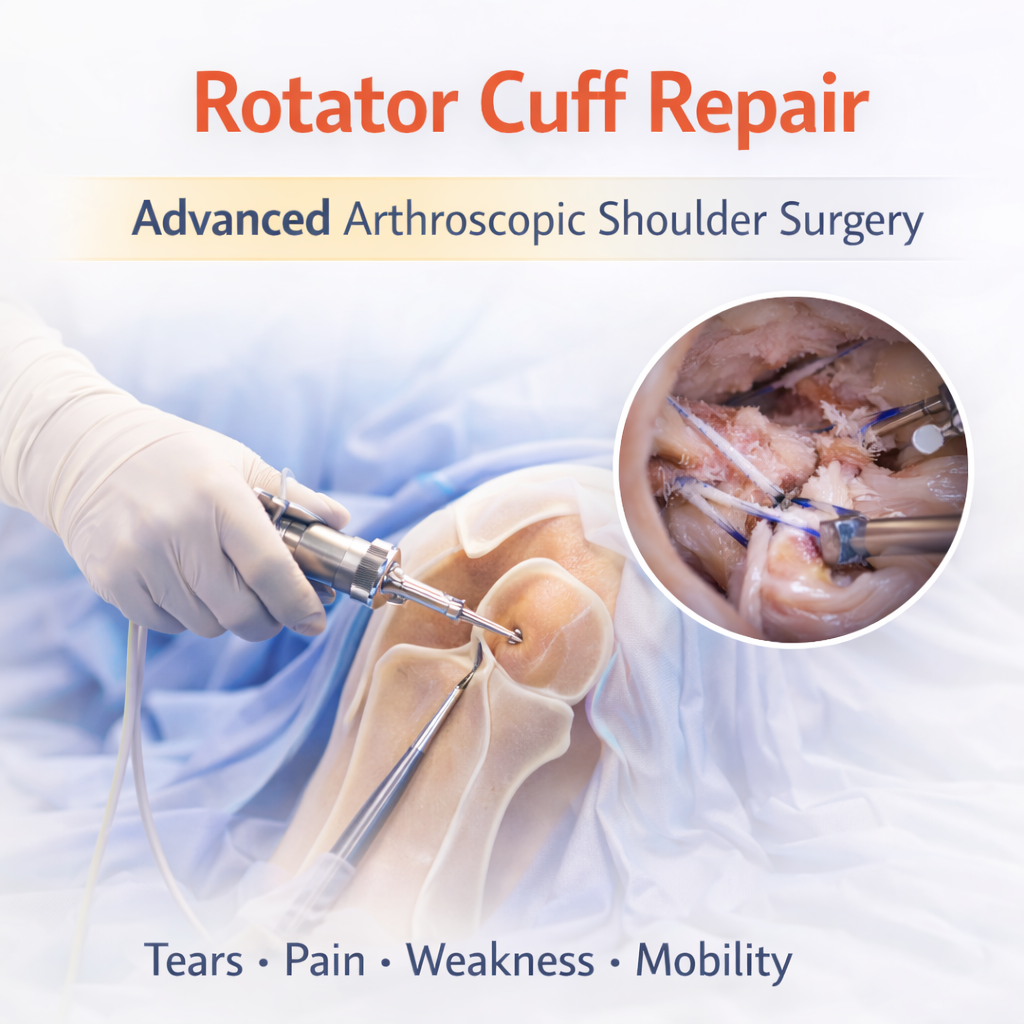
Overview
Rotator Cuff Repair is a surgical procedure performed to repair a torn rotator cuff tendon in the shoulder. The rotator cuff is a group of muscles and tendons that stabilize the shoulder joint and allow smooth arm movement.
Rotator cuff tears commonly occur due to:
Sports injuries
Heavy lifting
Repetitive overhead activity
Age-related degeneration
When the tendon is completely torn, it does not heal on its own and may require surgical repair to restore strength and function.
What Is Rotator Cuff Repair?
Rotator cuff repair is typically performed using minimally invasive arthroscopic surgery. Through small keyhole incisions:
The torn tendon is identified
The damaged edges are prepared
Special anchors are inserted into the bone
The tendon is reattached securely
This restores normal shoulder mechanics and stability.
Symptoms of Rotator Cuff Tear
Shoulder pain, especially at night
Weakness while lifting the arm
Difficulty reaching overhead
Pain during sleep on affected side
Clicking or catching sensation
Early treatment prevents worsening tear and muscle atrophy.
When Is Surgery Recommended?
Surgery is advised if:
Full-thickness tear on MRI
Persistent pain > 3 months
Failed physiotherapy
Progressive weakness
Active lifestyle or sports demand
Benefits of Rotator Cuff Repair
✅ Restores shoulder strength
✅ Reduces pain
✅ Improves range of motion
✅ Prevents further tendon retraction
✅ Minimally invasive technique
✅ Faster rehabilitation
Procedure – Step by Step
Clinical exam and MRI confirmation
Arthroscopic keyhole surgery
Removal of damaged tissue
Anchor placement in bone
Tendon reattachment
Stability testing
Duration: 60–120 minutes.
Recovery & Rehabilitation
Arm sling for 3–6 weeks
Passive exercises initially
Gradual strengthening after 6 weeks
Return to desk work: 2–3 weeks
Return to sports: 4–6 months
Rehabilitation is crucial for full recovery.