Introduction: The Evolution of Knee Replacement Surgery
Knee replacement surgery has undergone a revolutionary transformation over the past decade. Traditional techniques have delivered excellent outcomes, but the introduction of robotic-assisted knee replacement surgery has elevated surgical precision to an entirely new level.
Today, technology allows surgeons to achieve sub-millimeter accuracy, improving implant longevity, joint stability, and overall patient satisfaction.
One key concept defines this advancement:
👉 In knee replacement, even 1mm matters.
What Is Robotic Knee Replacement?
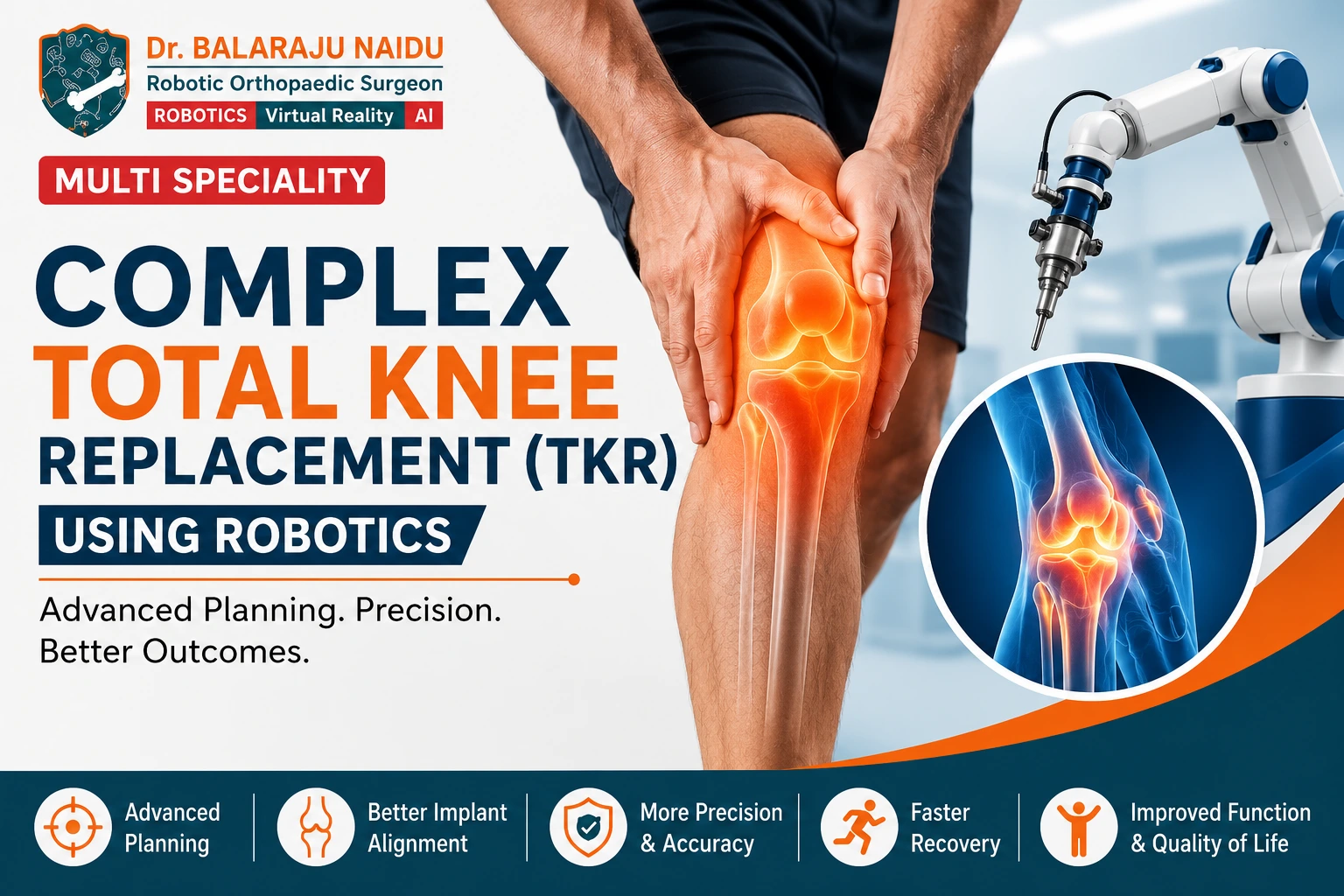
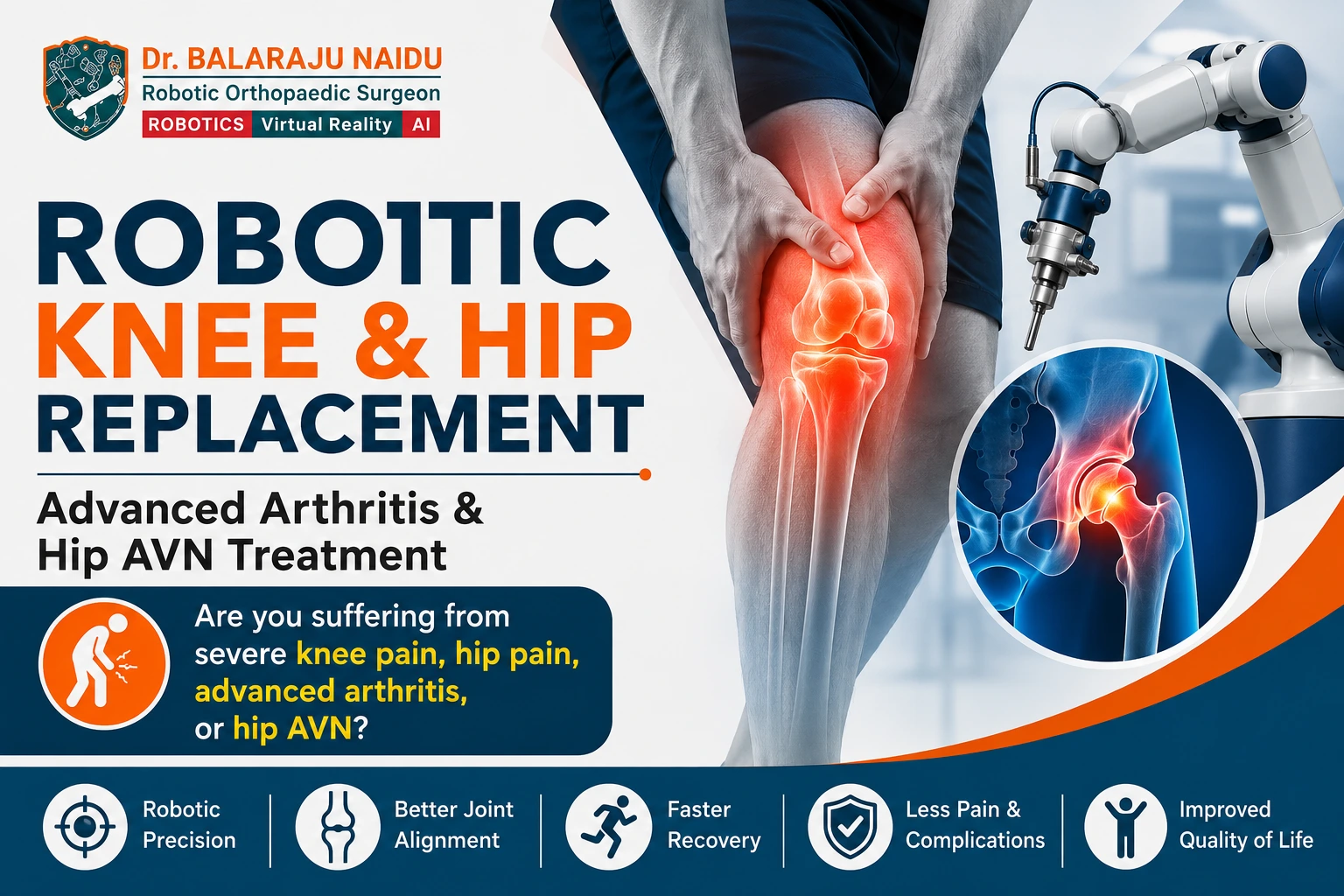
Robotic knee replacement is an advanced joint replacement procedure in which a robotic system assists the orthopedic surgeon in planning and executing highly precise bone cuts and implant positioning.
Important Clarification:
The robot does NOT perform surgery independently.
It works entirely under:
The surgeon’s control
Pre-operative planning
Real-time intraoperative feedback
The surgeon remains in complete command throughout the procedure.
Why 1mm Precision Matters in Knee Replacement
The knee joint functions based on precise alignment and balance.
Even small alignment errors can cause:
Uneven implant wear
Persistent post-operative pain
Implant loosening
Reduced range of motion
Early failure requiring revision surgery
Robotic systems allow:
✔ Bone cuts accurate within 1mm
✔ Real-time ligament balancing
✔ Personalized implant positioning
✔ Improved mechanical alignment
✔ Soft tissue protection
This precision significantly enhances long-term functional outcomes.
Advantages of Robotic Knee Replacement
1️⃣ Superior Surgical Accuracy
Pre-operative 3D mapping allows personalized surgical planning.
2️⃣ Better Knee Function
Improved alignment enhances joint biomechanics.
3️⃣ Reduced Blood Loss
Precise bone resection minimizes soft tissue trauma.
4️⃣ Faster Rehabilitation
Patients often mobilize earlier.
5️⃣ Lower Risk of Revision Surgery
Better alignment = longer implant life.
6️⃣ Improved Implant Longevity
Accurate placement reduces wear and tear.
Recovery Timeline: What Patients Can Expect
Most patients experience:
🟢 Walking within 24 hours
🟢 Hospital discharge in 2–3 days
🟢 Return to routine activities in 4–6 weeks
🟢 Full functional recovery over 3–6 months
Rehabilitation includes:
Guided physiotherapy
Muscle strengthening
Gradual weight-bearing
Robotic precision helps reduce post-operative pain and swelling, improving early mobility.
Cost vs Benefit Analysis
Robotic knee replacement may involve a slightly higher upfront cost compared to conventional surgery.
However, long-term benefits often outweigh the initial difference due to:
Reduced complication rates
Lower revision risk
Better functional outcomes
Higher patient satisfaction
Longer implant lifespan
When evaluated over 15–25 years, robotic surgery often proves to be a value-based investment in quality of life.
Longevity of Knee Implants
With proper alignment and post-operative care:
Modern knee implants can last 20–25 years or more.
Robotic-assisted precision improves:
Load distribution
Ligament balance
Implant stability
Which directly influences longevity.
Who Is an Ideal Candidate?
Robotic knee replacement is suitable for:
Severe knee osteoarthritis
Failed conservative treatment
Significant deformity (bow legs / knock knees)
Ligament imbalance
Younger active patients seeking long-term durability
A detailed evaluation determines suitability.
Why Precision Directly Affects Quality of Life
Joint replacement is not just about removing pain.
It is about restoring:
Stability
Confidence
Movement
Independence
Technology does not replace the surgeon.
It enhances the surgeon’s ability to deliver precision.
And in joint replacement —
precision determines outcomes.