Introduction: Orthopedics Is Entering an Immersive Era
Orthopedic surgery has traditionally relied on apprenticeship-based learning — observation, cadaver labs, and supervised live procedures. While effective, these methods have inherent limitations.
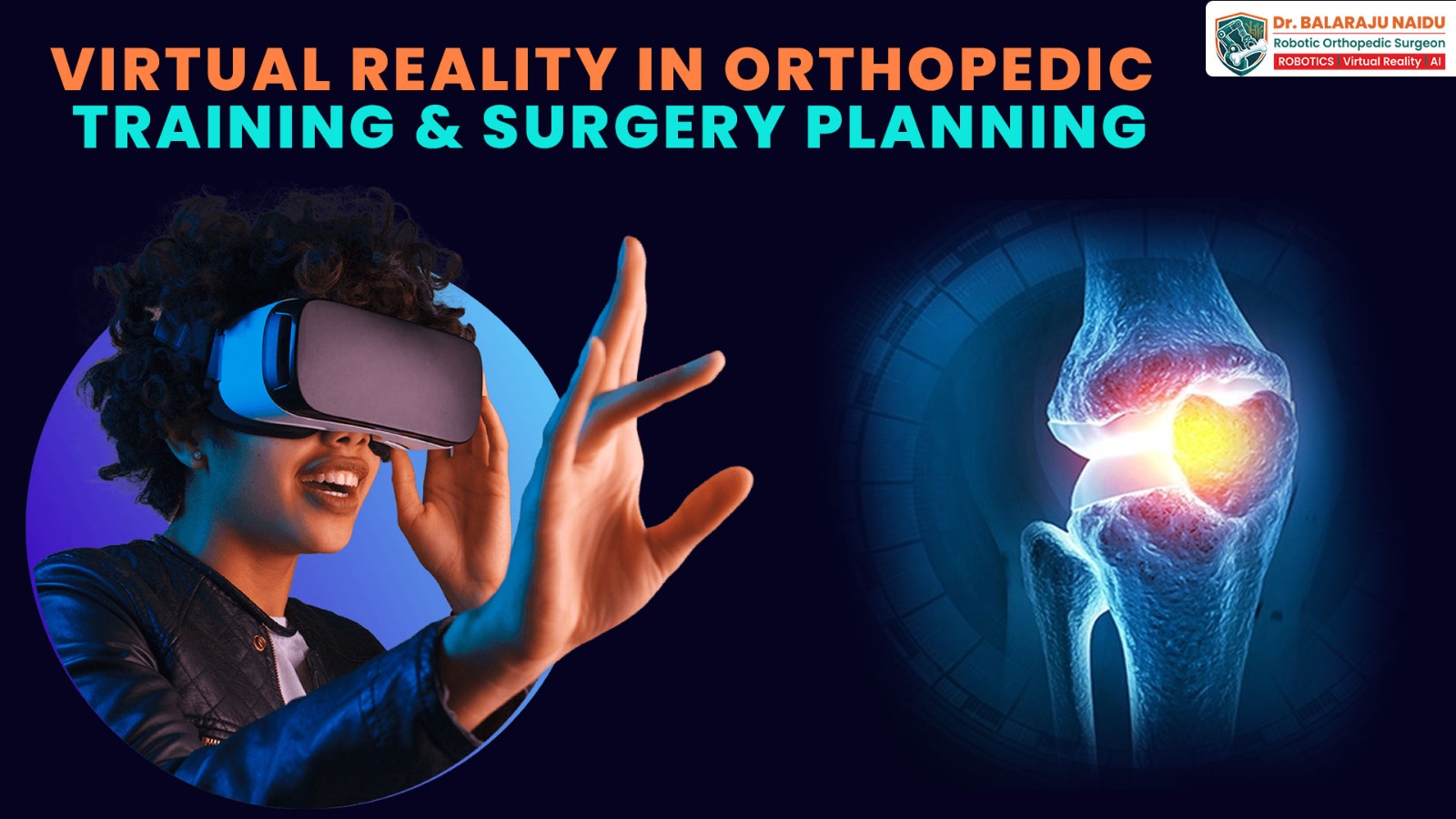
Today, Virtual Reality (VR) is transforming orthopedic education and surgical planning by offering immersive, data-driven simulations that allow surgeons to practice, refine, and plan procedures before entering the operating room.
VR is no longer futuristic — it is becoming an essential surgical tool.
What Is Virtual Reality in Orthopedics?
Virtual Reality in orthopedics involves creating interactive 3D simulations of bones, joints, fractures, and surgical procedures using CT and MRI imaging data.
Surgeons can:
Enter a fully immersive digital surgical environment
Manipulate bones and implants virtually
Simulate surgical steps
Predict technical challenges
This bridges the gap between theoretical learning and real surgical performance.
🦴 How VR Enhances Orthopedic Training
Traditional Surgical Training Includes:
Observation in operation theatres
Cadaver dissection labs
Mentored live surgeries
Limited hands-on repetition
VR Adds a Powerful Dimension:
✔ Realistic fracture and joint replacement simulations
✔ Repetitive skill development without patient risk
✔ Objective performance scoring
✔ Error correction in a safe environment
✔ Muscle memory reinforcement
Studies show that VR-based surgical training:
Reduces intraoperative errors
Improves hand-eye coordination
Shortens the learning curve
Enhances procedural confidence
Unlike traditional methods, VR allows unlimited repetition without ethical or practical limitations.
🧠 VR in Pre-Operative Surgical Planning
In complex cases such as:
Severe deformity correction
Revision joint replacement
Complex fractures
Tumor-related bone reconstruction
VR enables surgeons to:
Convert CT/MRI scans into 3D immersive models
Assess bone defects from multiple angles
Simulate implant size and alignment
Plan bone cuts precisely
Anticipate intraoperative complications
This significantly improves surgical preparedness.
🎯 Benefits for Patients
When surgeons plan with VR, patients benefit through:
More predictable outcomes
Reduced operative time
Less blood loss
Lower complication rates
Personalized surgical approach
Improved implant positioning
VR enhances preparation — and preparation enhances outcomes.
⚙️ Integration with Robotics and AI
The most exciting evolution lies in combining:
VR
Robotic-assisted surgery
Artificial Intelligence
Future integration may allow:
Real-time surgical simulation during procedures
Digital twin models of patients
Predictive modeling of post-operative recovery
Remote global mentoring
Orthopedic surgery is becoming data-driven and immersive.
⚠️ Current Limitations
While promising, VR has limitations:
High infrastructure cost
Need for technical training
Limited availability in smaller centers
Dependence on high-quality imaging data
However, as adoption increases, costs are expected to reduce.
🔮 The Future Outlook
Virtual Reality is no longer experimental — it is rapidly becoming a core component of advanced orthopedic practice.
With increasing global investment in surgical simulation technology, the next decade may redefine how surgeons train, plan, and operate.
Orthopedics is not just evolving.
It is becoming immersive, intelligent, and precision-driven.
📌 FINAL TAKEAWAY
Virtual Reality:
✔ Improves surgical training
✔ Enhances pre-operative planning
✔ Reduces variability
✔ Benefits patients
✔ Prepares the next generation of surgeons
The future of orthopedic surgery is immersive.