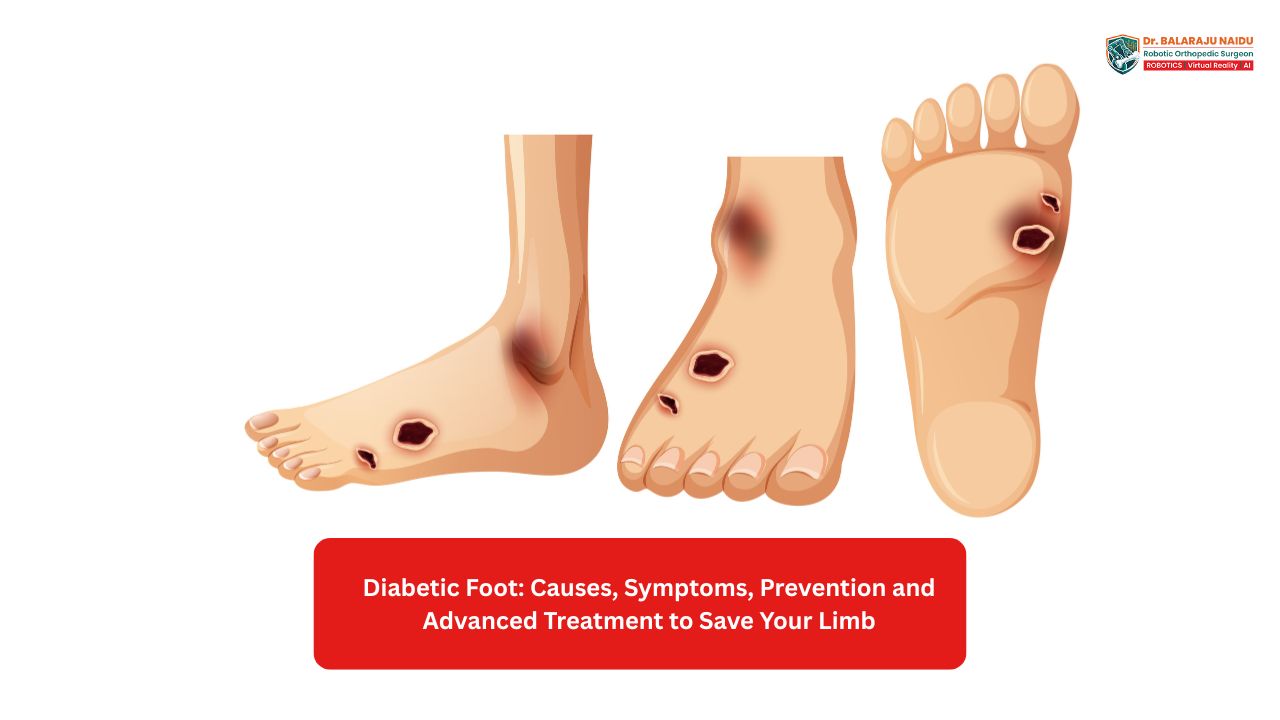
Diabetic Foot: Causes, Symptoms, Prevention and Advanced Treatment to Save Your Limb- By Dr. Balaraju Naidu, Robotic Orthopedic Surgeon, ONUS Robotic Hospitals
Why Early Detection and Proper Foot Care Can Prevent Serious Complications
Can a small wound on the foot become a life-threatening problem in people with diabetes? The answer is yes. A simple cut or blister can progress into a severe infection if not treated early. This condition is known as Diabetic Foot.
At ONUS Robotic Hospitals, specialists like Dr. Balaraju Naidu emphasize early detection, proper wound care, and structured diabetic foot programs to prevent ulcers, infections, and amputations.
The most important message for patients and families:
Early detection saves limbs. Delay increases the risk of amputation.
What Is Diabetic Foot?
Diabetic foot refers to a group of foot problems that occur in people with diabetes due to:
- Nerve damage
- Poor blood circulation
- Reduced healing capacity
- Increased risk of infection
Even a minor injury can become dangerous if ignored.
Why Does Diabetes Affect the Feet?
Two major complications of diabetes damage the feet.
1) Diabetic Neuropathy (Nerve Damage)
High blood sugar damages nerves.
This causes:
- Loss of sensation
- Numbness
- Burning sensation
- Reduced pain awareness
Patients may not feel injuries.
2) Poor Blood Circulation
Diabetes reduces blood flow to the feet.
This leads to:
- Slow wound healing
- Increased infection risk
- Tissue damage
Together, these problems increase the risk of ulcers and amputation.
Common Symptoms of Diabetic Foot
Watch for these early warning signs.
Early Symptoms
- Numbness or tingling
- Burning sensation in feet
- Dry or cracked skin
- Foot pain
- Reduced sensation
Advanced Symptoms
- Non-healing wounds
- Foot ulcers
- Swelling
- Redness
- Infection
- Skin discoloration
- Foul smell from wound
These symptoms require immediate medical attention.
Risk Factors for Diabetic Foot
Certain conditions increase the risk.
High-Risk Patients
- Long-standing diabetes
- Poor blood sugar control
- Smoking
- Obesity
- Poor footwear
- Previous foot ulcers
- Peripheral artery disease
These patients require regular screening.
Complications of Untreated Diabetic Foot
Ignoring symptoms can lead to serious consequences.
Possible Complications
- Foot ulcers
- Deep infections
- Gangrene
- Bone infection
- Amputation
- Disability
This is why early intervention is critical.
Diagnosis of Diabetic Foot
Doctors evaluate diabetic foot using:
Clinical Examination
- Foot inspection
- Sensation testing
- Circulation assessment
Diagnostic Tests
- Blood sugar tests
- Doppler scan
- X-ray
- MRI
These tests help identify infection and tissue damage.
Treatment Options for Diabetic Foot
Treatment depends on severity and infection level.
Step 1: Blood Sugar Control
This is the foundation of treatment.
Good glucose control:
- Improves healing
- Reduces infection risk
- Prevents complications
Step 2: Wound Care and Dressing
Advanced wound care includes:
- Regular cleaning
- Sterile dressing
- Pressure relief
- Infection control
Proper wound care prevents progression.
Step 3: Antibiotic Treatment
Used when infection is present.
This helps:
- Kill bacteria
- Reduce inflammation
- Prevent spread
Step 4: Advanced Surgical Care
In severe cases:
- Debridement (removal of dead tissue)
- Abscess drainage
- Reconstructive surgery
- Limb salvage procedures
These treatments prevent amputation.
Prevention Tips for Diabetic Foot
Prevention is the most powerful treatment.
Daily Foot Care Checklist
- Check feet daily
- Wash and dry feet carefully
- Moisturize skin
- Trim nails safely
- Wear comfortable footwear
- Avoid walking barefoot
- Control blood sugar
These habits reduce complications.
When Should You See a Doctor Immediately?
Seek urgent medical care if:
- A wound does not heal within 3 days
- Foot swelling increases
- Redness spreads
- Fever develops
- Foot becomes black or discolored
- Pain increases
These signs may indicate infection.
Importance of Regular Diabetic Foot Checkups
Regular screening helps:
- Detect problems early
- Prevent ulcers
- Reduce infection risk
- Avoid amputation
Patients with diabetes should undergo foot evaluation:
At least once every year
High-risk patients need more frequent visits.
Final Takeaway
Diabetic foot is a serious but preventable complication.
Remember:
A small wound today can become a major problem tomorrow.
Early treatment can:
- Save the limb
- Prevent infection
- Improve quality of life
- Reduce hospitalization
For Appointments:
Dr. Balaraju Naidu, Robotic Orthopedic Surgeon
ONUS Robotic Hospitals – Hyderabad