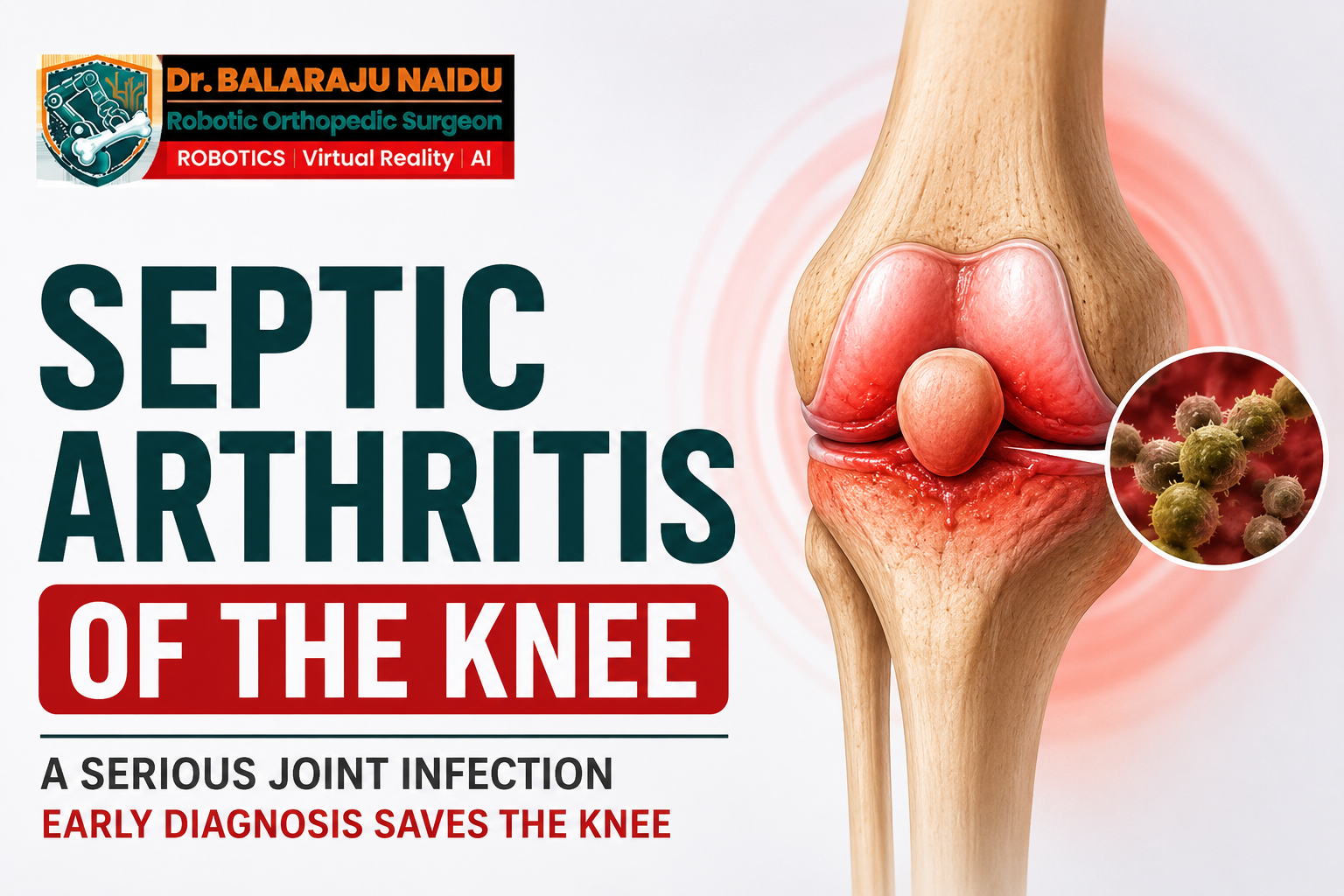
Septic Arthritis of the Knee: Symptoms, Causes & Emergency Treatment- By Dr. Balaraju Naidu, Robotic Orthopedic Surgeon, ONUS Robotic Hospitals
Severe knee pain with swelling and fever should never be ignored. In some cases, it may be due to Septic Arthritis of the Knee — a dangerous joint infection that can rapidly destroy the knee cartilage and lead to permanent disability if not treated early.
Septic arthritis is considered an orthopedic emergency because bacteria inside the knee joint can damage the joint within days. Early diagnosis and immediate treatment are critical to prevent joint destruction, sepsis, or long-term complications.
At ONUS Robotic Hospitals, advanced orthopedic and infection care services are available for rapid diagnosis and treatment of serious joint infections.
What is Septic Arthritis?
Septic arthritis is an infection inside a joint caused by bacteria, fungi, or other microorganisms. The knee joint is one of the most commonly affected joints.
When bacteria enter the joint, they trigger severe inflammation that can quickly damage:
✔ Cartilage
✔ Joint lining
✔ Bone surfaces
✔ Ligaments and soft tissues
Without prompt treatment, permanent joint destruction may occur.
Why is Septic Arthritis Dangerous?
Unlike normal arthritis, septic arthritis progresses very rapidly.
Delay in Treatment Can Cause:
🚨 Permanent cartilage damage
🚨 Severe knee stiffness
🚨 Joint destruction
🚨 Bloodstream infection (sepsis)
🚨 Long-term disability
🚨 Need for major surgery or joint replacement
This is why septic arthritis is considered a medical emergency.
Common Symptoms of Septic Arthritis Knee
Patients usually develop symptoms suddenly.
Warning Signs Include:
👉 Severe knee pain
👉 Swelling in the knee
👉 Warmth around the joint
👉 Redness over the knee
👉 Difficulty walking or standing
👉 Sudden stiffness
👉 Fever and chills
👉 Inability to bend the knee properly
In many patients, the pain becomes severe within a short time.
Common Causes of Septic Arthritis
1. Bacterial Infection
The most common cause is bacterial infection entering the bloodstream and reaching the joint.
Common bacteria include:
- Staphylococcus aureus
- Streptococcal infections
- Other skin or bloodstream infections
2. Diabetes
Patients with diabetes are at higher risk because immunity is often reduced and infections spread more easily.
3. Low Immunity
Conditions affecting immunity increase the risk of joint infection:
- Cancer
- Steroid use
- Kidney disease
- Autoimmune diseases
4. Untreated Infections
Infections elsewhere in the body may spread to the knee through the bloodstream.
Examples include:
- Skin infections
- Dental infections
- Urinary infections
5. Injury or Surgery
Previous knee surgery, injections, or trauma may occasionally allow bacteria to enter the joint.
Who is at Higher Risk?
Certain people are more likely to develop septic arthritis:
✔ Elderly patients
✔ Diabetic patients
✔ Patients with rheumatoid arthritis
✔ Immunocompromised individuals
✔ People with previous knee surgery
✔ Patients with chronic kidney disease
✔ Individuals using steroids long-term
How Does Septic Arthritis Affect the Knee?
The infection causes rapid accumulation of infected fluid (pus) inside the knee joint.
This leads to:
- Increased pressure
- Severe inflammation
- Damage to cartilage
- Reduced blood supply
- Progressive joint destruction
Even a few days of untreated infection can permanently damage the knee.
Diagnosis of Septic Arthritis
Early diagnosis is extremely important.
Clinical Examination
The orthopedic specialist checks for:
✔ Severe tenderness
✔ Swelling
✔ Warmth
✔ Restricted movement
Blood Tests
Blood investigations may show signs of infection:
- Elevated WBC count
- Increased ESR
- Increased CRP
Joint Fluid Analysis (Most Important Test)
Fluid is aspirated from the knee joint using a sterile needle.
This helps identify:
✔ Presence of pus
✔ Bacteria causing infection
✔ Severity of infection
Imaging Studies
X-rays
Help assess joint damage and rule out fractures.
MRI Scan
MRI helps evaluate:
- Joint inflammation
- Bone involvement
- Soft tissue infection
- Abscess formation
At ONUS Robotic Hospitals, advanced 1.5 Tesla MRI imaging helps in early diagnosis.
Treatment of Septic Arthritis Knee
1. Emergency Antibiotic Treatment
Strong antibiotics are started immediately once infection is suspected.
Antibiotics may later be adjusted depending on culture reports.
2. Joint Aspiration
Removing infected fluid reduces:
✔ Pressure inside the joint
✔ Pain and swelling
✔ Bacterial load
Some patients may need repeated aspirations.
3. Arthroscopic Washout Surgery
In many patients, arthroscopic surgery is performed to clean the infected joint.
Benefits of Arthroscopic Washout:
✔ Minimally invasive
✔ Removes infected material
✔ Helps preserve cartilage
✔ Faster recovery compared to open surgery
4. Open Surgical Drainage
Severe infections or delayed cases may require open surgery to remove infected tissue completely.
5. Physiotherapy & Rehabilitation
After infection control, physiotherapy helps restore:
✔ Knee movement
✔ Muscle strength
✔ Walking ability
Complications if Left Untreated
Ignoring septic arthritis can lead to serious complications:
🚨 Permanent knee damage
🚨 Cartilage destruction
🚨 Osteomyelitis (bone infection)
🚨 Joint deformity
🚨 Sepsis
🚨 Need for knee replacement
🚨 Long-term disability
How to Prevent Septic Arthritis
Important Preventive Measures
✔ Control diabetes properly
✔ Treat infections early
✔ Maintain wound hygiene
✔ Avoid self-medication
✔ Seek medical attention for fever with joint pain
✔ Follow sterile precautions during injections or procedures
When Should You See an Orthopedic Specialist?
Consult immediately if you experience:
🚨 Severe knee pain with fever
🚨 Sudden swelling in the knee
🚨 Difficulty walking
🚨 Warm or red knee joint
🚨 Pain worsening rapidly
Early treatment can save the knee joint.
Final Takeaway
Septic Arthritis of the Knee is a serious orthopedic emergency that requires immediate attention. Unlike normal arthritis, this condition can permanently damage the knee within a short time if ignored.
Early Diagnosis Can:
✔ Prevent cartilage damage
✔ Preserve joint function
✔ Avoid major surgery
✔ Reduce complications
✔ Improve recovery outcomes
If you develop sudden knee pain with swelling and fever, do not delay medical evaluation.
For Appointments:
Dr. Balaraju Naidu, Robotic Orthopedic Surgeon
ONUS Robotic Hospitals – Hyderabad