Knee Pain After 30: Why It Happens and When to Consult a Doctor- By Dr. Balaraju Naidu, Robotic Orthopedic Surgeon, ONUS Robotic Hospitals
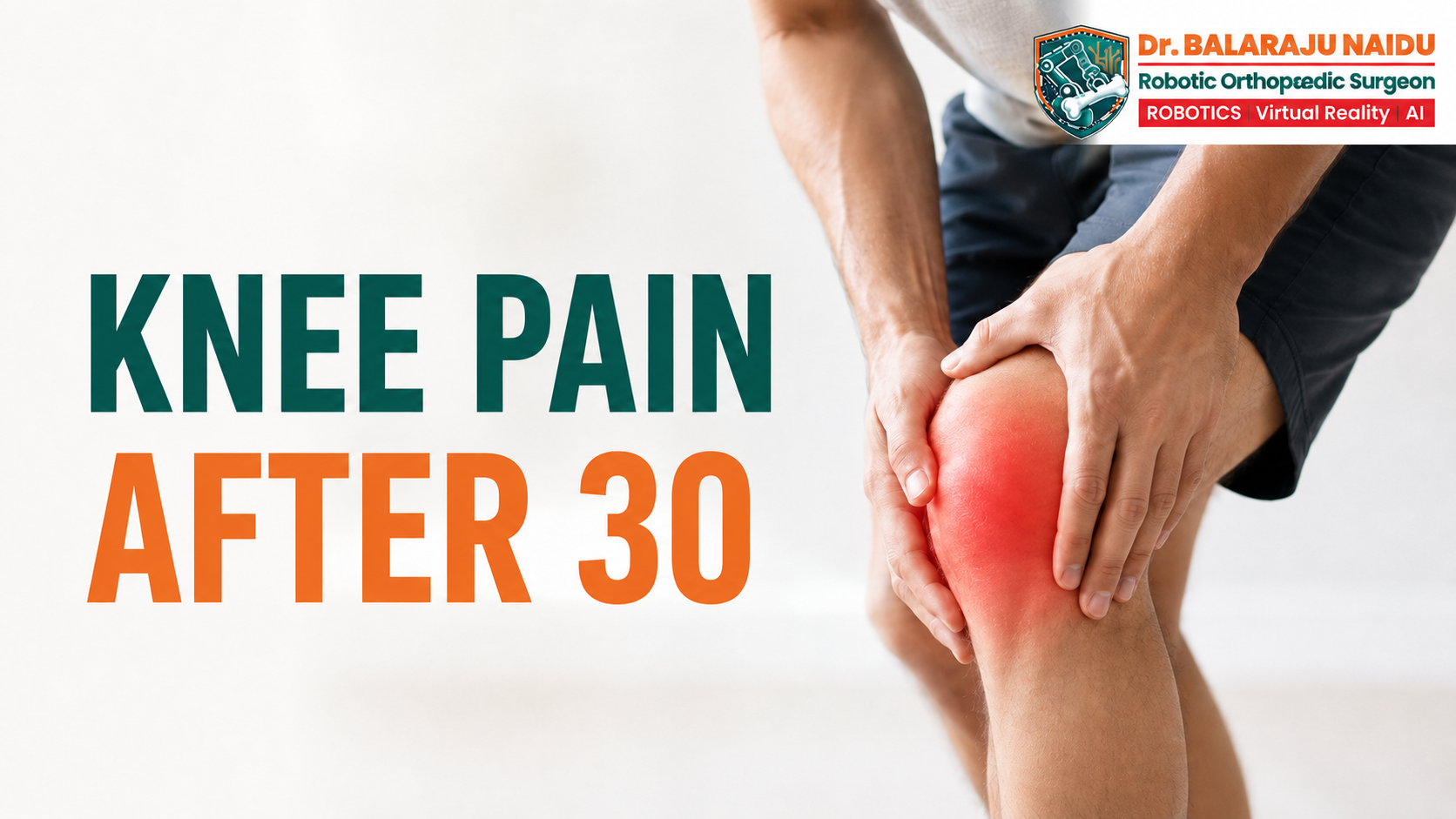
Knee pain is no longer a problem seen only in elderly people. Today, many people above the age of 30 are experiencing knee pain due to lifestyle changes, weight gain, long sitting hours, gym injuries, vitamin deficiencies, muscle weakness, and early arthritis.
Ignoring knee pain in the early stages can lead to worsening joint damage, reduced mobility, and difficulty performing daily activities like walking, climbing stairs, sitting cross-legged, or exercising. Early diagnosis and proper treatment can help prevent long-term knee problems.
Why Is Knee Pain Becoming Common After 30?
After the age of 30, the body slowly starts showing the effects of lifestyle, posture, activity levels, body weight, and nutritional deficiencies. People who sit for long hours, do sudden heavy workouts, gain weight, or have weak muscles around the knee are more likely to develop knee pain.
Knee pain may start as mild discomfort but can gradually progress into stiffness, swelling, instability, or difficulty walking if not treated at the right time.
Common Causes of Knee Pain After 30
1. Early Arthritis
Early arthritis is one of the common reasons for knee pain in adults above 30. It may happen due to cartilage wear, previous injuries, excess weight, family history, or improper joint loading. Patients may feel pain while walking, climbing stairs, or standing for long periods.
2. Weight Gain and Obesity
Excess body weight puts additional pressure on the knee joints. Even a small increase in weight can significantly increase stress on the knees during walking, running, or climbing stairs. Over time, this can lead to cartilage damage and early knee arthritis.
3. Ligament Injuries
Gym workouts, sports activities, sudden twisting movements, or falls can cause ligament injuries such as ACL, PCL, or collateral ligament injuries. These injuries may cause pain, swelling, instability, or a feeling that the knee is giving way.
4. Vitamin D Deficiency
Vitamin D deficiency is very common and can cause bone pain, muscle weakness, fatigue, and joint discomfort. Weak muscles and poor bone health can increase the risk of knee pain and injuries.
5. Cartilage Wear
Cartilage acts like a cushion between the bones of the knee joint. Repeated stress, old injuries, excess weight, and poor biomechanics can lead to cartilage wear. This may cause pain, stiffness, swelling, and clicking sounds in the knee.
6. Muscle Weakness
Weak thigh and hip muscles can increase pressure on the knee joint. People who do not exercise regularly or sit for long hours may develop muscle imbalance, which can lead to knee pain while walking, squatting, or climbing stairs.
7. Long Sitting and Sedentary Lifestyle
Long sitting hours, especially among IT employees and office workers, can cause stiffness, poor posture, weak muscles, and reduced joint flexibility. This can trigger knee pain and make simple movements uncomfortable.
8. Gym and Workout Injuries
Sudden intense workouts, improper squats, heavy weightlifting, poor technique, and inadequate warm-up can cause knee strain, meniscus injuries, ligament injuries, or tendon pain. Fitness should be done with proper form and gradual progression.
Symptoms You Should Not Ignore
You should consult an orthopedic specialist if you have:
Pain lasting more than a few days
Swelling around the knee
Pain while climbing stairs
Difficulty walking or standing
Knee stiffness after sitting
Clicking, locking, or catching sensation
Knee instability or giving way
Pain after gym, running, or sports activity
Difficulty bending or straightening the knee
Pain that affects daily activities
When Should You Consult an Orthopedic Doctor?
Persistent knee pain should not be ignored, especially if it is recurring or affecting your daily life. Early consultation helps identify whether the pain is due to arthritis, ligament injury, cartilage damage, vitamin deficiency, muscle weakness, or another underlying problem.
An orthopedic specialist may recommend clinical examination, X-ray, MRI, blood tests, physiotherapy, medicines, lifestyle correction, injections, or advanced treatment depending on the cause.
Treatment Options for Knee Pain After 30
Treatment depends on the exact cause and severity of knee pain. Common treatment options include:
Lifestyle modification and weight management
Physiotherapy and muscle strengthening
Posture and activity correction
Vitamin D and calcium correction
Medicines for pain and inflammation
PRP or joint preservation injections when required
Treatment for ligament, meniscus, or cartilage injuries
Advanced orthopedic and robotic-assisted surgical options in severe cases
How to Protect Your Knees After 30
Maintain healthy body weight
Avoid sitting continuously for long hours
Do regular knee and thigh strengthening exercises
Warm up before gym or sports
Avoid sudden heavy workouts
Correct Vitamin D deficiency
Use proper footwear
Do not ignore recurring knee pain
Consult an orthopedic specialist early
Expert Knee Pain Care at ONUS Robotic Hospitals
At ONUS Robotic Hospitals, Dr. Balaraju Naidu provides advanced evaluation and treatment for knee pain, early arthritis, ligament injuries, cartilage wear, sports injuries, and joint-related problems.
With expertise in robotic orthopedic surgery, arthroscopy, joint preservation, and advanced knee care, patients receive personalized treatment based on their condition, age, activity level, and long-term joint health.
For Appointments:
Dr. Balaraju Naidu, Robotic Orthopedic Surgeon
ONUS Robotic Hospitals – Hyderabad