Cervical Spondylosis: Causes, Symptoms, Diagnosis & Treatment- By Dr. Balaraju Naidu, Robotic Orthopedic Surgeon, ONUS Robotic Hospitals
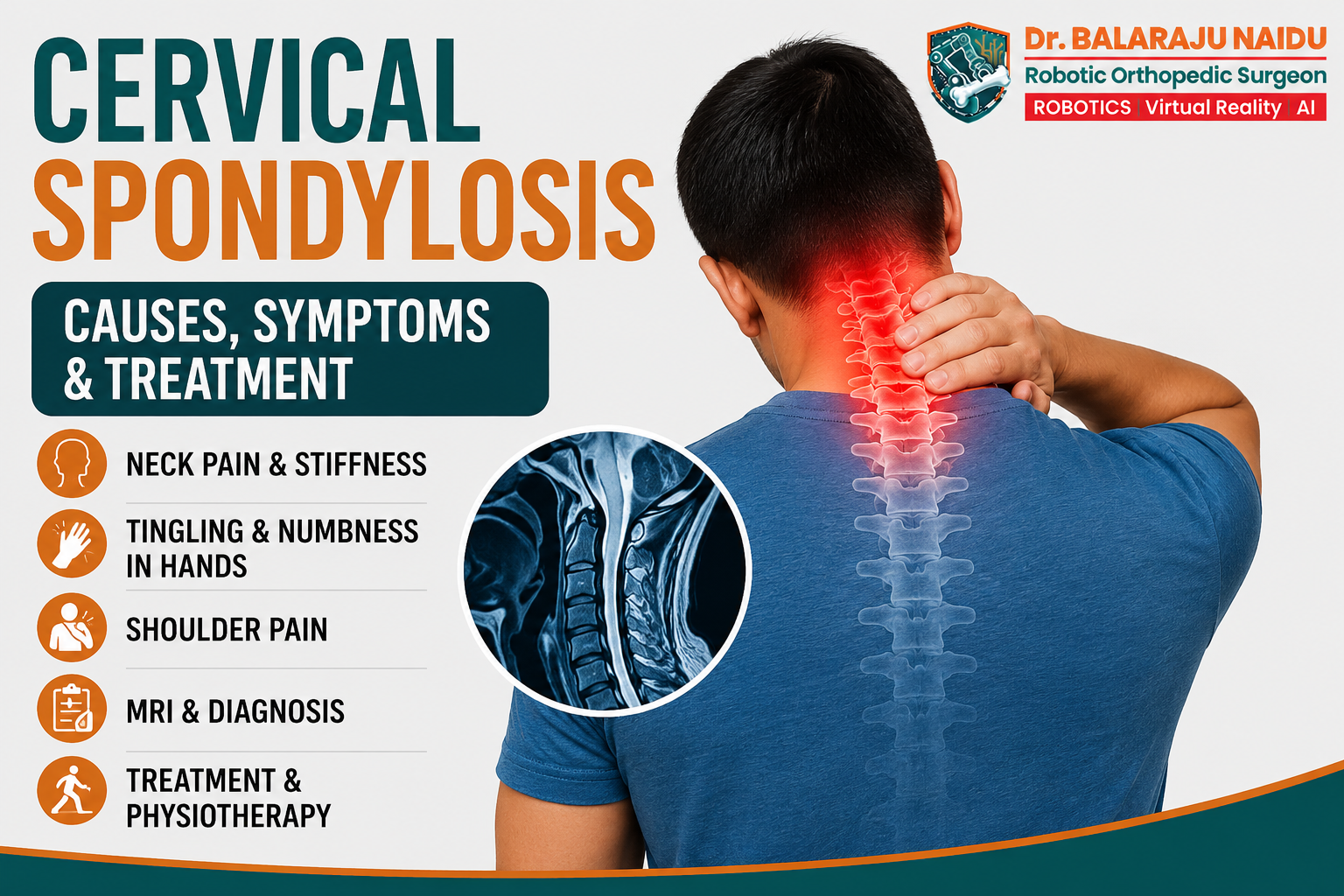
Cervical Spondylosis is one of the most common age-related spine conditions affecting the neck region. It occurs due to gradual wear and tear of the cervical spine, including the discs, joints, ligaments, and bones.
Many people experience occasional neck pain, but when the cervical discs and joints degenerate, it can lead to chronic pain, stiffness, nerve compression, tingling, numbness, and weakness in the arms or hands.
At ONUS Robotic Hospitals, Dr. Balaraju Naidu and the spine care team provide advanced diagnosis and treatment for cervical spine disorders using modern imaging, rehabilitation, and minimally invasive treatment approaches.
What is Cervical Spondylosis?
The cervical spine consists of seven vertebrae in the neck region that support head movement and protect the spinal cord.
With aging and continuous stress on the neck:
- Intervertebral discs lose hydration
- Disc height decreases
- Bone spurs (osteophytes) may develop
- Ligaments become stiff
- Nerves may get compressed
This degenerative process is known as Cervical Spondylosis.
It is commonly seen after the age of 40 but can occur earlier due to poor posture, prolonged screen time, desk jobs, or repetitive strain.
Common Symptoms of Cervical Spondylosis
Symptoms can vary depending on the severity of degeneration and nerve involvement.
Common Symptoms Include:
👉 Neck pain and stiffness
👉 Shoulder pain
👉 Pain radiating into the arms
👉 Tingling sensation in hands
👉 Numbness in fingers
👉 Weakness in arms or grip strength
👉 Headaches starting from the neck
👉 Dizziness or imbalance
👉 Reduced neck movements
Some patients may also experience muscle spasms and difficulty performing daily activities.
Causes & Risk Factors
Several factors contribute to Cervical Spondylosis.
Common Causes Include:
✔ Age-Related Wear & Tear
Natural degeneration of discs and joints over time.
✔ Poor Posture
Long hours using mobile phones, laptops, or computers can strain the neck muscles and discs.
✔ Sedentary Lifestyle
Lack of exercise weakens spinal support muscles.
✔ Previous Neck Injury
Past trauma may accelerate degeneration.
✔ Repetitive Neck Movements
Continuous strain from driving, office work, or certain occupations.
✔ Obesity & Muscle Weakness
Excess body weight and weak muscles increase spinal stress.
How Does Nerve Compression Occur?
As the cervical discs degenerate:
- Disc bulges may develop
- Bone spurs can narrow nerve passages
- Spinal canal narrowing may occur
This can compress nearby nerves or even the spinal cord.
Nerve compression may cause:
- Tingling
- Numbness
- Weakness
- Burning pain radiating to the shoulders or hands
In severe cases, patients may experience balance problems or difficulty walking.
Diagnosis of Cervical Spondylosis
Early diagnosis helps prevent worsening symptoms and nerve damage.
Clinical Examination
Doctors assess:
- Neck movements
- Muscle strength
- Reflexes
- Sensation in arms and hands
- Signs of nerve compression
Imaging Tests
✔ X-Ray
Shows:
- Disc space narrowing
- Bone spurs
- Degenerative changes
✔ MRI Scan
MRI is the best investigation to identify:
- Disc bulges
- Nerve compression
- Spinal cord involvement
- Soft tissue damage
✔ CT Scan (In Selected Cases)
Useful for evaluating bone structures in detail.
Treatment Options for Cervical Spondylosis
Most patients improve with non-surgical treatment.
Non-Surgical Treatments
✔ Medications
Pain relievers and anti-inflammatory medicines help reduce symptoms.
✔ Physiotherapy
A structured physiotherapy program improves:
- Neck strength
- Flexibility
- Posture
- Muscle balance
✔ Lifestyle Modifications
Patients are advised to:
- Improve posture
- Avoid prolonged mobile use
- Take frequent breaks
- Use ergonomic seating
✔ Cervical Collar (Short-Term)
May help during acute pain episodes.
✔ Heat Therapy & Exercises
Relieves muscle spasms and improves circulation.
When is Surgery Needed?
Surgery is considered only in severe cases where patients have:
⚠ Persistent severe pain
⚠ Progressive weakness
⚠ Severe nerve compression
⚠ Difficulty walking
⚠ Loss of hand coordination
⚠ Failed conservative treatment
Surgical procedures aim to relieve nerve pressure and stabilize the spine.
Physiotherapy & Rehabilitation
Physiotherapy plays a major role in long-term recovery.
Benefits of Physiotherapy
✔ Reduces pain
✔ Improves posture
✔ Strengthens neck muscles
✔ Improves flexibility
✔ Prevents recurrence
✔ Enhances daily function
Regular exercises and posture correction significantly improve outcomes.
How to Prevent Cervical Spondylosis?
Simple lifestyle changes can reduce neck strain.
Prevention Tips
✔ Maintain proper posture
✔ Avoid prolonged mobile usage
✔ Use ergonomic workstations
✔ Exercise regularly
✔ Strengthen neck and shoulder muscles
✔ Sleep with proper pillow support
✔ Avoid sudden jerky neck movements
When Should You Consult a Doctor?
Seek medical attention if you experience:
👉 Persistent neck pain
👉 Tingling or numbness in hands
👉 Weakness in arms
👉 Severe stiffness
👉 Pain radiating to shoulders or arms
👉 Difficulty balancing while walking
Early treatment can prevent complications and improve quality of life.
Advanced Spine Care at ONUS Robotic Hospitals
At ONUS Robotic Hospitals, patients receive comprehensive spine and orthopedic care with advanced diagnostic and rehabilitation facilities.
Advanced Facilities
✔ Robotic Orthopedic Care
✔ Arthroscopy & Sports Injury Treatment
✔ AI Neuro & Cardiac Cath Lab
✔ 128 Slice Cardiac CT Scan
✔ 1.5 Tesla MRI
✔ Advanced Physiotherapy & Rehabilitation
For Appointments:
Dr. Balaraju Naidu, Robotic Orthopedic Surgeon
ONUS Robotic Hospitals – Hyderabad
👉 link: contact-us or book-appointment