Shoulder Pain: Causes, Warning Signs, Diagnosis & Treatment Options- By Dr. Balaraju Naidu, Robotic Orthopedic Surgeon, ONUS Robotic Hospitals
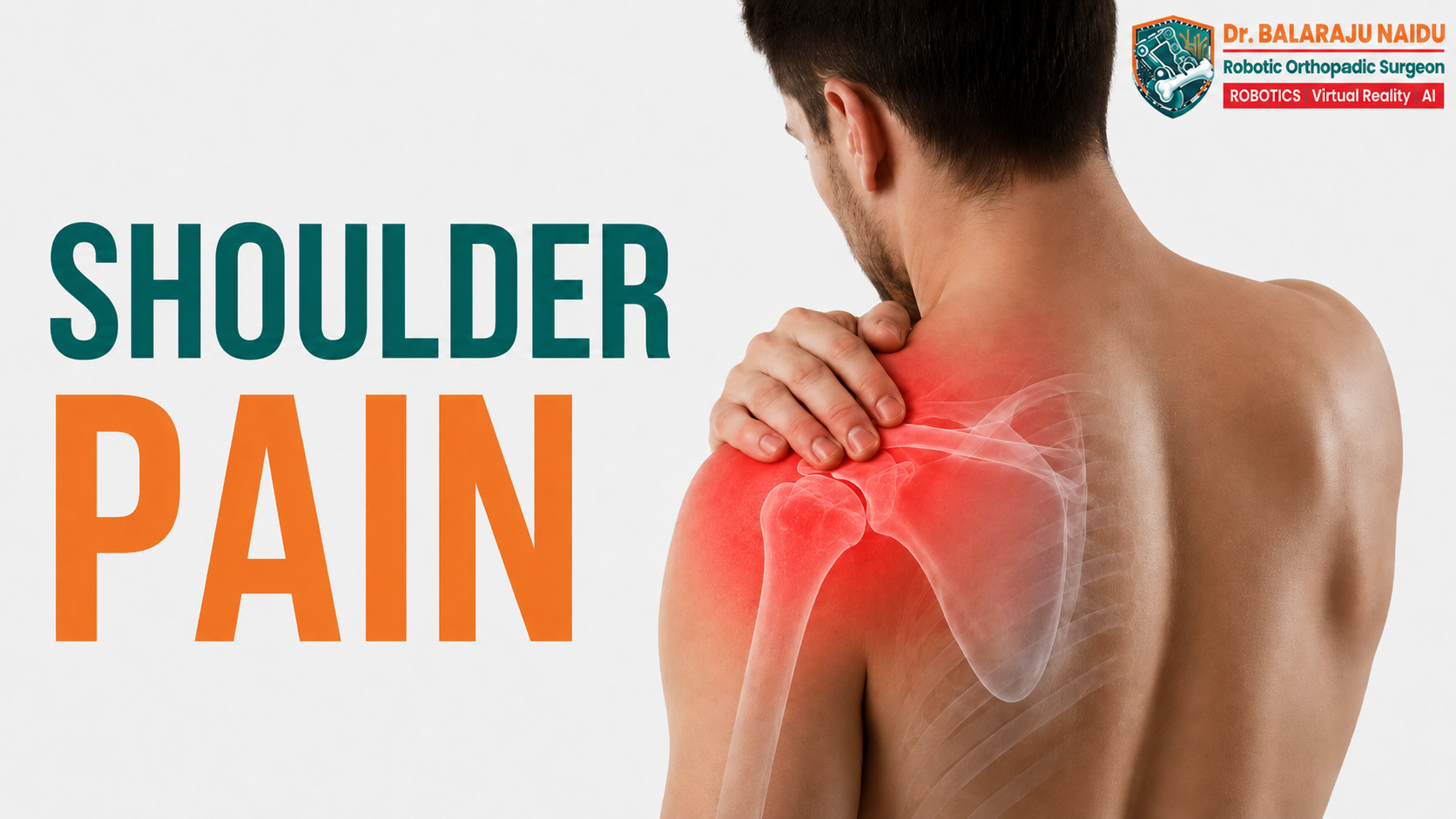
Shoulder pain is one of the most common orthopedic problems affecting adults, athletes, gym-goers, office workers, elderly patients, and people with previous injuries. It can disturb daily activities, sleep, exercise, work, driving, lifting, dressing, and overall quality of life.
The shoulder is a highly mobile joint, but because of this mobility, it is also vulnerable to stiffness, tendon injuries, instability, arthritis, and repeated dislocations. Common causes of shoulder pain include frozen shoulder, rotator cuff tear, recurrent shoulder dislocation, shoulder arthritis, stiffness, weakness, and sports-related shoulder injuries.
Shoulder pain should not be ignored when it is persistent, worsening, associated with weakness, affects sleep, or limits arm movement. Early diagnosis helps identify the exact cause and allows proper treatment before the problem becomes chronic.
Common Causes of Shoulder Pain
1. Frozen Shoulder
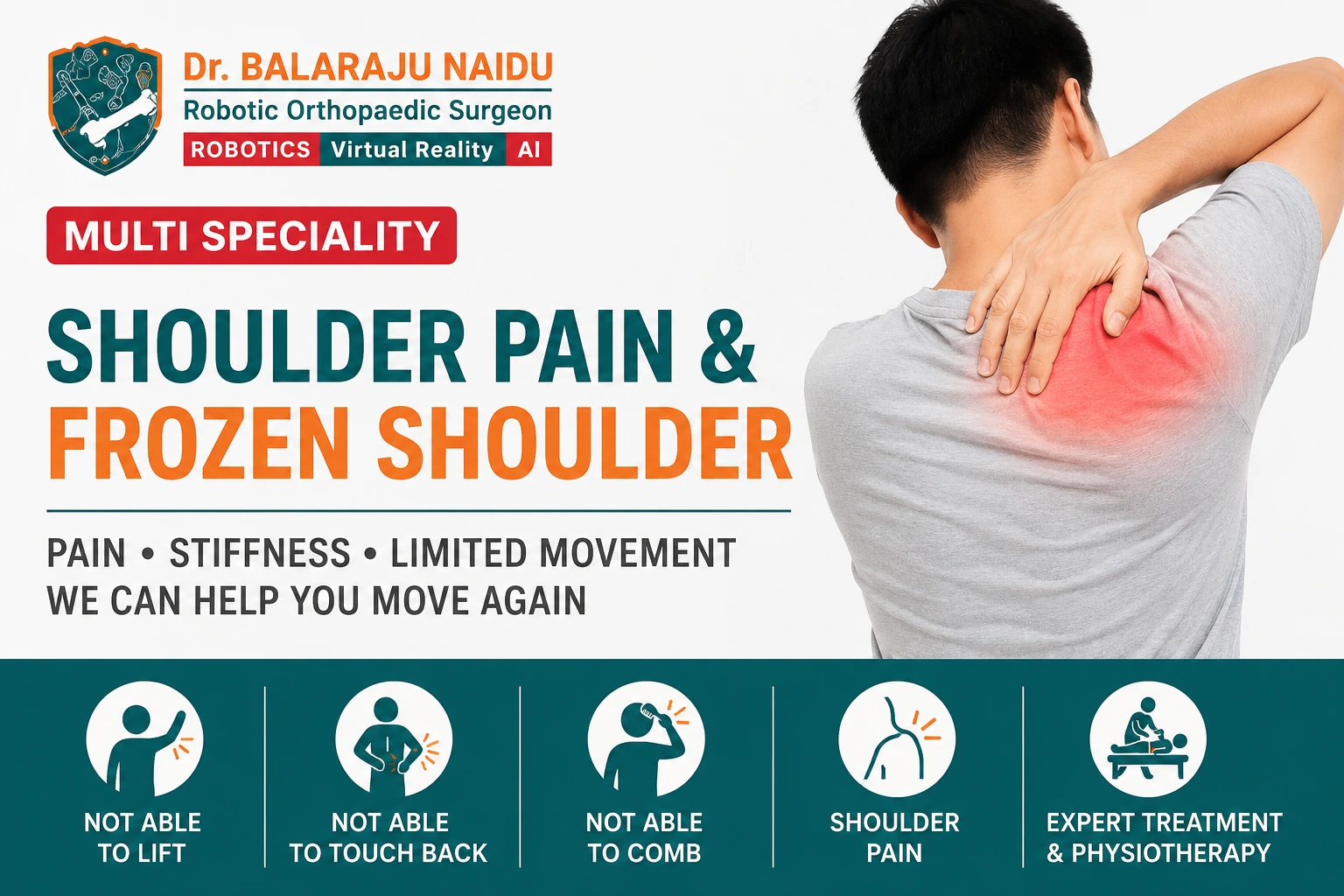
Frozen shoulder, also called adhesive capsulitis, causes pain and progressive stiffness in the shoulder joint. Patients may find it difficult to lift the arm, reach overhead, comb hair, wear clothes, or place the hand behind the back.
Frozen shoulder often develops gradually and may take months to improve. Physical therapy focusing on shoulder flexibility is commonly recommended, and full recovery can sometimes take a long time.
2. Rotator Cuff Tear
The rotator cuff is a group of muscles and tendons that helps lift and rotate the shoulder. A rotator cuff tear may occur due to injury, aging, repeated overhead activity, gym strain, sports injury, or degeneration.
Common symptoms include pain while lifting the arm, weakness, pain at night, difficulty sleeping on the affected shoulder, and crackling or catching sensation during movement.
3. Recurrent Shoulder Dislocation
Shoulder dislocation occurs when the ball of the shoulder joint comes out of its socket. Some patients develop repeated dislocations after the first injury, especially young active individuals and athletes.
Repeated dislocation can damage the joint, ligaments, labrum, and cartilage. Patients may feel instability, clicking, fear of movement, or repeated slipping sensation.
4. Shoulder Arthritis
Shoulder arthritis occurs when the cartilage inside the shoulder joint wears down or becomes inflamed. It may cause pain, stiffness, reduced range of motion, clicking, grinding, and difficulty using the arm. Shoulder arthritis may develop with age, after injury, or after repeated dislocations.
5. Shoulder Stiffness and Weakness
Shoulder stiffness may occur after injury, surgery, immobilization, diabetes-related frozen shoulder, or long-term lack of movement. Weakness may be due to rotator cuff tear, nerve-related problems, muscle imbalance, or tendon inflammation.
6. Sports and Gym-Related Shoulder Injuries
Sports, gym workouts, weightlifting, overhead activities, and sudden falls can cause shoulder injuries. Poor technique, heavy lifting, repeated overhead movements, and inadequate warm-up may increase the risk of rotator cuff injury, impingement, labral tear, dislocation, or muscle strain.
Symptoms You Should Not Ignore
Consult an orthopedic specialist if you have:
Pain while lifting the arm
Shoulder stiffness
Weakness in the shoulder
Clicking, popping, or grinding sensation
Repeated shoulder dislocation
Pain during sleep
Difficulty wearing clothes or combing hair
Pain after gym, fall, or sports injury
Reduced shoulder movement
Pain that does not improve with rest
Feeling that the shoulder is slipping out
Night pain and weakness are especially important symptoms in rotator cuff injuries, while progressive stiffness is commonly seen in frozen shoulder.
How Is Shoulder Pain Diagnosed?
Diagnosis begins with a detailed clinical examination. The doctor checks shoulder movement, strength, stability, pain location, stiffness, tendon function, and signs of instability.
Depending on the symptoms, the doctor may recommend:
X-ray to check arthritis, fracture, dislocation, or bone changes
MRI to assess rotator cuff tear, labral injury, cartilage, ligaments, and soft tissues
Ultrasound in selected tendon-related conditions
Blood tests in selected inflammatory or infection-related conditions
Physical examination tests for instability, stiffness, and tendon weakness
Correct diagnosis is important because frozen shoulder, rotator cuff tear, arthritis, and shoulder dislocation require different treatment plans.
Treatment Options for Shoulder Pain
Treatment depends on the cause, severity, age, activity level, injury history, and functional needs.
1. Medicines and Pain Control
Pain-relieving medicines and anti-inflammatory medicines may be prescribed for short-term relief. Medicines should be taken only under medical guidance.
2. Physiotherapy
Physiotherapy is one of the most important treatments for many shoulder conditions. It helps improve shoulder movement, flexibility, posture, strength, and function. AAOS notes that many shoulder injuries can be treated without surgery using exercises to strengthen shoulder muscles.
Physiotherapy may include:
Range-of-motion exercises
Stretching for frozen shoulder
Rotator cuff strengthening
Scapular stabilization
Posture correction
Sports rehabilitation
Functional shoulder training
3. Injections
In selected cases, injections may be advised to reduce inflammation and pain. For example, steroid injections may be used in frozen shoulder or inflammatory shoulder conditions when appropriate.
4. Arthroscopy and Advanced Shoulder Procedures
Shoulder arthroscopy is a minimally invasive procedure used for selected shoulder problems such as rotator cuff tears, recurrent dislocation, labral injuries, and some stiffness-related conditions.
AAOS notes that recurring dislocations and some rotator cuff tears may not benefit from exercise alone, and surgery may be recommended in selected cases.
5. Shoulder Arthritis Treatment
Shoulder arthritis treatment may include activity modification, physiotherapy, medicines, injections, and advanced surgical options in severe cases. Treatment depends on pain severity, cartilage damage, movement restriction, and patient expectations.
When Is Surgery Needed?
Surgery is not required for every shoulder pain case. It may be considered when:
Rotator cuff tear is significant
Shoulder dislocation is recurrent
Shoulder instability affects daily activity or sports
Pain does not improve with conservative treatment
Frozen shoulder remains severely stiff despite treatment
Advanced arthritis causes severe pain and movement restriction
There is a traumatic injury affecting shoulder function
The goal of surgery is to reduce pain, restore movement, improve stability, repair damaged tissues, and help the patient return to daily activities safely.
Recovery and Rehabilitation
Recovery depends on the exact shoulder condition and treatment method. Frozen shoulder may require consistent therapy and patience. Rotator cuff injuries may need strengthening and gradual return to activity. Dislocation patients may require stability training or surgery followed by rehabilitation. Arthritis treatment focuses on pain control and functional improvement.
Patients should avoid forceful massage, sudden heavy lifting, repeated overhead strain, or unplanned gym activity when shoulder pain is active.
Expert Shoulder Pain Care at ONUS Robotic Hospitals
At ONUS Robotic Hospitals, patients with shoulder pain, frozen shoulder, rotator cuff tear, recurrent shoulder dislocation, shoulder arthritis, sports injuries, and shoulder stiffness receive advanced orthopedic evaluation and personalized treatment.
For Appointments:
Dr. Balaraju Naidu, Robotic Orthopedic Surgeon
ONUS Robotic Hospitals – Hyderabad