TFCC Injury: Causes, Symptoms, Diagnosis & Treatment Options- By Dr. Balaraju Naidu, Robotic Orthopedic Surgeon, ONUS Robotic Hospitals
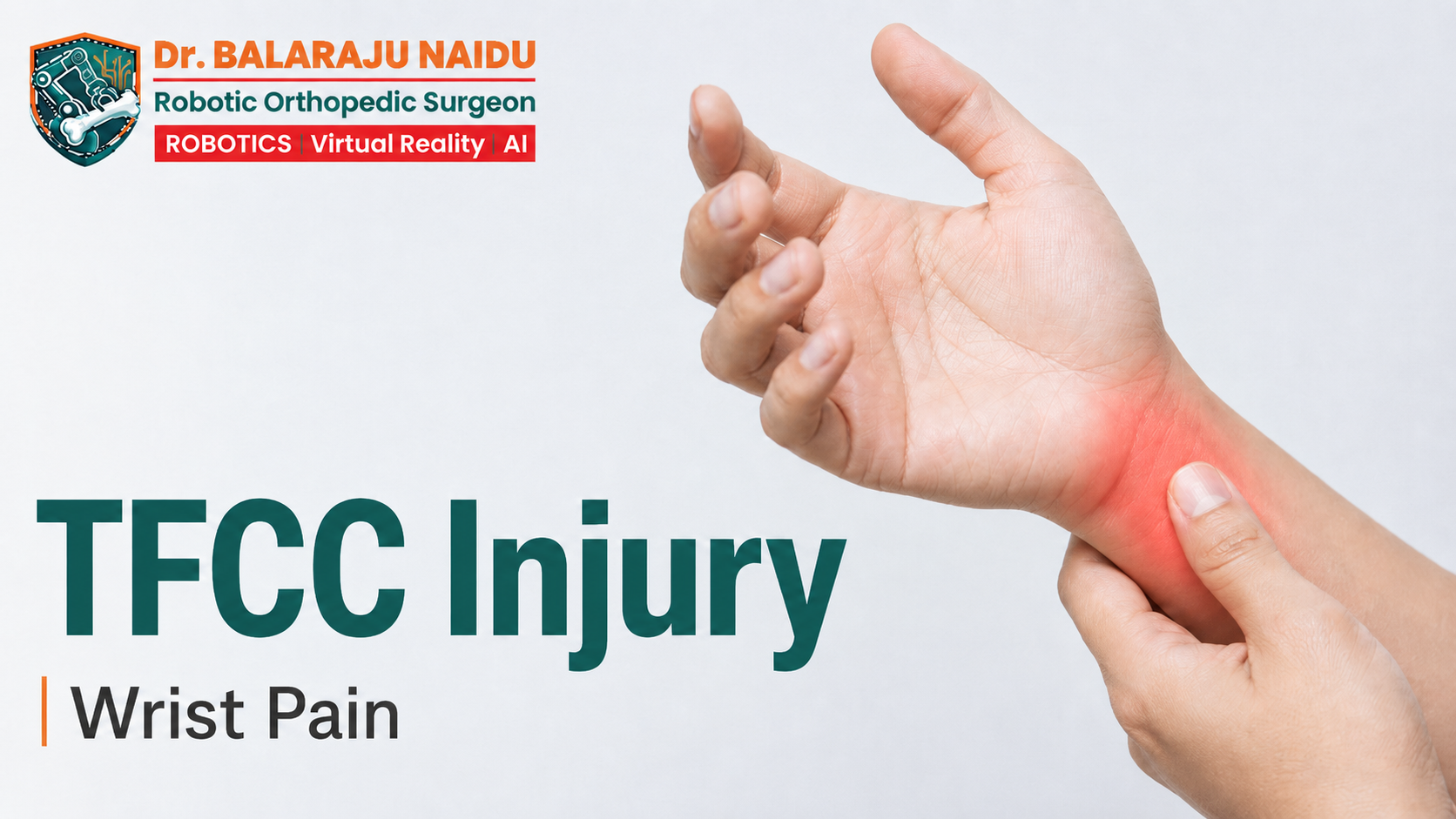
Pain on the little finger side of the wrist, difficulty holding objects, weak grip, or a clicking sound while rotating the hand may be signs of a TFCC injury.
TFCC stands for Triangular Fibrocartilage Complex. It is an important structure on the outer side of the wrist, near the little finger. It helps stabilize the wrist joint, supports smooth wrist movement, and allows rotation of the forearm during daily activities such as turning a door handle, lifting a bag, using tools, playing sports, or doing gym workouts.
When the TFCC is injured or torn, patients may develop wrist pain, clicking, instability, weakness, and difficulty using the hand normally. TFCC tears commonly cause pain and instability in the wrist, and many patients improve with rest, splinting, and physiotherapy, while severe tears may require surgery.
What Is TFCC?
The Triangular Fibrocartilage Complex is a group of cartilage, ligaments, and soft tissue structures located on the ulnar side of the wrist, which is the little finger side. It acts like a cushion and stabilizer between the forearm bones and small wrist bones.
TFCC plays an important role in:
Wrist stability
Grip strength
Forearm rotation
Weight-bearing through the wrist
Smooth wrist movement
Protection of the ulnar side of the wrist
Because TFCC is involved in many wrist movements, an injury can affect daily activities, sports, gym workouts, and work-related hand use.
Common Causes of TFCC Injury
1. Fall on the Hand
A fall on an outstretched hand is one of the common causes of TFCC injury. Sudden pressure through the wrist can damage the cartilage or supporting ligaments.
2. Sports Injuries
TFCC injuries are common in sports that involve twisting, gripping, weight-bearing, or sudden wrist impact. These include cricket, tennis, badminton, gymnastics, boxing, martial arts, and contact sports.
3. Gym and Weightlifting Injuries
Heavy lifting, improper wrist position during push-ups, bench press, dumbbell exercises, or sudden twisting under load can irritate or tear the TFCC.
4. Repetitive Wrist Rotation
Repeated twisting movements, use of tools, racquet sports, and occupational strain can cause gradual TFCC irritation.
5. Degenerative Wear
TFCC can also weaken with age or due to long-term wear and tear. Degenerative TFCC tears may develop slowly and are more common in older adults or people with underlying wrist changes. TFCC tears may be traumatic or degenerative, and ulnar-sided wrist pain can be difficult to diagnose because of the complex wrist anatomy.
6. Wrist Fractures or Previous Injury
TFCC injury may occur along with wrist fractures, ligament injuries, or previous trauma to the wrist.
Symptoms of TFCC Tear
Common symptoms include:
Pain on the little finger side of the wrist
Pain while rotating the hand
Clicking or popping sound in the wrist
Difficulty holding objects
Weak grip strength
Pain while lifting weights
Pain while pushing up from a chair
Wrist swelling or tenderness
Feeling of wrist instability
Pain during sports or gym activity
Difficulty turning a door handle or opening a jar
The American Society for Surgery of the Hand notes that TFCC tears can cause clicking or popping while turning the forearm, pain, weakness, and limited motion.
When Should You Consult a Doctor?
You should consult an orthopedic specialist if you have:
Persistent wrist pain
Pain on the little finger side of the wrist
Clicking with pain
Weak grip
Difficulty lifting or holding objects
Pain after sports or gym injury
Pain after a fall
Wrist instability
Symptoms not improving with rest
Pain that affects daily activity
Early diagnosis helps prevent chronic wrist pain, long-term instability, and delayed recovery.
How Is TFCC Injury Diagnosed?
Diagnosis starts with a detailed clinical examination. The doctor checks the exact pain location, wrist movement, grip strength, instability, clicking, and tenderness on the ulnar side of the wrist.
Investigations may include:
X-Ray
X-ray may be done to rule out fracture, bone alignment problems, or associated wrist injury.
MRI Scan
MRI is useful to evaluate TFCC tear, ligament injury, cartilage damage, and soft tissue involvement. Some patients may need advanced imaging depending on symptoms and examination findings.
Clinical Wrist Tests
The doctor may perform specific wrist tests to check TFCC stress, ulnar-sided pain, clicking, and instability.
Treatment Options for TFCC Injury
Treatment depends on the severity of the tear, duration of symptoms, stability of the wrist, activity level, and whether the injury is traumatic or degenerative.
1. Rest and Activity Modification
Avoid activities that worsen pain, especially heavy lifting, push-ups, gym exercises, twisting movements, racquet sports, and forceful gripping.
2. Wrist Splint or Brace
A splint or brace may be advised to immobilize and protect the wrist while the injured tissue heals. Conservative treatment commonly includes bracing, therapy, and sometimes injections before surgery is considered.
3. Medicines
Pain-relieving or anti-inflammatory medicines may be prescribed for short-term symptom control. Medicines should be taken only under medical advice.
4. Physiotherapy
Physiotherapy helps restore wrist movement, reduce stiffness, improve grip strength, and support safe return to activity.
Therapy may include:
Wrist mobility exercises
Grip strengthening
Forearm strengthening
Stability training
Activity correction
Sports or gym rehabilitation
5. Injections
In selected cases, injections may be considered to reduce inflammation and pain when symptoms are not improving with rest, splinting, and therapy.
6. Surgery or Wrist Arthroscopy
Surgery is not required for every TFCC injury. It may be needed if there is persistent pain, instability, mechanical clicking, or a significant tear that does not improve with conservative treatment.
Surgical options may include wrist arthroscopy, TFCC debridement, TFCC repair, or other procedures depending on the tear location and wrist stability. Surgical treatment is generally considered when pain, swelling, or mechanical symptoms continue despite nonsurgical care.
Can TFCC Injury Heal Without Surgery?
Many mild TFCC injuries can improve with rest, splinting, physiotherapy, activity modification, and proper rehabilitation. However, severe tears, unstable tears, or long-standing symptoms may need advanced treatment.
Do not continue gym workouts or sports through pain, because repeated stress can worsen the injury.
Recovery After TFCC Injury
Recovery depends on:
Severity of the tear
Whether the injury is traumatic or degenerative
Wrist stability
Time taken to start treatment
Physiotherapy compliance
Activity modification
Need for surgery
With proper treatment, many patients regain wrist function and return to daily activities. Cleveland Clinic notes that with the right treatment, most people with TFCC tears regain full function within a few months.
How to Prevent TFCC Injury
Use proper wrist posture during gym workouts
Avoid sudden heavy lifting
Warm up before sports
Do not ignore wrist pain after a fall
Use wrist support when advised
Avoid repeated twisting under load
Strengthen forearm and grip muscles gradually
Correct sports or gym technique
Consult early if clicking and pain persist
Expert TFCC Injury Care at ONUS Robotic Hospitals
At ONUS Robotic Hospitals, patients with wrist pain, TFCC injury, TFCC tear, hand pain, sports-related wrist injuries, gym injuries, and ulnar-sided wrist pain receive advanced orthopedic evaluation and personalized treatment.
For Appointments:
Dr. Balaraju Naidu, Robotic Orthopedic Surgeon
ONUS Robotic Hospitals – Hyderabad