Hip Fractures in Old Age: Causes, Symptoms, Treatment & Recovery- By Dr. Balaraju Naidu, Robotic Orthopedic Surgeon, ONUS Robotic Hospitals
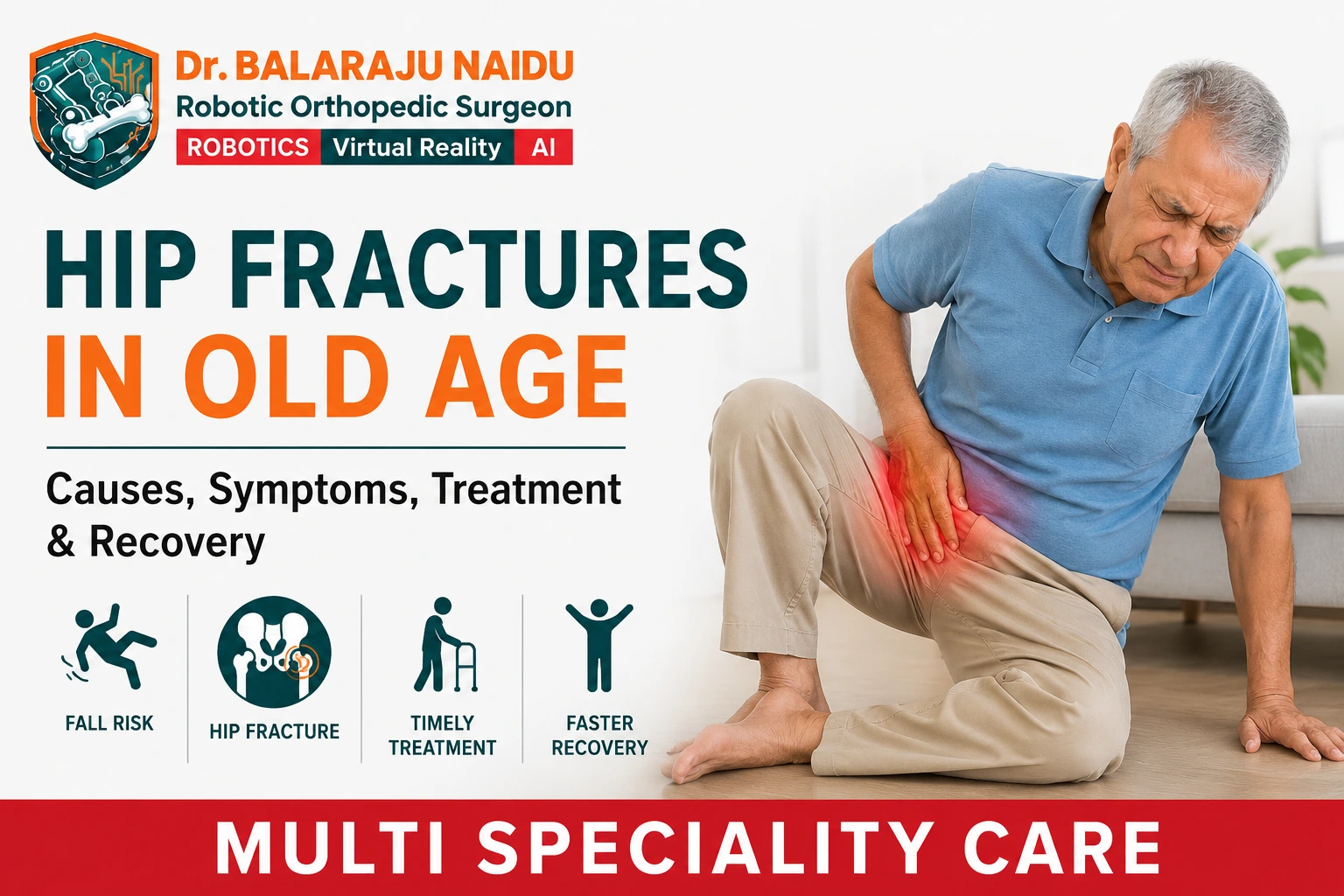
A hip fracture is one of the most serious injuries affecting older adults. It usually occurs after a simple fall, especially in people with osteoporosis, a condition that weakens the bones. Hip fractures can significantly reduce mobility and independence and may lead to serious complications if treatment is delayed.
Early diagnosis, timely surgery when required, and proper rehabilitation can help elderly patients recover faster and regain their quality of life.
What is a Hip Fracture?
A hip fracture is a break in the upper part of the thigh bone (femur), close to the hip joint. It commonly occurs in older adults because aging bones become weaker and more prone to fractures.
Hip fractures are considered orthopedic emergencies because delayed treatment increases the risk of complications such as blood clots, infections, prolonged immobility, and muscle weakness.
Common Causes of Hip Fractures
Several factors increase the risk of hip fractures, including:
- Falls at home
- Osteoporosis (weak bones)
- Age above 65 years
- Vitamin D deficiency
- Poor balance or dizziness
- Muscle weakness
- Vision problems
- Certain medications causing drowsiness
- Previous fractures
- Neurological conditions such as Parkinson’s disease or stroke
Even a minor fall from standing height can cause a hip fracture in elderly individuals.
Symptoms of a Hip Fracture
Common warning signs include:
- Severe pain in the hip or groin
- Inability to stand or walk
- Difficulty moving the affected leg
- Swelling around the hip
- Bruising
- Shortened leg
- Foot turning outward
- Pain while attempting to bear weight
If these symptoms occur after a fall, immediate medical evaluation is essential.
Types of Hip Fractures
Hip fractures generally occur in three locations:
Femoral Neck Fracture
Occurs just below the ball of the hip joint and may affect blood supply to the bone.
Intertrochanteric Fracture
Occurs between the neck and shaft of the femur and is one of the most common fractures in elderly patients.
Subtrochanteric Fracture
Occurs below the trochanter and often requires surgical fixation.
How is a Hip Fracture Diagnosed?
Orthopedic specialists perform:
- Physical examination
- X-rays
- CT Scan (if fracture is not clearly visible)
- MRI (for occult fractures)
- Blood investigations before surgery
Early diagnosis helps plan the best treatment approach.
Treatment Options
Treatment depends on the fracture type, patient’s age, bone quality, and overall health.
Non-Surgical Treatment
Very few hip fractures can be managed without surgery. Conservative treatment may include:
- Bed rest
- Pain management
- Walking aids
- Physiotherapy
This approach is usually reserved for patients who are medically unfit for surgery.
Surgical Treatment
Most elderly patients benefit from surgery because it allows earlier mobilization and reduces complications.
Procedures include:
Internal Fixation
Metal screws, plates, or rods stabilize the fractured bone.
Partial Hip Replacement (Hemiarthroplasty)
Only the damaged femoral head is replaced.
Total Hip Replacement
Both the ball and socket of the hip joint are replaced, providing excellent long-term function in selected patients.
Modern orthopedic techniques and advanced surgical planning help improve precision and recovery.
Recovery After Hip Fracture
Recovery involves:
- Early mobilization
- Pain management
- Physiotherapy
- Muscle strengthening
- Balance training
- Nutritional support
- Calcium and Vitamin D supplementation
- Fall prevention strategies
Most patients gradually regain mobility with proper rehabilitation.
Can Hip Fractures Be Prevented?
Many hip fractures can be prevented through healthy lifestyle habits.
Prevention Tips
- Treat osteoporosis early
- Take adequate calcium and Vitamin D
- Exercise regularly
- Improve balance and muscle strength
- Wear supportive footwear
- Remove fall hazards at home
- Install grab bars in bathrooms
- Ensure proper lighting
- Get regular vision check-ups
When Should You See an Orthopedic Doctor?
Seek immediate medical attention if an elderly person experiences:
- A fall followed by hip pain
- Inability to stand or walk
- Severe groin pain
- Leg shortening
- Swelling after injury
- Difficulty bearing weight
Prompt treatment improves recovery and reduces the risk of complications.
Expert Orthopedic Care at ONUS Robotic Hospitals
At ONUS Robotic Hospitals, our orthopedic specialists provide comprehensive care for hip fractures in elderly patients. From accurate diagnosis and advanced surgical treatment to personalized rehabilitation, we focus on restoring mobility, reducing pain, and helping patients return to an active and independent life.
Early treatment saves mobility—don’t ignore hip pain after a fall.
Frequently Asked Questions (FAQs)
Can an elderly person walk with a hip fracture?
Most patients cannot walk comfortably and experience severe pain. Immediate medical evaluation is necessary.
Is surgery always required?
Most hip fractures in older adults require surgery to restore mobility and reduce complications.
How long does recovery take?
Recovery usually takes several weeks to months, depending on the fracture type, surgery performed, and rehabilitation.
Can osteoporosis increase hip fracture risk?
Yes. Osteoporosis weakens bones and is one of the leading causes of hip fractures in older adults.
Can hip fractures be prevented?
Maintaining bone health, preventing falls, exercising regularly, and treating osteoporosis significantly reduce the risk.
For Appointments:
Dr. Balaraju Naidu, Robotic Orthopedic Surgeon
ONUS Robotic Hospitals – Hyderabad