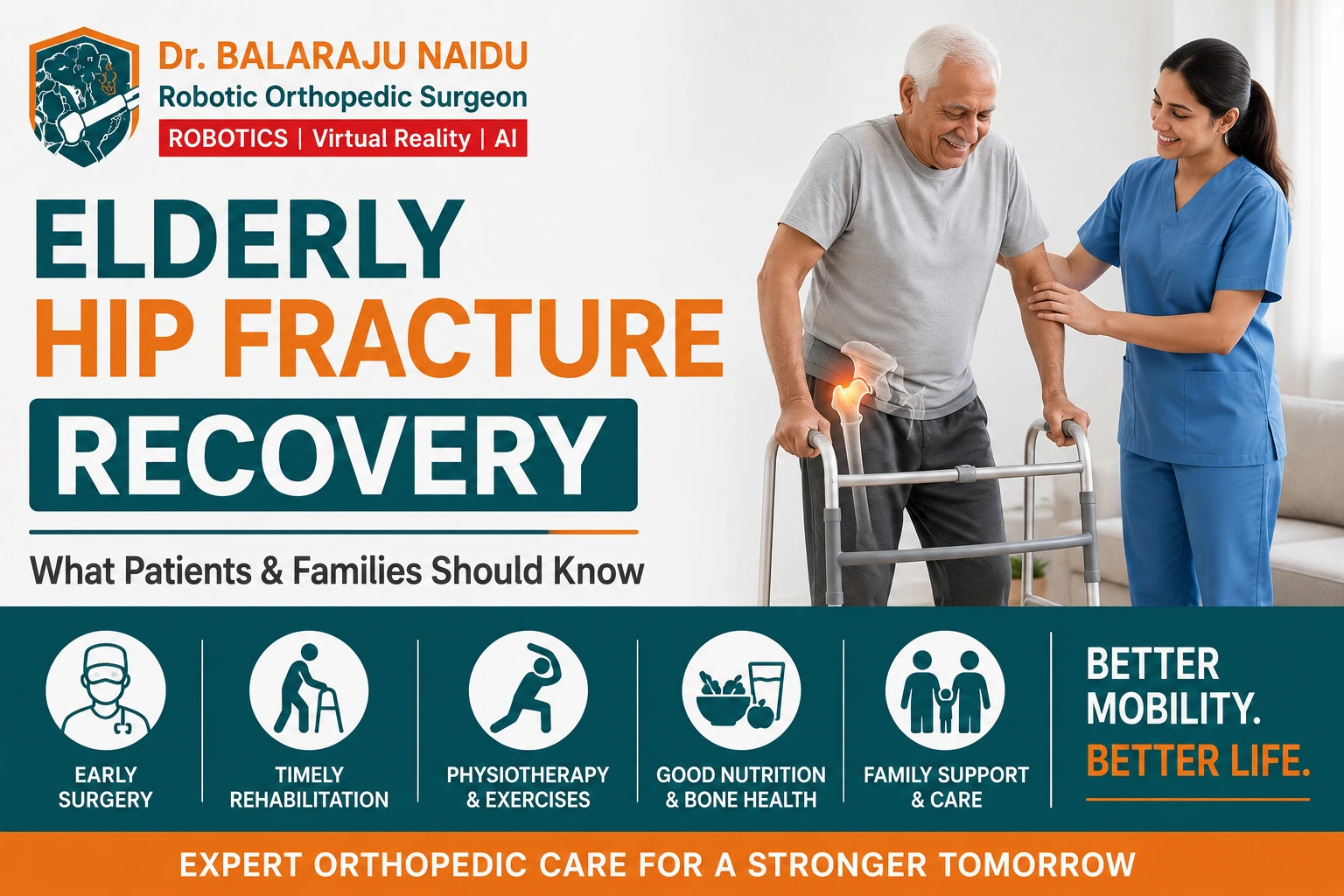
Elderly Hip Fracture Recovery: A Comprehensive Guide for Patients and Families- By Dr. Balaraju Naidu, Robotic Orthopedic Surgeon, ONUS Robotic Hospitals
Introduction
Hip fractures are among the most serious injuries affecting older adults. A simple fall that may cause only minor bruising in a younger person can result in a significant hip fracture in an elderly individual due to age-related bone loss and osteoporosis.
A hip fracture can dramatically impact mobility, independence, and overall quality of life. However, with early diagnosis, timely surgery, proper rehabilitation, and family support, many elderly patients can achieve excellent recovery and regain their ability to perform daily activities.
Understanding the recovery process helps patients and caregivers prepare for the journey ahead and achieve the best possible outcomes.
What Is a Hip Fracture?
A hip fracture is a break in the upper part of the femur (thigh bone) near the hip joint.
The most common types include:
Femoral Neck Fracture
This fracture occurs just below the ball of the hip joint and can sometimes affect the blood supply to the bone.
Intertrochanteric Fracture
This occurs between the greater and lesser trochanters of the femur and is one of the most common hip fractures in older adults.
Subtrochanteric Fracture
This fracture occurs below the hip joint and may require specialized fixation techniques.
Each fracture type requires individualized treatment planning.
Why Are Hip Fractures Common in the Elderly?
Several factors increase the risk of hip fractures as people age.
Osteoporosis
Osteoporosis causes bones to become weak and fragile, making them more susceptible to fractures.
Reduced Muscle Strength
Age-related muscle loss reduces stability and balance.
Vision Problems
Poor vision increases the risk of falls.
Balance Disorders
Neurological conditions and age-related changes can affect coordination.
Chronic Medical Conditions
Conditions such as:
- Arthritis
- Parkinson’s disease
- Stroke
- Diabetes
- Dementia
can contribute to falls and fractures.
Certain Medications
Some medications may cause dizziness or affect balance.
Symptoms of a Hip Fracture
Common signs include:
- Severe pain in the hip or groin
- Inability to stand or walk
- Difficulty bearing weight
- Shortening of the affected leg
- Outward rotation of the leg
- Swelling and bruising around the hip
Any elderly person who develops hip pain after a fall should be evaluated immediately.
Why Early Treatment Matters
Hip fractures are not only bone injuries; they can affect overall health.
Delayed treatment may lead to:
- Blood clots
- Pneumonia
- Pressure sores
- Muscle wasting
- Loss of independence
- Increased mortality risk
Early surgical intervention and rehabilitation significantly improve outcomes.
Treatment Options for Elderly Hip Fractures
Treatment depends on:
- Type of fracture
- Bone quality
- Patient age
- General health condition
- Functional status before injury
Internal Fixation
Metal implants such as:
- Screws
- Plates
- Intramedullary nails
are used to stabilize the fracture and allow bone healing.
Partial Hip Replacement (Hemiarthroplasty)
The damaged femoral head is replaced with a prosthetic implant.
Total Hip Replacement
In selected patients, replacing the entire hip joint provides excellent long-term function and pain relief.
Modern orthopedic techniques allow earlier mobilization and faster rehabilitation.
Recovery Timeline After Hip Fracture Surgery
First 24–48 Hours
Patients are encouraged to:
- Sit up in bed
- Begin gentle exercises
- Stand with assistance
- Start walking using support devices
First Few Weeks
The focus is on:
- Pain control
- Wound healing
- Walking with a walker
- Improving muscle strength
6–12 Weeks
Most patients experience gradual improvement in:
- Mobility
- Balance
- Confidence
- Daily activities
3–6 Months
Significant recovery is often achieved during this period.
Up to One Year
Continued improvements in strength and mobility may occur for several months after surgery.
The Role of Physiotherapy
Physiotherapy is one of the most important components of hip fracture recovery.
Benefits include:
- Improved muscle strength
- Better balance
- Reduced stiffness
- Increased walking ability
- Lower risk of future falls
A personalized rehabilitation program helps maximize recovery.
Nutrition for Faster Recovery
Proper nutrition plays a crucial role in bone healing and muscle recovery.
Protein
Supports tissue repair and muscle rebuilding.
Sources include:
- Eggs
- Fish
- Chicken
- Dairy products
- Pulses
Calcium
Essential for strong bones.
Sources include:
- Milk
- Yogurt
- Cheese
- Green leafy vegetables
Vitamin D
Improves calcium absorption and bone strength.
Hydration
Adequate fluid intake supports healing and overall health.
Preventing Future Falls
After recovering from a hip fracture, preventing another fall becomes a priority.
Home Safety Measures
- Remove loose rugs
- Improve lighting
- Install bathroom grab bars
- Use non-slip flooring
Physical Activity
Regular strength and balance exercises improve stability.
Vision Care
Regular eye examinations help reduce fall risk.
Bone Health Management
Osteoporosis treatment can help prevent future fractures.
Emotional and Psychological Recovery
Many elderly patients develop:
- Fear of falling
- Anxiety
- Reduced confidence
- Social isolation
Support from family members, caregivers, and healthcare professionals is essential for emotional recovery and motivation.
How Families Can Help
Family support significantly influences recovery outcomes.
Caregivers can assist by:
- Encouraging physiotherapy participation
- Ensuring medication compliance
- Providing emotional support
- Helping with mobility and safety
- Monitoring nutrition and hydration
Positive encouragement often leads to better recovery.
When Should You Consult an Orthopedic Specialist?
Seek immediate medical attention if an elderly individual experiences:
- A fall followed by hip pain
- Difficulty standing
- Inability to walk
- Groin pain after a fall
- Leg deformity or shortening
Prompt diagnosis and treatment improve recovery and reduce complications.
For Appointments:
Dr. Balaraju Naidu, Robotic Orthopedic Surgeon
ONUS Robotic Hospitals – Hyderabad