Toe Fracture: Symptoms, Causes, Diagnosis & Treatment – By Dr. Balaraju Naidu, Robotic Orthopedic Surgeon, ONUS Robotic Hospitals
Introduction
Toe fractures are among the most common bone injuries affecting people of all age groups. Although many individuals assume a broken toe is a minor problem that will heal on its own, some toe fractures can lead to chronic pain, deformity, difficulty walking, and long-term joint problems if left untreated.
A toe fracture can occur during daily activities, sports, workplace accidents, or falls. Early diagnosis and proper management are essential to ensure complete healing and prevent complications.
What Is a Toe Fracture?
A toe fracture refers to a crack or break in one of the small bones (phalanges) of the toes. The injury can range from a tiny hairline fracture to a displaced fracture where the bone fragments move out of alignment.
Fractures may involve:
- The big toe (great toe)
- The smaller toes
- Joint surfaces
- Multiple toe bones
The big toe is particularly important because it plays a major role in balance, walking, and weight-bearing activities.
Common Causes of Toe Fractures
Toe fractures commonly occur due to:
Direct Trauma
- Heavy objects falling on the foot
- Kicking a hard surface
- Workplace injuries
Falls and Accidents
- Slipping or tripping
- Falling down stairs
- Household accidents
Sports Injuries
- Football
- Cricket
- Basketball
- Running activities
Twisting Injuries
Sudden twisting of the foot can cause stress on the toe bones leading to fractures.
Repetitive Stress
Athletes may develop stress fractures due to repeated pressure on the toes.
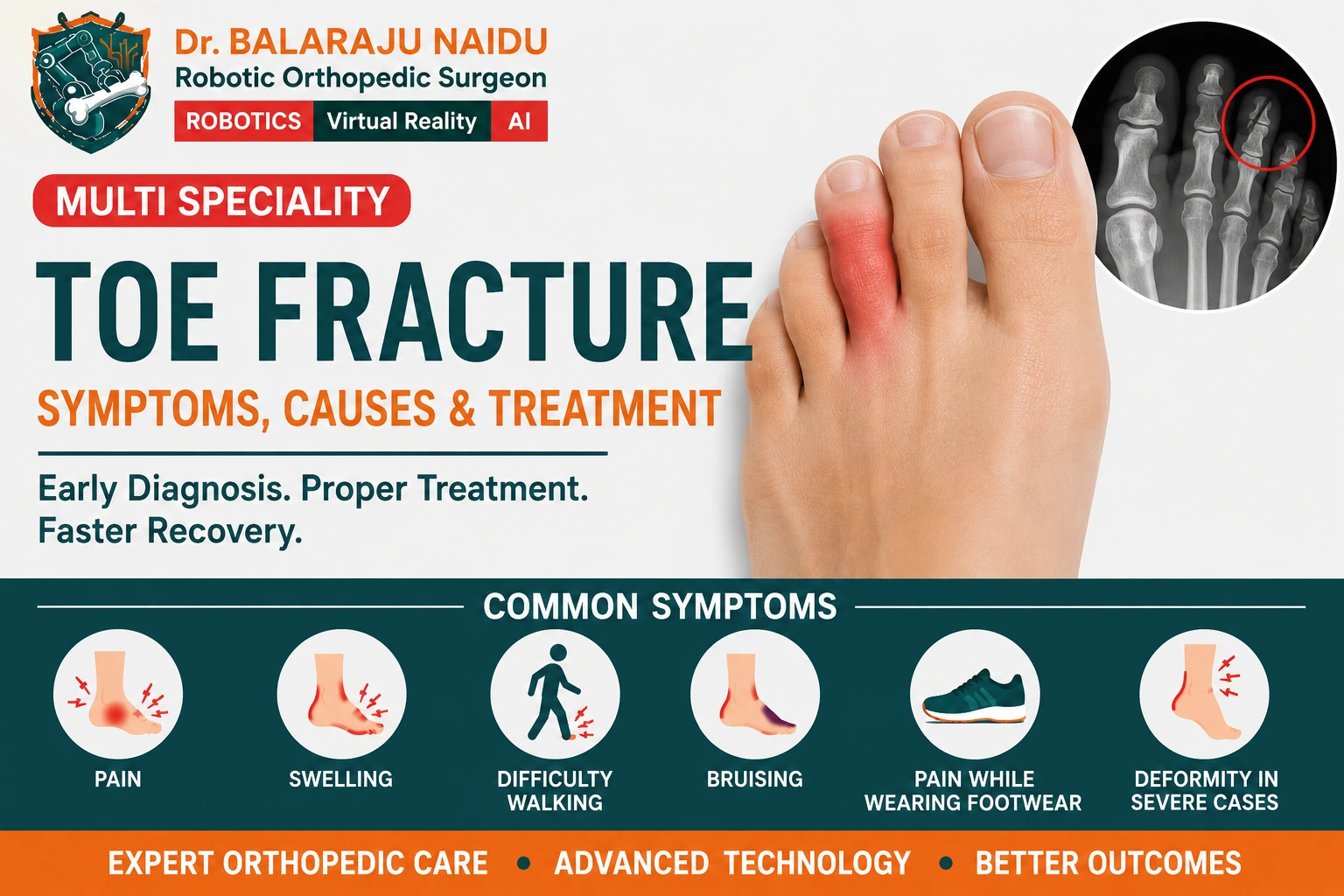
Symptoms of a Toe Fracture
The symptoms vary depending on the severity of the injury.
Common Signs Include:
✔ Pain in the affected toe
✔ Swelling and redness
✔ Bruising around the toe
✔ Tenderness when touched
✔ Difficulty walking
✔ Pain while wearing footwear
✔ Reduced toe movement
✔ Deformity in severe fractures
✔ Inability to bear weight comfortably
If symptoms persist after an injury, medical evaluation is recommended.
Types of Toe Fractures
Non-Displaced Fracture
The bone cracks but remains properly aligned.
Displaced Fracture
The broken bone pieces shift out of position and may require reduction or surgery.
Open Fracture
The bone breaks through the skin, increasing the risk of infection.
Stress Fracture
Tiny cracks develop due to repetitive stress rather than sudden trauma.
Intra-Articular Fracture
The fracture extends into the joint surface and requires careful management to prevent arthritis.
Why the Big Toe Fracture Needs Special Attention
The big toe carries a significant portion of body weight during walking and running.
Untreated fractures of the big toe may result in:
- Persistent pain
- Difficulty walking
- Joint stiffness
- Improper healing
- Early arthritis
Therefore, big toe fractures often require closer orthopedic evaluation.
Diagnosis of Toe Fracture
Clinical Examination
An orthopedic specialist evaluates:
- Pain location
- Swelling
- Deformity
- Joint movement
- Ability to bear weight
X-Ray Imaging
X-rays help determine:
- Fracture location
- Severity
- Bone alignment
- Joint involvement
In complex injuries, advanced imaging may occasionally be required.
Treatment Options for Toe Fractures
Treatment depends on the fracture type, severity, and location.
Conservative Treatment
Most simple toe fractures heal successfully without surgery.
Treatment may include:
Rest
Avoid activities that worsen pain.
Ice Application
Reduces swelling and inflammation.
Elevation
Keeping the foot elevated helps decrease swelling.
Buddy Taping
The injured toe is gently taped to an adjacent toe for support.
Protective Footwear
Special stiff-soled shoes reduce stress on the healing bone.
Immobilization
Some fractures may require a walking boot or splint.
When Is Surgery Required?
Surgery may be recommended if:
- The fracture is displaced
- Bone alignment is poor
- Multiple fragments are present
- The fracture involves the joint
- There is significant deformity
- Conservative treatment fails
Modern orthopedic techniques help restore proper alignment and function while minimizing recovery time.
Recovery After Toe Fracture
Most uncomplicated toe fractures heal within:
- 4–6 weeks for smaller toes
- 6–8 weeks for big toe fractures
Recovery may vary depending on:
- Age
- Overall health
- Severity of fracture
- Compliance with treatment
Physical therapy may be recommended for restoring flexibility and strength after healing.
Possible Complications If Ignored
Ignoring a fractured toe can lead to:
- Chronic pain
- Bone deformity
- Improper healing (malunion)
- Joint stiffness
- Arthritis
- Difficulty walking
- Reduced athletic performance
Early diagnosis significantly reduces these risks.
Tips to Prevent Toe Fractures
- Wear protective footwear.
- Use safety shoes at work.
- Keep floors clutter-free.
- Wear proper sports footwear.
- Avoid walking barefoot in risky environments.
- Maintain bone health through adequate calcium and vitamin D intake.
When Should You See an Orthopedic Specialist?
Seek medical attention if you experience:
- Severe toe pain
- Significant swelling
- Visible deformity
- Difficulty walking
- Persistent pain after injury
- Open wounds near the fracture
- Suspected big toe fracture
Early orthopedic consultation ensures proper healing and prevents long-term complications.
Conclusion
Although toe fractures are common, they should never be ignored. While many simple fractures heal with conservative treatment, some injuries require specialized orthopedic care to restore proper function and prevent future problems.
If you experience toe pain, swelling, bruising, or difficulty walking after an injury, consult an orthopedic specialist for accurate diagnosis and personalized treatment.
For Appointments:
Dr. Balaraju Naidu, Robotic Orthopedic Surgeon
ONUS Robotic Hospitals – Hyderabad