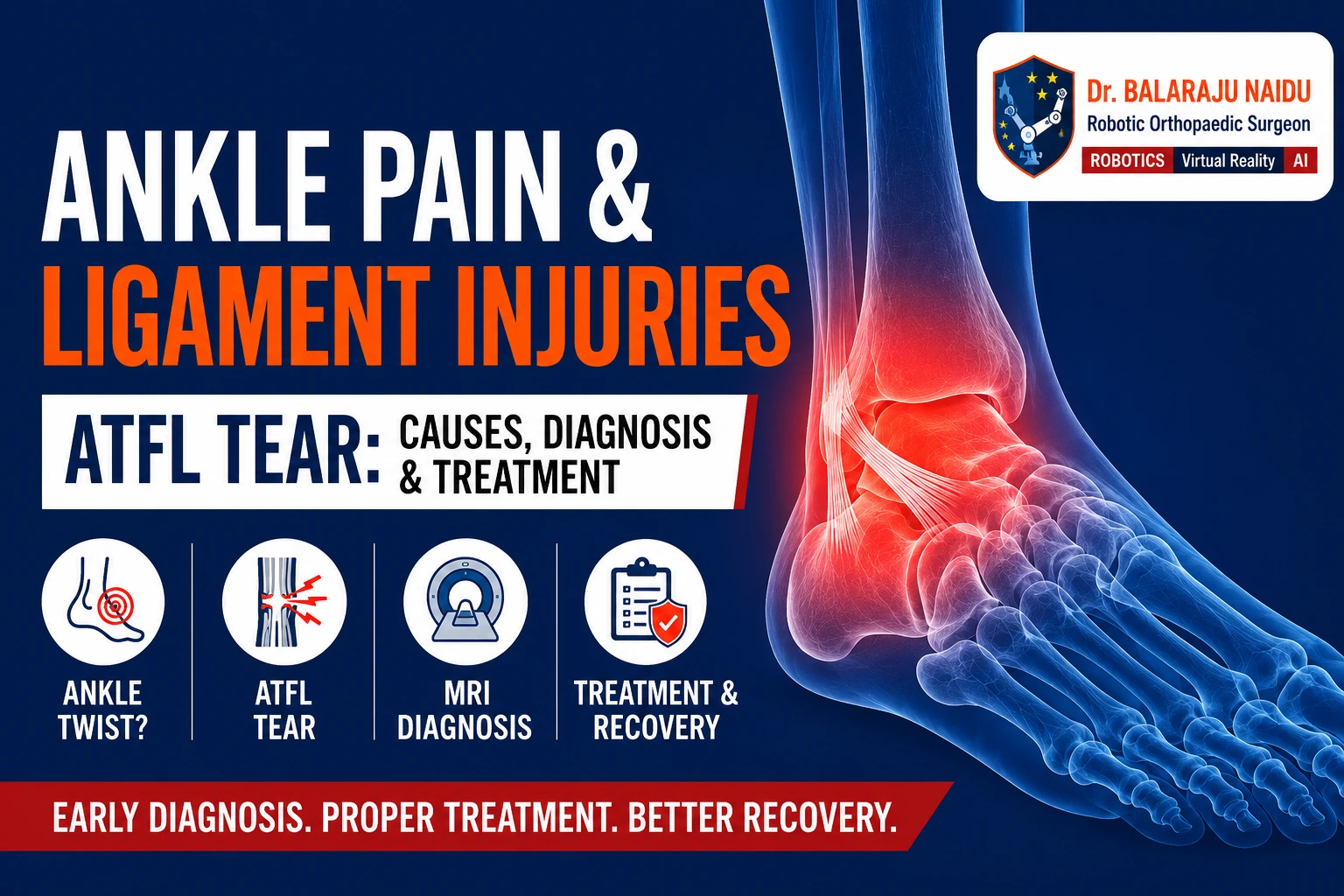
Ankle Pain & Ligament Injuries: Understanding ATFL Tears, Diagnosis and Treatment- By Dr. Balaraju Naidu, Robotic Orthopedic Surgeon, ONUS Robotic Hospitals
Ankle injuries are among the most common orthopedic problems affecting people of all ages. Whether you are an athlete, a fitness enthusiast, or simply walking on an uneven surface, a sudden ankle twist can result in pain, swelling, and ligament damage.
While many ankle sprains heal with rest and rehabilitation, some injuries involve tears of important stabilizing ligaments such as the Anterior Talofibular Ligament (ATFL). If left untreated, these injuries can lead to chronic ankle instability, recurrent sprains, and long-term functional limitations.
In this article, Dr. Balaraju Naidu, Senior Robotic Orthopedic Surgeon at ONUS Robotic Hospitals, explains ankle sprains, ATFL tears, diagnosis, treatment options, and the importance of proper recovery.
What is an Ankle Sprain?
An ankle sprain occurs when the ligaments supporting the ankle joint are stretched beyond their normal range or torn.
Ligaments are strong bands of tissue that connect bones and help stabilize joints.
Most ankle sprains occur when the foot suddenly rolls inward, causing excessive stress on the ligaments located on the outer side of the ankle.
What is the ATFL?
The Anterior Talofibular Ligament (ATFL) is one of the primary stabilizing ligaments on the outside of the ankle.
Its role includes:
- Maintaining ankle stability
- Preventing excessive inward rolling of the foot
- Supporting movement during walking, running, and jumping
- Protecting the ankle during sports activities
The ATFL is the most commonly injured ligament during an ankle sprain.
Common Causes of ATFL Injury
ATFL injuries usually occur during activities that involve sudden changes in movement.
Common Causes Include:
- Running on uneven surfaces
- Sports injuries
- Jumping and landing awkwardly
- Sudden twisting movements
- Slipping or falling
- Basketball injuries
- Football injuries
- Cricket-related ankle twists
- Stair missteps
Even a seemingly minor ankle twist can sometimes result in a significant ligament injury.
Symptoms of an ATFL Tear
Symptoms vary depending on whether the ligament is stretched, partially torn, or completely torn.
Common Symptoms
- Sudden ankle pain
- Swelling around the ankle
- Difficulty walking
- Bruising
- Tenderness on the outer ankle
- Reduced ankle movement
- Feeling of instability
- Pain during weight-bearing activities
Symptoms of Chronic Instability
If the injury is not treated properly, patients may develop:
- Recurrent ankle sprains
- Repeated twisting episodes
- Ankle weakness
- Fear of running or sports activities
- Persistent discomfort during daily activities
Grades of Ankle Ligament Injury
Orthopedic specialists often classify ligament injuries into three grades.
Grade 1 – Mild Sprain
- Ligament stretched but not torn
- Mild swelling
- Mild pain
- Stable ankle joint
Grade 2 – Partial Tear
- Partial ligament damage
- Moderate pain and swelling
- Difficulty walking
- Mild instability
Grade 3 – Complete Tear
- Complete rupture of the ligament
- Significant swelling and bruising
- Marked instability
- Difficulty bearing weight
Grade 3 injuries may sometimes require surgical treatment.
Why Ankle Instability Develops
One of the biggest mistakes patients make is returning to sports, exercise, or regular activities too soon.
Without adequate healing and rehabilitation:
- Ligaments remain weak
- Ankle support decreases
- Recurrent sprains occur
- Cartilage damage may develop
- Long-term instability can result
Proper recovery is essential for restoring normal ankle function.
How is an ATFL Tear Diagnosed?
Clinical Examination
An orthopedic surgeon evaluates:
- Pain location
- Swelling
- Joint stability
- Walking pattern
- Range of motion
X-Ray Evaluation
X-rays help identify:
- Fractures
- Bone injuries
- Joint alignment issues
Although ligaments do not appear on X-rays, this investigation helps rule out associated injuries.
MRI Scan
MRI is the most useful imaging study for evaluating:
- ATFL tears
- Other ligament injuries
- Tendon damage
- Cartilage injuries
- Soft tissue abnormalities
MRI helps determine the severity of injury and guide treatment decisions.
Conservative Treatment for Ankle Sprains
Many ankle sprains and partial ligament injuries can be treated without surgery.
Treatment Options Include:
- Rest
- Ice application
- Compression bandaging
- Elevation of the leg
- Ankle braces
- Anti-inflammatory medications
- Physiotherapy
- Strengthening exercises
Benefits of Physiotherapy
A structured rehabilitation program helps:
- Restore strength
- Improve balance
- Enhance ankle stability
- Reduce the risk of future sprains
When is Surgery Necessary?
Surgery may be considered when:
- A complete ATFL tear is present
- Chronic ankle instability develops
- Conservative treatment fails
- Repeated ankle sprains occur
- Athletes require high-level ankle stability
The goal is to restore normal ligament function and prevent future instability.
Surgical Treatment for ATFL Tears
Modern orthopedic surgery offers minimally invasive techniques to repair or reconstruct damaged ligaments.
Benefits of Surgical Stabilization
- Improved ankle stability
- Reduced pain
- Prevention of recurrent injuries
- Faster return to activity
- Better long-term function
The choice of procedure depends on the severity of ligament damage and patient activity levels.
Recovery After ATFL Treatment
Recovery depends on:
- Severity of injury
- Treatment method
- Rehabilitation compliance
- Patient activity level
Rehabilitation Stages
Early Recovery
- Swelling control
- Pain management
- Protected movement
Strengthening Phase
- Balance training
- Muscle strengthening
- Controlled exercises
Return to Sports
- Sport-specific rehabilitation
- Functional testing
- Gradual return to activities
Most patients achieve excellent outcomes when treatment and rehabilitation are completed properly.
Preventing Future Ankle Injuries
To reduce the risk of ankle sprains:
- Warm up before exercise
- Wear proper footwear
- Strengthen ankle muscles
- Improve balance and coordination
- Follow rehabilitation programs completely
- Avoid returning to sports too early
When Should You Consult an Orthopedic Surgeon?
Seek medical attention if you experience:
- Severe ankle pain after twisting
- Persistent swelling
- Difficulty walking
- Repeated ankle sprains
- Ankle instability
- Sports-related ankle injuries
- Symptoms lasting more than a few days
Early diagnosis and treatment can prevent chronic instability and long-term complications.
Conclusion
Ankle sprains and ATFL ligament injuries are extremely common but should never be ignored. While many mild injuries heal with conservative treatment, significant ligament tears can lead to chronic pain and ankle instability if not properly managed.
Accurate diagnosis through clinical evaluation, X-rays, and MRI imaging allows orthopedic specialists to develop an effective treatment plan. Whether treated conservatively or surgically, early intervention and proper rehabilitation are key to restoring ankle function and preventing future injuries.
If you are experiencing persistent ankle pain or repeated ankle sprains, consult an orthopedic specialist for a comprehensive evaluation.
For Appointments:
Dr. Balaraju Naidu, Robotic Orthopedic Surgeon
ONUS Robotic Hospitals – Hyderabad