Knee Pain Treatment Without Surgery – Non-Surgical Options for Knee Arthritis- By Dr. Balaraju Naidu, Robotic Orthopedic Surgeon, ONUS Robotic Hospitals
Introduction
Knee pain is one of the most common orthopedic problems affecting people of all ages, especially middle-aged and elderly individuals. For many patients, knee arthritis can gradually make simple activities such as walking, climbing stairs, sitting, standing, and exercising increasingly difficult.
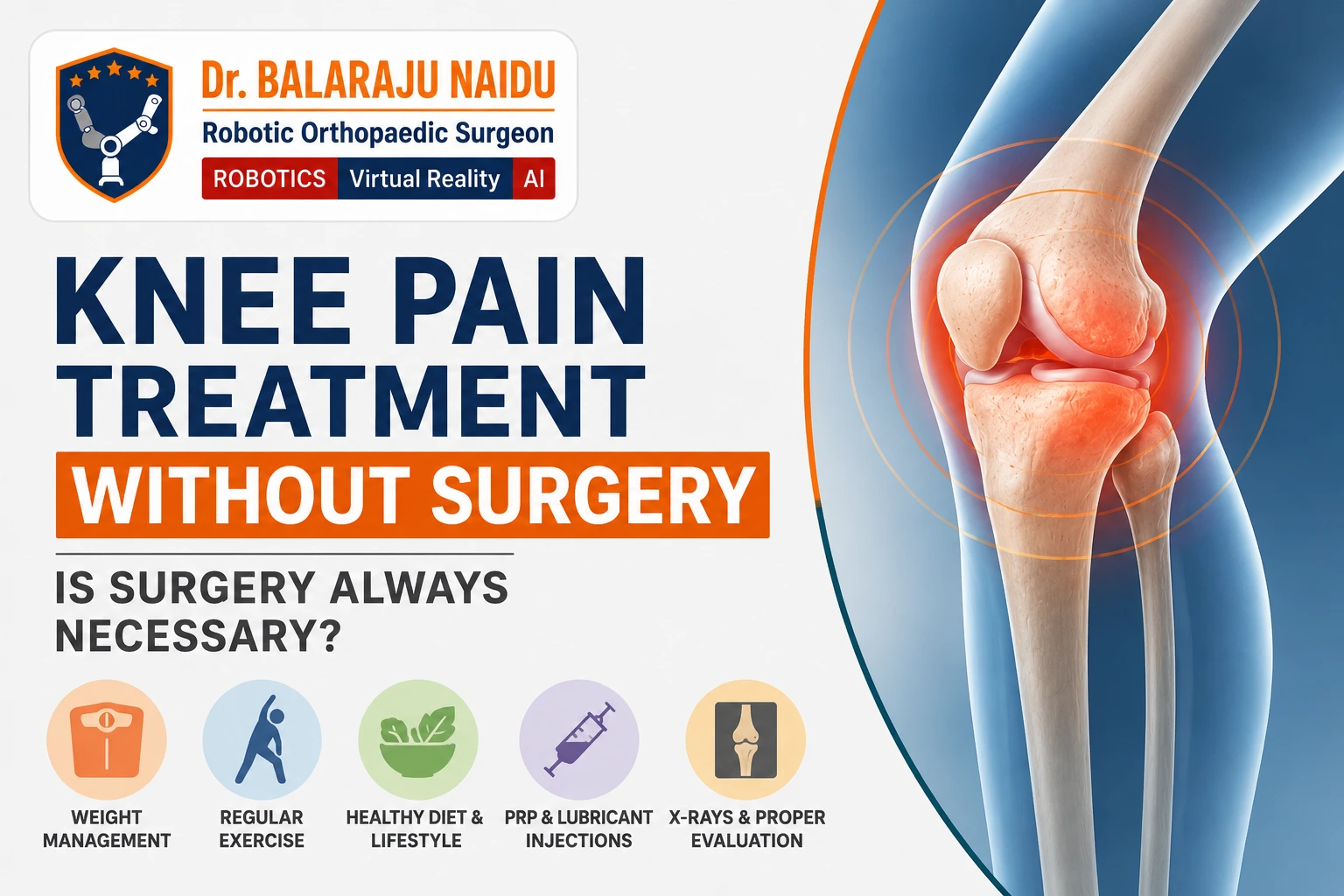
A common concern among patients diagnosed with knee arthritis is whether surgery is the only treatment option. The good news is that many patients can effectively manage knee pain and improve their quality of life through non-surgical treatments, particularly during the early and moderate stages of arthritis.
In this article, Dr. Balaraju Naidu, Robotic Orthopedic Surgeon, explains the various non-surgical treatment options available for knee pain and knee arthritis and when surgical intervention may eventually become necessary.
Understanding Knee Arthritis
Knee arthritis, commonly known as osteoarthritis of the knee, occurs when the protective cartilage that cushions the knee joint gradually wears away.
As the cartilage deteriorates, the bones begin to rub against each other, leading to:
- Pain
- Swelling
- Stiffness
- Reduced mobility
- Difficulty walking
- Joint deformity in advanced stages
Knee arthritis is often progressive, but early diagnosis and appropriate treatment can help slow its progression and reduce symptoms.
Can Knee Arthritis Be Treated Without Surgery?
Yes. Many patients with mild to moderate arthritis can achieve significant symptom relief without surgery.
Non-surgical treatments focus on:
- Reducing pain
- Improving mobility
- Strengthening surrounding muscles
- Protecting remaining cartilage
- Delaying or avoiding surgery
The best treatment plan depends on the patient’s age, weight, activity level, severity of arthritis, X-ray findings, and overall health.
1. Weight Management
Why Weight Matters
Excess body weight places additional stress on the knee joints.
Research shows that every extra kilogram of body weight can significantly increase the load experienced by the knees during walking and other activities.
Benefits of Weight Loss
Even modest weight loss can:
- Reduce knee pain
- Improve mobility
- Decrease joint stress
- Slow arthritis progression
- Improve treatment outcomes
For overweight individuals, weight management is one of the most effective non-surgical strategies.
2. Regular Exercise and Physical Therapy
Many patients avoid movement because of pain, but inactivity can actually worsen symptoms.
Recommended Exercises
Orthopedic specialists often recommend:
- Quadriceps strengthening exercises
- Hamstring strengthening exercises
- Straight leg raises
- Stationary cycling
- Swimming
- Walking on level surfaces
Benefits
Regular exercise helps:
- Improve joint stability
- Strengthen muscles around the knee
- Reduce stiffness
- Improve flexibility
- Enhance balance and function
A customized physical therapy program can significantly improve knee function.
3. Healthy Diet and Lifestyle Modifications
A healthy lifestyle plays a major role in arthritis management.
Dietary Recommendations
Patients should focus on:
- Fruits and vegetables
- Lean proteins
- Whole grains
- Omega-3-rich foods
- Adequate hydration
Lifestyle Changes
Helpful lifestyle modifications include:
- Avoiding prolonged standing
- Using proper footwear
- Avoiding excessive stair climbing
- Maintaining an active lifestyle
- Quitting smoking
These changes can help reduce inflammation and support overall joint health.
4. Medications for Symptom Relief
Depending on symptom severity, doctors may prescribe medications to reduce pain and inflammation.
Common options include:
- Anti-inflammatory medications
- Pain-relieving medications
- Topical gels and creams
- Short-term pain management therapies
Medication use should always be guided by a healthcare professional.
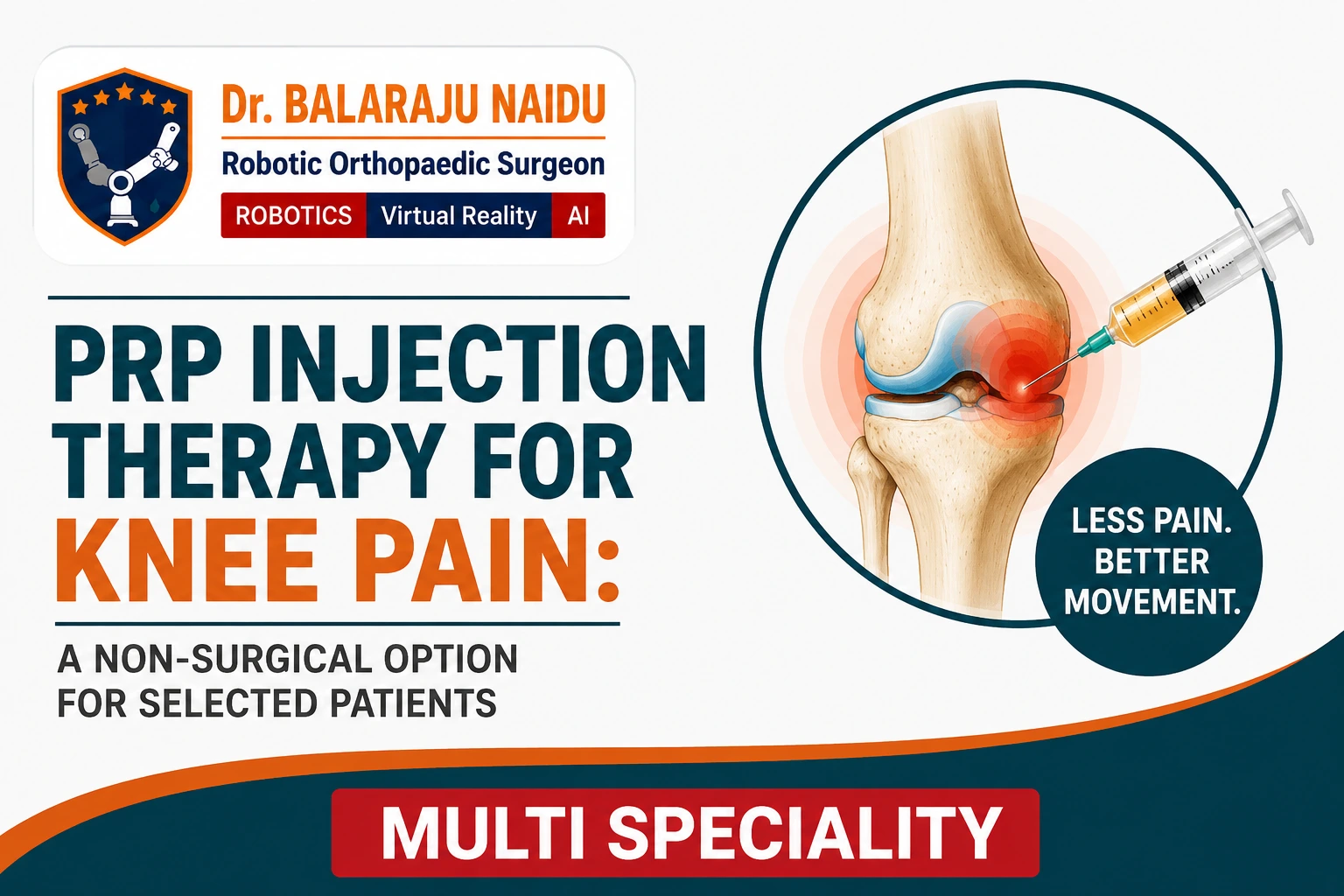
5. PRP (Platelet-Rich Plasma) Injections
What Is PRP?
PRP therapy uses concentrated platelets obtained from the patient’s own blood.
These platelets contain growth factors that may help reduce inflammation and support tissue healing.
Potential Benefits
Selected patients may experience:
- Reduced knee pain
- Improved function
- Better mobility
- Delayed disease progression
PRP is generally considered for patients with early to moderate arthritis and should be evaluated on a case-by-case basis.
6. Lubricant (Viscosupplementation) Injections
What Are Lubricant Injections?
These injections contain hyaluronic acid, a substance naturally present in joint fluid.
They help improve lubrication within the knee joint and may reduce friction between joint surfaces.
Benefits
Suitable patients may experience:
- Improved knee movement
- Reduced pain
- Better joint cushioning
- Enhanced daily activity levels
Not every patient is a candidate, which is why orthopedic evaluation is essential.
Importance of X-Rays and Proper Evaluation
One of the most important steps in managing knee arthritis is obtaining an accurate diagnosis.
Why X-Rays Matter
X-rays help doctors evaluate:
- Degree of cartilage loss
- Joint space narrowing
- Bone changes
- Severity of arthritis
Treatment decisions should never be based on symptoms alone.
A detailed orthopedic evaluation allows the doctor to recommend the most appropriate treatment plan.
When Conservative Treatment May Not Be Enough
Although many patients benefit from non-surgical treatments, advanced arthritis may eventually require surgical intervention.
Signs that surgery may need to be considered include:
- Severe pain despite treatment
- Difficulty walking
- Significant limitation of daily activities
- Advanced arthritis on X-rays
- Poor quality of life
- Failure of conservative management
In such cases, knee replacement surgery may provide long-term pain relief and improved function.
Who Is a Good Candidate for Non-Surgical Treatment?
Patients with the following characteristics may benefit most:
- Early-stage arthritis
- Mild to moderate pain
- Preserved joint function
- Minimal deformity
- Good response to conservative therapies
A personalized assessment is necessary to determine the best treatment pathway.
Conclusion
Knee arthritis does not always require surgery. Many patients can successfully manage knee pain through a combination of weight management, regular exercise, physical therapy, healthy lifestyle changes, PRP therapy, and lubricant injections.
The key is early diagnosis and individualized treatment planning based on the severity of arthritis and each patient’s unique needs.
If knee pain is affecting your mobility, work, or quality of life, consult an orthopedic specialist for a comprehensive evaluation and personalized treatment recommendations.
Dr. Balaraju Naidu, Robotic Orthopedic Surgeon, emphasizes that the right treatment at the right stage can help patients stay active, reduce pain, and maintain independence for years to come.
For Appointments:
Dr. Balaraju Naidu, Robotic Orthopedic Surgeon
ONUS Robotic Hospitals – Hyderabad