Knee Crepitus: Why Your Knee Makes Cracking or Grinding Sounds and When to Worry- By Dr. Balaraju Naidu, Robotic Orthopedic Surgeon, ONUS Robotic Hospitals
Understanding the Causes, Symptoms, and Treatment Options for Knee Joint Sounds
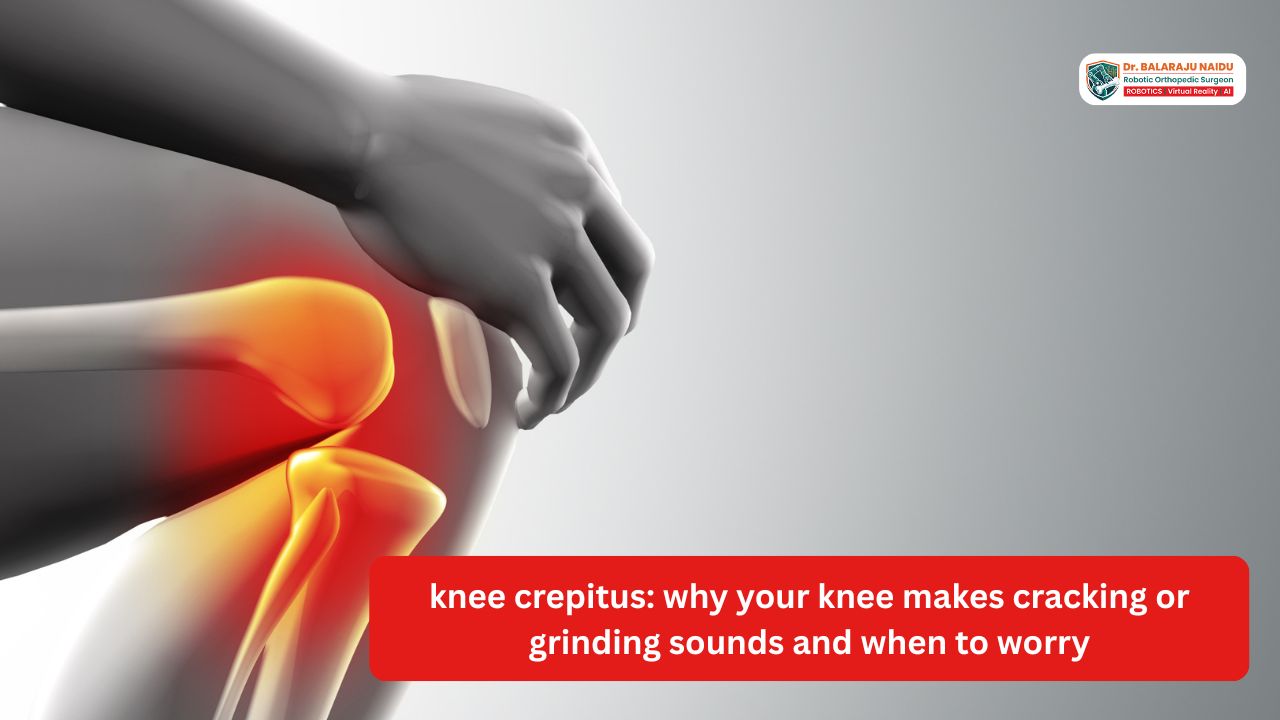
Are you hearing a cracking, popping, or grinding sound when bending your knee while walking, climbing stairs, or getting up from a chair? This condition is known as Knee Crepitus.
While knee crepitus is common and often harmless, it can sometimes signal underlying joint problems such as cartilage wear, ligament injury, or early arthritis. Early evaluation by an orthopedic specialist like Dr. Balaraju Naidu at ONUS Robotic Hospitals can help prevent long-term joint damage and maintain knee health.
What Is Knee Crepitus?
Knee crepitus refers to the crackling, popping, or grinding sensation felt or heard when the knee joint moves.
It commonly occurs during:
- Walking
- Climbing stairs
- Squatting
- Standing up from sitting
- Exercising
In many cases, it is painless and harmless. However, when associated with pain or swelling, it may indicate joint damage.
Why Does Knee Crepitus Happen?
The knee joint contains cartilage, ligaments, and synovial fluid that allow smooth movement. When these structures are affected, abnormal friction or movement can produce sounds.
Common Causes of Knee Crepitus
1) Air Bubbles in Joint Fluid (Normal Cause)
Sometimes small gas bubbles form in the joint fluid.
These bubbles:
- Collapse during movement
- Create a popping sound
- Cause no pain
This is usually harmless.
2) Cartilage Wear and Tear (Early Arthritis)
One of the most common causes.
Cartilage damage leads to:
- Rough joint surfaces
- Increased friction
- Grinding sensation
This condition is often linked to:
Osteoarthritis
3) Meniscus or Ligament Injury
Injuries to knee structures can cause:
- Clicking or popping sounds
- Pain
- Instability
Common injuries include:
- Meniscus tear
- Ligament sprain
- Sports injuries
4) Patellar Tracking Problems
The kneecap may move improperly within its groove.
This leads to:
- Grinding sound
- Pain in front of the knee
- Difficulty climbing stairs
5) Post-Injury or Post-Surgery Changes
After trauma or surgery:
- Scar tissue may develop
- Joint surfaces may change
- Crepitus may occur
This is usually temporary.
Symptoms Associated with Knee Crepitus
Watch for these symptoms.
Common Symptoms
- Cracking or grinding sound
- Knee pain
- Swelling
- Stiffness
- Reduced movement
- Difficulty walking
- Knee instability
When Should You Be Concerned?
Not all knee sounds are dangerous.
However, medical evaluation is necessary if you experience:
- Pain along with sound
- Persistent swelling
- Difficulty climbing stairs
- Knee weakness
- Locking sensation
- Instability
- Reduced mobility
Important Rule
Crepitus without pain = Usually harmless
Crepitus with pain = Needs medical evaluation
Risk Factors for Knee Crepitus
Certain factors increase the risk.
Common Risk Factors
- Age above 40
- Obesity
- Sedentary lifestyle
- Previous knee injury
- Repetitive strain
- Weak muscles
- Poor posture
These factors accelerate joint wear.
Diagnosis of Knee Crepitus
Doctors evaluate knee crepitus using:
Clinical Examination
- Joint movement assessment
- Pain evaluation
- Stability testing
Imaging Tests
- X-ray
- MRI
- Ultrasound
These tests help identify the underlying cause.
Treatment Options for Knee Crepitus
Treatment depends on the severity and cause.
Non-Surgical Treatment
Most cases improve without surgery.
Common Treatments
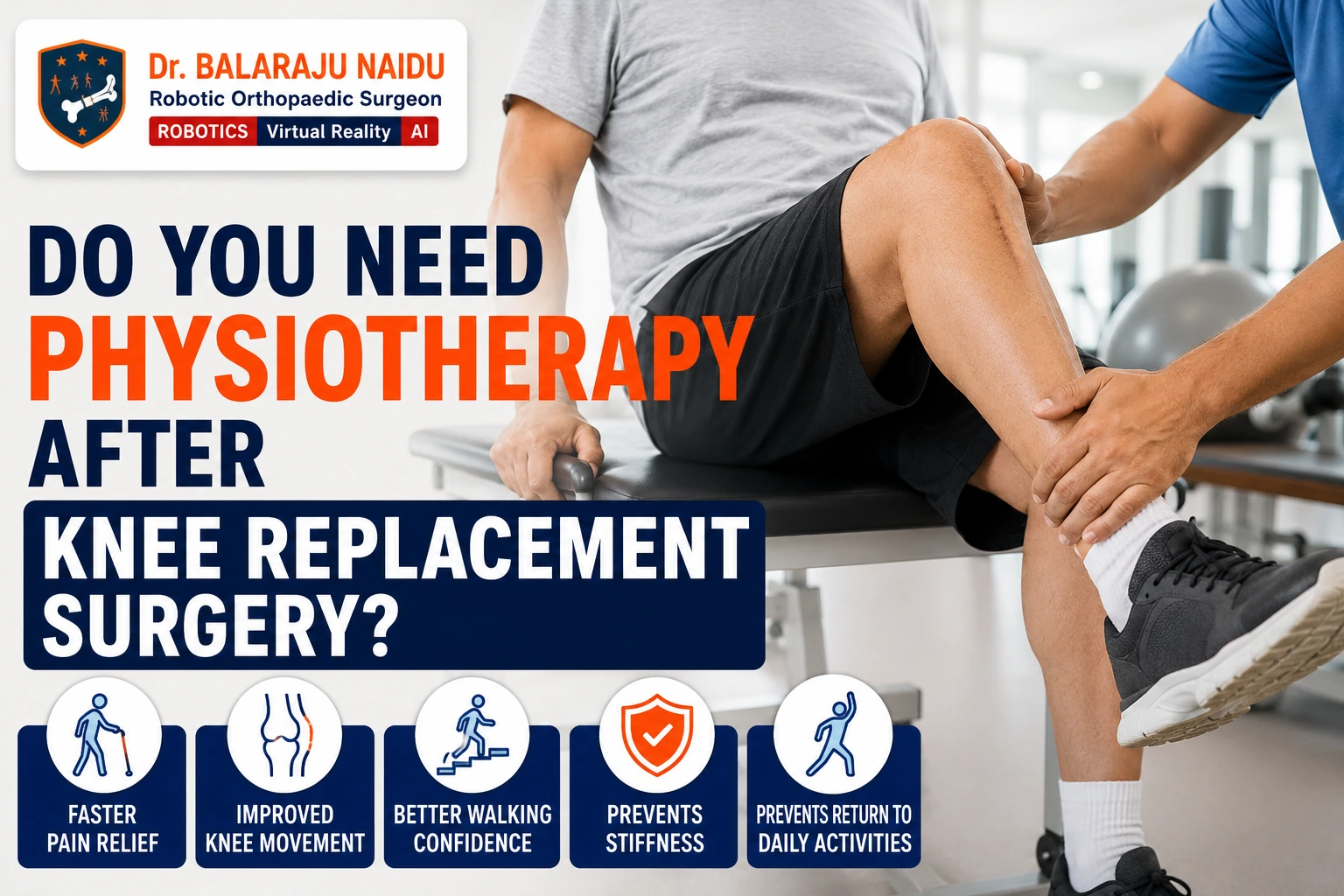
- Physiotherapy
- Muscle strengthening exercises
- Weight management
- Activity modification
- Pain medications
- Knee braces
These treatments reduce stress on the joint.
Physiotherapy Exercises for Knee Strength
Strengthening the surrounding muscles stabilizes the knee.
Recommended Exercises
- Quadriceps strengthening
- Hamstring stretching
- Straight leg raises
- Wall squats
- Step-ups
Regular exercise reduces joint strain.
Advanced Treatment Options
If symptoms persist, advanced treatments may be required.
Advanced Treatments
- Injection therapy
- Arthroscopy
- Cartilage repair
- Robotic knee replacement (severe arthritis)
Modern techniques provide faster recovery and improved outcomes.
Prevention Tips for Knee Crepitus
Simple lifestyle changes can protect your knee joints.
Prevention Strategies
- Maintain healthy body weight
- Exercise regularly
- Strengthen leg muscles
- Avoid prolonged sitting
- Use proper footwear
- Warm up before exercise
- Avoid sudden movements
These steps reduce joint stress and injury risk.
When to See an Orthopedic Specialist
Consult a doctor immediately if:
- Knee pain lasts more than 2 weeks
- Swelling persists
- Walking becomes difficult
- Knee feels unstable
- Pain increases with movement
Early diagnosis prevents arthritis progression.
Final Takeaway
Knee crepitus is common and often harmless.
But remember:
Painful knee sounds should never be ignored.
Early treatment can:
- Prevent joint damage
- Reduce pain
- Improve mobility
- Avoid surgery
For Appointments:
Dr. Balaraju Naidu, Robotic Orthopedic Surgeon
ONUS Robotic Hospitals – Hyderabad
👉 link: contact-us or book-appointment